– As NAPA-Lagos holds Scientific Week
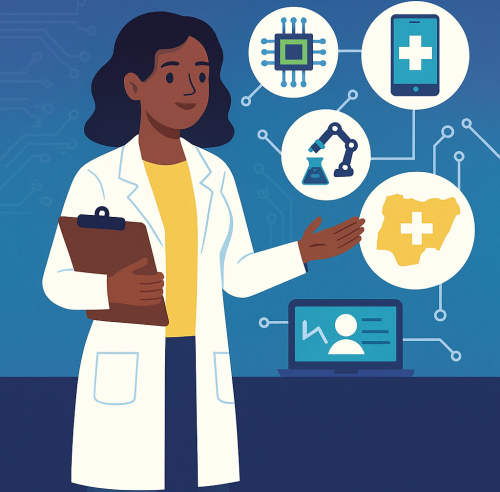
Pharmacists in academia have been urged to embrace digital transformation by integrating digital technology more strongly into pharmacy education, research, and practice, thereby advancing equitable healthcare delivery and universal health coverage (UHC) in Nigeria.
The call was made at a symposium organised by the Lagos State Chapter of the Nigeria Association of Pharmacists in Academia (NAPA), tagged “2025 NAPA Day Symposium”. The theme of the event was Digital Transformation in Pharmacy Education, Research, and Practice: Driving Access and Equity for Universal Health Coverage.
As part of activities marking the 2025 Pharmacy Week in Lagos, and held at Fidson Healthcare Plc Hall, speakers affirmed that technology-driven pharmacy education and research are indispensable for Nigeria’s progress towards universal health coverage.
In his remarks, the Chairman of the Lagos State Chapter of the Pharmaceutical Society of Nigeria, Pharm. Oyekunle Babayemi, noted that the world is in an era of digital evolution and pharmacists cannot afford to be left behind.
He said, “Pharmacists in academia are at the forefront of driving the digital future of the profession. Let us leverage all the digital tools to achieve universal health coverage.”
Pharm. Babayemi acknowledged that artificial intelligence (AI) has come to stay; however, he warned that AI can make mistakes, and therefore users should not rely on it entirely but engage with it using critical thinking.
In his opening address, the Chairman of NAPA, Lagos State Chapter, Prof. Chukwuemeka Azubuike, stressed that digital transformation was no longer futuristic but an urgent necessity. “As pharmacists in academia, we must embrace this transformation to better prepare our students, advance cutting-edge research, and ensure that the benefits of pharmacy practice reach all segments of society equitably,” he emphasised.
The Dean of the Faculty of Pharmacy, University of Lagos, Prof. Sunday Adesegun, highlighted the importance of innovation in bridging healthcare gaps. He described the symposium as a platform for both reflection and action, adding that pharmacy must be positioned as a “key driver of equitable healthcare delivery in Nigeria.”
Delivering the keynote address, the CEO of Advantage Health Africa, Pharm. Abimbola Adebakin, urged academic pharmacists to embrace digital transformation, describing it as the pathway to achieving universal coverage.
According to her, health is a human right, and everyone – regardless of income, location, or status – should be able to receive quality healthcare. She noted that the global push for UHC, championed by the World Health Organisation, enshrined in the UN’s SDG 3.8, and strengthened by efforts to use technology, aims to close access gaps.
Adebakin pointed out that there is increasing demand for fair healthcare access, ensuring services reach all populations regardless of location or income. She added that the COVID-19 pandemic accelerated digital health adoption, making technology a key driver of equitable care delivery.
Sharing practical insights into how digital tools are reshaping healthcare, she noted that e-learning platforms, AI-powered research, tele-pharmacy, and mobile health applications are expanding reach and improving efficiency.
She emphasised the need to leverage AI and structured data to provide real-time, context-specific guidance for pharmacists. According to her, such tools not only reduce errors but also help address workforce shortages, especially in underserved communities.
In education, she noted, virtual learning platforms such as Coursera, edX, and Moodle can extend pharmacy training to students in remote areas. In research, AI-driven drug discovery and tele-research foster global collaboration. In practice, e-prescriptions, tele-pharmacy, and mobile apps enhance patient monitoring and access to care.
“To drive sustainable transformation in pharmacy, educators must adopt digital tools, researchers should embrace data-driven methods, and practitioners need technology to expand care, supported by cross-sector collaboration for greater impact,” Adebakin said.
She stressed that digital transformation is not replacing pharmacists but empowering them, adding: “This is a change we must embrace or risk being left behind.”
A former Dean of the Faculty of Pharmacy, University of Lagos, Prof. Aderonke Adepoju Bello, also urged academic pharmacists to use AI with critical thinking. She emphasised that it is now imperative for pharmacy lecturers to adopt digital tools, explaining that teaching is no longer about speaking for two hours in front of students, but about fostering interaction and engagement through class activities.
Similarly, Prof. Udoma Mendie encouraged pharmacists in academia to embark on research in order to generate valuable and accurate data, while also urging lecturers to master the use of AI.