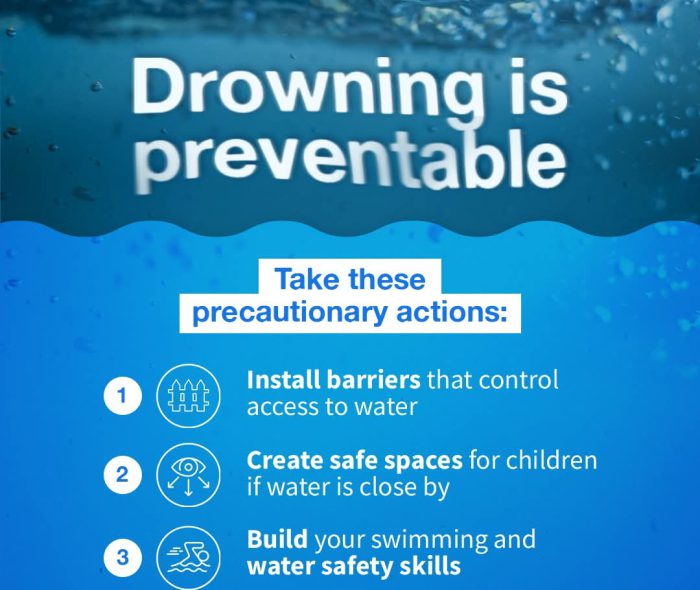
The World Health Organisation (WHO) has launched a new technical package aimed at helping governments and communities implement seven evidence-based strategies to prevent drowning, ahead of World Drowning Prevention Day marked annually on 25 July.
The initiative, known by the acronym PROTECT, comes as nearly 300,000 people die from drowning every year globally, with more than 90 per cent of these deaths occurring in low- and middle-income countries. Drowning also remains one of the ten leading causes of death among children aged 5 to 14 years.
This year’s World Drowning Prevention Day is themed “Unite to Turn the Tide,” underscoring the need for coordinated action by governments, partners and communities to prevent drowning and save lives.
WHO warned that climate change is worsening drowning risks as floods, storms and heatwaves become more frequent. According to the agency, studies have shown that drowning deaths increase during periods of extreme heat.
Launching the package, WHO Director-General, Dr Tedros Adhanom Ghebreyesus, described every drowning as a preventable tragedy, stressing that the PROTECT framework offers practical, evidence-based measures to save lives.
“The seven PROTECT strategies give countries practical, evidence-based approaches to prevent these tragedies, including making water transport safer, teaching schoolchildren to swim, and preparing for floods,” he said.
The PROTECT package translates WHO’s Global Strategy for Drowning Prevention into actionable policies, focusing on seven priority areas: safe water infrastructure, rescue and resuscitation capacity, occupational water safety, safer water transport, swimming and water safety education, child-care and safeguarding systems, and preparedness for floods and other water-related emergencies.
WHO launched the framework in Ghana, citing the country’s growing commitment to drowning prevention. An estimated 1,100 people die from drowning annually in Ghana, with children and young adults accounting for the majority of fatalities
Dr Kelly Henning, who leads the public health programme at Bloomberg Philanthropies, said the framework would help governments strengthen efforts to reduce drowning deaths through proven interventions.
Bloomberg Philanthropies has partnered with WHO on drowning prevention since 2014, supporting the development of global guidance, including the newly launched PROTECT technical package.
.