Six weeks after giving birth, Tolu Adekoya’s phone rang during an executive meeting. It was her mother, telling her that the breast milk she had left for her baby had run out. She became distraught and confused, uncertain whether to dash back home or remain at work, where she had been saddled with an urgent task carrying a two-day deadline.
“Is this how I will continue for the next six months?” Adekoya muttered in frustration.
Her employer had given her the option of resuming work six weeks after delivery or forfeiting her salary to an assistant who would replace her for however long she wished to stay home and nurse her baby. Being a new mother whose wedding had taken place barely a year earlier, she needed the financial support to assist her husband. She therefore decided to express her breast milk into a clean container to be stored for her baby while she was at work. But before midday, the milk had been exhausted, leaving both mother and baby distressed.
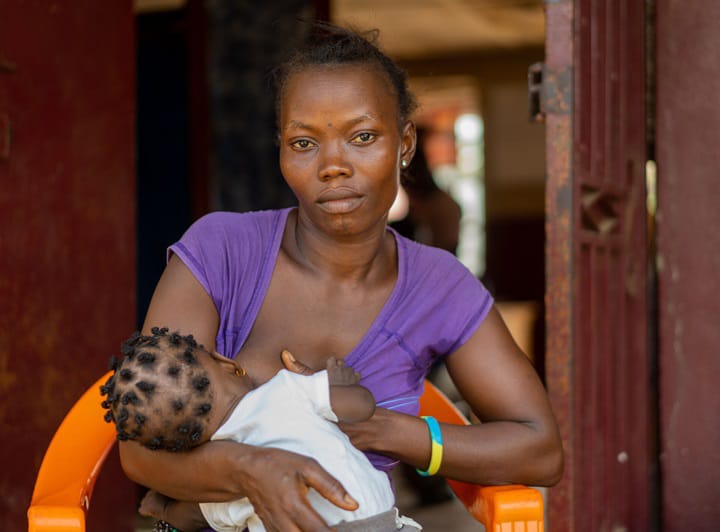
Sadly, Adekoya is not alone in this quagmire. About 70 per cent of Nigerian mothers cannot breastfeed their babies exclusively for the first six months, according to the 2023-24 Nigeria Demographic and Health Survey.
Reports show, however, that these mothers genuinely want to breastfeed optimally, but the barriers along their way are bigger than their determination. This raises a fundamental question: why is optimal breastfeeding still so difficult for many Nigerian mothers, despite decades of awareness campaigns?
Optimal breastfeeding: More than just exclusive breastfeeding
Optimal breastfeeding is the complete, WHO-recommended strategy that begins with initiating breastfeeding within 1 hour of birth, continues with exclusive breastfeeding for the first 6 months, and is followed by continued breastfeeding alongside appropriate complementary feeding until at least 2 years of age. Exclusive breastfeeding is therefore one key component of optimal breastfeeding, not the entire practice.
To breastfeed exclusively for the first six months of life means that the infant receives only breast milk, with no other foods or liquids, not even water, except for oral rehydration solution, vitamins, minerals or medicines when medically indicated.
Experts have repeatedly highlighted the impact of optimal breastfeeding on both infants and mothers. It fortifies the child’s immunity, reduces mortality, provides complete nutrition, boosts brain development, and supports healthy growth. For mothers, they say it reduces the risk of postpartum haemorrhage, lowers the risk of cancer, diabetes and cardiovascular disease, aids mother-infant bonding, and serves as a natural family planning mechanism.
On the wider economic front, the impact of optimal breastfeeding cannot be overemphasised. Data show that it boosts national GDP, reduces the burden of disease and improves children’s educational attainment. It helps tackle child malnutrition, stunting and wasting, reduces the financial burden of treating preventable childhood illnesses, improves children’s future earning potential, and strengthens the country’s human capital and economic development.
The barriers: Why many Nigerian mothers struggle
Call it exclusive or optimal breastfeeding, the practice is not unfamiliar to mothers in rural and urban areas alike, said Lactation Consultant Titilayo Medunonye in an exclusive interview with Pharmanews. Many mothers, however, encounter challenges beyond their control that push them towards alternatives to optimal breastfeeding. She identified the principal barriers as poor breastfeeding knowledge and prevailing myths, inadequate support from healthcare providers, workplace challenges and short maternity leave, family and cultural pressures, aggressive formula marketing and social media misinformation, and maternal physical and mental health challenges, among others.
Medunonye, who is Nigeria’s first indigenous International Board Certified Lactation Consultant and the founder of the country’s first breastfeeding company, Milky Express Ltd, emphasised the need for policymakers and stakeholders to deliberate on policies that promote optimal breastfeeding across the board, dispel the myths that stigmatise the practice, mobilise health workers to provide adequate care and counselling to lactating mothers, and mandate employers to comply with six months of maternity leave.
“It is also pertinent to impose higher tariffs on the importation of baby formula as a way of discouraging patronage, while husbands and relatives must be held accountable for the wellbeing of nursing mothers, in order to provide optimal care for both infants and mothers,” she stated.
A retired Deputy Director of Nursing at the Lagos State Primary Health Care Board, Nurse Patience Omoluwa, also condemned the idea of placing the entire burden of optimal breastfeeding on mothers alone, arguing that this is a critical public health issue requiring urgent attention. The nursing expert, who spent much of her active service at primary health centres caring for infants and nursing mothers, shared the difficult conditions faced by some mothers:
“There were times I saw mothers struggling to breastfeed because they themselves were malnourished. They looked pale, anaemic and weak. When you asked about their husbands, they would say he had been away for days without making adequate provision for the family.”
Breaking the barriers: What works
The commemoration of World Breastfeeding Week 2026, with the theme “Breastfeeding for a Sustainable Start in Life: Strengthen What Works,” should not be another jamboree, particularly in Nigeria, where an estimated two to three million children suffer from severe acute malnutrition, with only a fraction receiving adequate treatment, according to 2026 UNICEF data. Such an occasion ought to be used to critically examine the barriers to optimal breastfeeding and address them directly, so that sustainable change can be achieved. Given the difficult realities described above by experts, it is high time the government reviewed the implementation of existing policies and formulated new ones to strengthen maternal health.
The Innocenti Declaration (1990/2005), established by the World Health Organisation and UNICEF, calls on all governments to create a national breastfeeding culture by establishing multi-sectoral national breastfeeding committees, passing protective labour laws, and integrating breastfeeding support into health infrastructure. There is no better time than now for the Nigerian government to review and fully implement this policy, so that meaningful progress can be recorded in infant and maternal health.
Medunonye also emphasised the need for enforcement of the International Code of Marketing of Breast-milk Substitutes, commonly known as the WHO Code, which mandates food agencies to curb aggressive marketing of milk formula and prohibits direct-to-consumer advertising, free formula samples in maternity wards, and financial incentives offered to healthcare providers by formula manufacturers.
She further underscored the need for the legislative arm of government to rise to the occasion by reviewing the implementation of legislation that promotes optimal breastfeeding, with a view to formulating punitive measures for non-compliant agencies or institutions. “Lawmakers must formulate laws on mandatory paid maternity leave, workplace accommodations that allow for lactation breaks and private expression spaces, and legal protections for nursing in public spaces,” she said.
As the theme for this year’s World Breastfeeding Week aptly reminds us, achieving sustainable optimal breastfeeding requires every stakeholder to play a role. It is not solely a mother’s responsibility; it is a shared responsibility of families, employers, healthcare providers, policymakers and society at large.