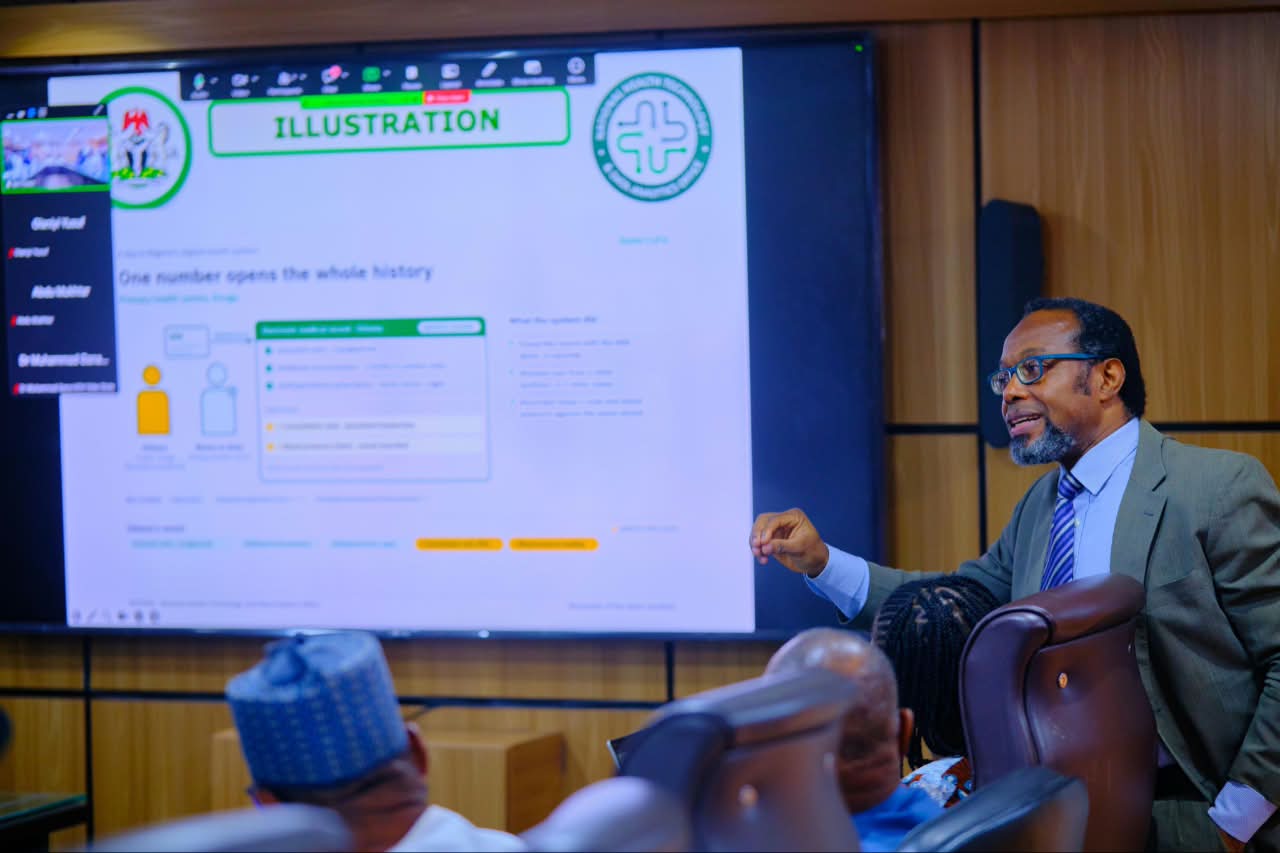
The National Coordinator, National Health Technology and Data Analytics Office (NHTDAO), Dr Obi Adigwe, has revealed deeper insights into the functions of the agency, saying it will work with relevant government institutions and stakeholders to translate the national digital health architecture into coordinated implementation.
Adigwe, who made the disclosure at the inauguration of a Steering Committee of the NHTDAO by the Federal Government, on Wednesday, highlighted the focus areas of the agency, noting that it won’t replace existing institutions, but will complement their roles with emphasis on common standards, interoperability and effective use of health data.
Pharmanewsonline reports that the NHTDAO was established in June 2026, following President Bola Ahmed Tinubu’s approval of the Office as a national platform to coordinate Nigeria’s digital health agenda and support implementation of the National Digital Health Architecture approved by the National Council on Health.
The Steering Committee brings together key stakeholders from the Federal Government, state governments, national health institutions, the private sector and the sector-wide approach to provide strategic direction and oversight for the Office.

Co-Chairing the meeting, the Coordinating Minister of Health and Social Welfare, Prof. Muhammad Ali Pate, said Nigeria must move beyond simply digitising health information to ensuring that securely stored and connected health data can generate new knowledge, support the development of new technologies in medicine and ultimately improve patient care.
He said the value of digitalisation would be realised when data generated across the health system can be responsibly used to support clinical decision-making, research, innovation and more efficient healthcare delivery.
The Honourable Minister of State for Health and Social Welfare and Alternate Co-Chair of the Steering Committee, Dr Iziaq Adekunle Salako, said NHTDAO would provide a coordination mechanism for Nigeria’s growing digital health ecosystem.
He stressed that the office would complement rather than replace the responsibilities of existing departments, agencies, programmes and institutions, while helping to address fragmentation among electronic medical record systems and establish common standards to improve interoperability across the health system.
He described digital health as an important enabler of the Nigeria Health Sector Renewal Investment Initiative (NHSRII).
In her welcome address, the Permanent Secretary of the Ministry, Daju Kachollom S. mni, said the growing scale and complexity of Nigeria’s health system made reliable and connected data increasingly important to effective decision-making. She urged the Steering Committee to ensure that technology ultimately delivers tangible value to Nigerians, asking: “How does this improve the experience, access, safety or health outcome of the Nigerian patient?”
She also stressed the need for attention to interoperability, cybersecurity, data protection, ethical use of artificial intelligence, data governance and patient confidentiality, while ensuring that digital transformation reduces rather than deepens inequalities, particularly for rural and underserved communities.
The other Co-Chair, Mr. Olaniyi Yusuf, chairman of the Nigerian Economic Summit Group, underscored the importance of clear guidelines to promote interoperability, scale digital health solutions and unlock greater private-sector investment and participation in Nigeria’s health technology ecosystem.