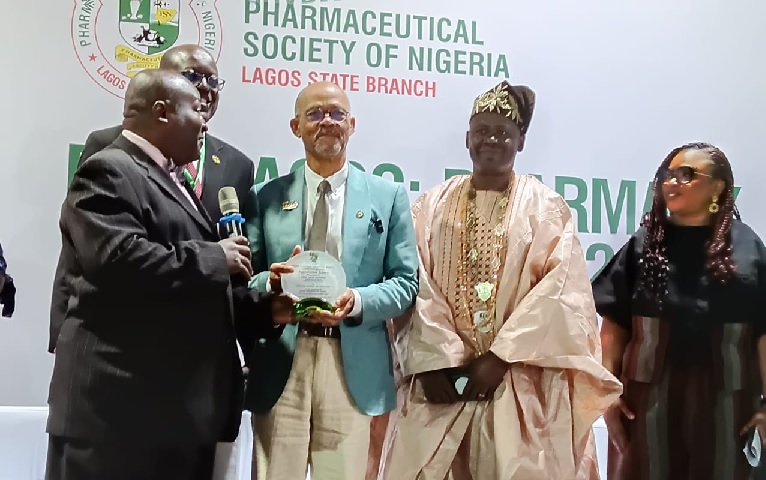
The Lagos State Commissioner for Health, Professor Akin Abayomi, has appealed to pharmacists to collaborate with the state government in combating antimicrobial resistance (AMR), which he described as a growing threat to public health.
Abayomi, who decried the indiscriminate use of antibiotics in the state, attributed the situation partly to the ease with which restricted medicines could be obtained from pharmacies and medicine vendors. He disclosed that the government is set to address the anomaly by engaging as many pharmacists as possible as gatekeepers and supervisors to sanitise the system.
The commissioner also expressed concern over the paucity of drug data in the state, saying effective collaboration with pharmacists, as custodians of medicines, is essential to compiling comprehensive data on drugs in circulation. He therefore appealed to pharmacists to help make this a reality.
“An antibiotic or an antimicrobial is a very dangerous chemical,” he said. “It should not be used lightly because we don’t understand the downstream effects of indiscriminate use of these restricted pharmaceutical drugs.
“As I said, every time you give an antibiotic, you are destroying millions of beneficial microbes. And it takes months to recover,” he warned.
Abayomi, who spoke at the recent Lagos State Pharmacy Week, frowned at the prevailing situation in which people could walk into pharmacies and obtain restricted medicines without adequate checks or controls. He urged pharmacists to renew their ethical vigilance and play their role in curbing inappropriate access to prescription medicines.
The commissioner also raised concerns about the misuse of antimalarial medicines, saying doctors and pharmacists should not prescribe antimalarials without an established diagnosis through a point-of-care or laboratory test.
He said a recent study conducted by the state had revealed a drastic reduction in malaria prevalence in Lagos, underscoring the need for healthcare practitioners to exercise greater caution in patient care and promote rational medicine use.
“We need you, please, as volunteers,” he appealed. “We want to make thousands and thousands of healthcare professionals, pharmacists as instructors. Now, in the regulatory function of diseases, we are fully regulating the space.”
Abayomi added that while there might be an economic dimension to the issue, financial considerations should not take precedence over good medical practice.
“And I know there is an economic angle to this. But the economic angle can be suppressed if we practise good medicine. Because it requires investigations, it requires going to a doctor, coming back to you, going back, monitoring, rather than just sledgehammer treatment, which is detrimental to the patient.”
Speaking on the task-shifting and task-sharing policy at the national level, Abayomi disclosed that Lagos State was developing a sub-national policy that would define the roles of different healthcare professionals and establish areas of collaboration among them.
He emphasised the importance of effective collaboration between pharmacists and medical doctors, noting that this was essential for ensuring appropriate patient care.
“And we’re reaching out to you for partnership because our people, whether we like it or not, they come to you and patent medicine vendors.
“We cannot allow an environment where there’s a disconnect between patients and practitioners.”
Abayomi assured pharmacists that stronger collaboration among healthcare professionals would facilitate appropriate referrals. According to him, once a solid partnership was established, doctors would refer patients to pharmacists after diagnosis and the provision of appropriate prescriptions.
He, however, noted that pharmacists, drawing on their professional expertise and the use of point-of-care testing kits, could identify conditions such as hypertension, obesity, malaria and hepatitis and make immediate referrals where a test produced a positive result.