As the country grapples with a growing disease burden driven largely by infectious diseases, the Provost of the College of Medicine, University of Lagos (CMUL), Professor Ademola Ayodele Oremosu, has urged the Federal Government to adopt the One Health approach to improve public health and environmental wellbeing.
He described One Health as a three-dimensional approach that could improve the lives of Nigerians, promote environmental cleanliness and strengthen public health, stressing that it is indispensable if the country is serious about addressing the challenges in the healthcare ecosystem.
This is coming as the Nigeria Centre for Disease Control and Prevention (NCDC) disclosed that Nigeria’s public health disease burden remains heavily driven by infectious illnesses, with significant regional concentrations. The major disease burdens include Lassa fever, malaria, cholera and diphtheria, while non-communicable diseases (NCDs), including hypertension, diabetes and cancer, are rising sharply among adults.
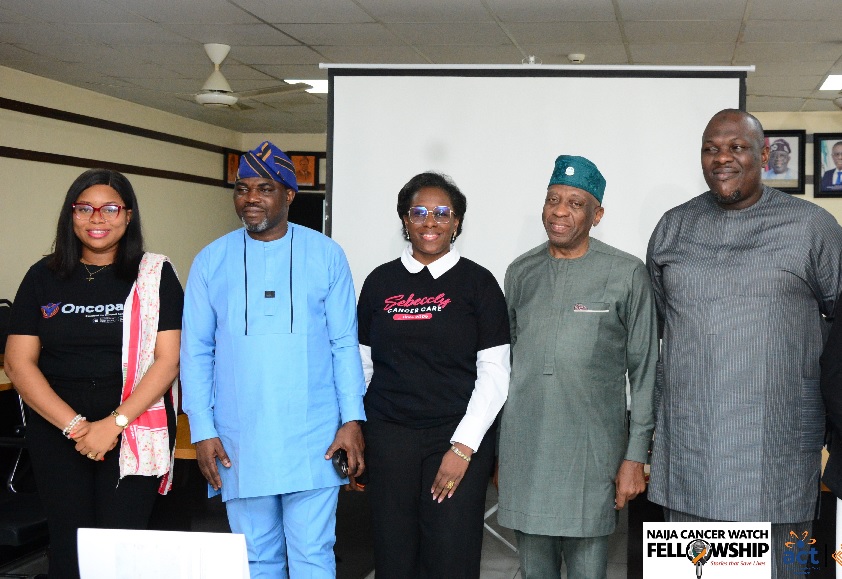
Oremosu, who spoke with Pharmanews in an exclusive interview on the sidelines of the POWER Conference, organised by Sebeccly Cancer Care at the College of Medicine, UNILAG, described One Health as an integrated, unifying approach that recognises the close connection between human health, animal health and the shared environment.
Rather than treating human medicine, veterinary medicine and environmental science as separate fields, he said, One Health brings experts from these areas together to tackle health threats at their source.
He stressed the need for the government to deploy the approach, saying it would enable the country to trace the sources of diseases and address them more effectively.
He cited the reduction of emissions from vehicles and other sources as an example, noting that this would help protect environmental health, while reducing pollutants entering water bodies would also protect the environment and have a direct impact on public health.
“This will definitely improve the lives of the people, environmental cleanliness, as well as public health. And when it comes to non-communicable diseases such as cancer, hypertension, and diabetes, government will need to provide palliatives and other forms of support to ensure that patients can bear the cost of treatment and do not abandon care,” he said.
Speaking on the persistent brain drain in the healthcare sector, the provost advised the government to look inward to identify the factors driving young professionals out of the country and address them accordingly.
While acknowledging the need to double the production of medical doctors as a means of bridging the personnel gap and improving access to healthcare, he said this would not be sufficient if the factors driving practitioners abroad were not adequately addressed.
He argued that although working abroad might not be without its challenges, the government must undertake a holistic review of practitioners’ remuneration and provide a more conducive working environment to encourage them to remain in the country.
He also called for incentives for practitioners willing to work in remote areas, where a significant proportion of the population resides.
According to him, “one of those factors is remuneration. When we look at Africa, in terms of per capita income and the salaries paid to medical personnel, Nigeria still ranks very low. It is something the government needs to address. We also need to incentivise people who are willing to work outside the major cities. The majority of our population still lives in rural areas, about 70 per cent or thereabouts. So, you have to provide incentives.
“If they cannot have all the facilities available in the big cities, at least give them good accommodation and access to the internet so that they can remain abreast of developments around the world. Such policies will help to stem the brain drain, as we normally call it.”
On how the College is preparing students and consultants to use technology and telemedicine without compromising patient safety, the professor of anatomy disclosed that it is adopting a model known as the Diaspora Bridge.
He acknowledged that telemedicine has existed before now but said the College is seeking to build a more formal structure around it through the initiative.
According to him, the Diaspora Bridge is a new initiative that connects experts abroad, particularly those of Nigerian descent, with students, consultants and physicians in Nigeria who require additional training and information on patient diagnosis and management through digital technology.
Attributing the initiative to the Minister of Education, Dr Tunji Alausa, he said its implementation was still facing some challenges.
“However, there are also some challenges,” he stated. “Our internet services are still sometimes epileptic. There are also time differences. For example, someone in the Global North, such as Canada, may be five or six hours behind Nigeria. So, some of them may just be waking up at the time when we need that information.
“These are some of the challenges that, over time, we will continue to look at and find ways to address. Of course, artificial intelligence is also helping. Sometimes, when you cannot speak to someone in real time, artificial intelligence can interface with those who need the information at that particular point in time,” he maintained.
When asked how to address the disconnect between medical schools and the healthcare system, particularly the shortage and uneven distribution of doctors, the provost identified the challenge as a disparity between the number of doctors being produced and the resources required to train them.
He said the cost of training doctors is substantial, noting that between 400 and 600 academic staff across various cadres, including professors, associate professors, senior lecturers and lecturers, are required to train medical students.
The CMUL head further explained that medical schools operate under stringent accreditation requirements and are regulated by the Medical and Dental Council of Nigeria, which ensures that prescribed standards are maintained.
“We are therefore appealing that, when political candidates want to establish a medical school in every village, it may be better to strengthen existing institutions so that they can have greater capacity. More importantly, when doctors are produced, they must be properly oriented and encouraged to remain committed to their country,” he stated.
He cited the example of Dr Omolola Salako, CEO of Sebeccly Cancer Care, who he said has remained committed to improving oncology services in the country and had devoted her life to ensuring that people living with cancer received reprieve and relief.
Oremosu acknowledged that government alone might not be able to resolve the country’s healthcare challenges, charging practitioners to take greater responsibility and consider how their commitment could contribute to producing more doctors and ensuring a more equitable distribution of healthcare professionals across the country.