In a shared commitment to lower Nigeria’s troubling maternal and infant mortality rates, health journalists and civil society organisations (CSOs) in Lagos State have solidified a unified front to demand systemic reforms and push for strict accountability within the health sector.
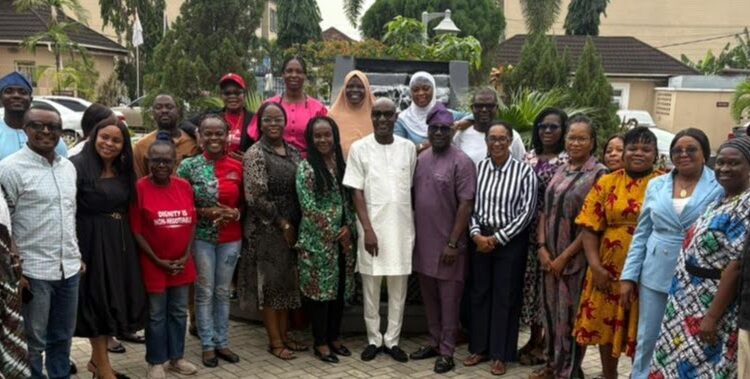
Operating under the newly formed Lagos State Unified Media Health Coalition, with the support of the International Society of Media in Public Health (ISMPH), the media professionals gathered for a crucial post-alignment meeting to harmonise their communication strategies. The coalition brings together major media blocks that previously operated independently, establishing a powerful, single voice for public health advocacy.
Speaking at the session, Vivian Ihechu, the Chairperson of the Lagos State Unified Media Health Coalition, explained that the group was born to dismantle existing professional silos. Inaugurated in February 2026, the body merges various health writers’ networks, independent media associations, and unaligned journalists under a single progressive banner.
“Instead of operating association by association, we have come together to move health reportage forward,” Ihechu stated. She emphasised that the primary mandate of the coalition is to ensure accurate, timely dissemination of lifesaving public health information while actively holding the government accountable to its healthcare promises.
Ihechu highlighted the indispensable role of media advocacy in influencing healthcare policies and tracking legislative promises. She noted that consistent journalistic scrutiny is the most reliable tool to pressure policymakers into honouring budgetary allocations and executing pledged infrastructure upgrades.
The coalition identified severe structural bottlenecks affecting maternal and newborn healthcare in Lagos, naming physical accessibility, inadequate equipping of facilities, and persistent understaffing as critical dangers. While the state government has expanded its network of Primary Health Centres (PHCs), many remote facilities fail to function optimally during obstetric emergencies.
The investigative findings of the coalition also spotlighted severe barriers regarding blood banking and healthcare financing. Expectant mothers face steep challenges with rigid blood-donation mandates during antenatal registration, forcing many to rely on commercial donors rather than voluntary structures.
Furthermore, financial exclusion remains rampant as a vast majority of vulnerable mothers lack health insurance. Despite the deployment of the state’s health insurance scheme, Ilera Eko, public awareness and enrollment rates remain low—a communication gap the coalition aims to aggressively bridge to protect families from catastrophic out-of-pocket spending.
Lending institutional backing to the media alliance, Solomon Dogo, the director of programmes for the International Society of Media and Public Health (ISMPH), praised the journalists for taking ownership of the initiative. He clarified that the coalition was entirely a media-led innovation rather than an external civil society creation.
Dogo stated that ISMPH’s expectations are strictly aligned with the coalition’s core mission to improve local health indices. “Our goal as partners is to see that no woman or child dies simply because the mother lacked the vital information on where to access treatment, routine immunisation, or emergency services,” he noted.
He disclosed further that the alliance would support efforts to bridge the gap between health services and public awareness, while also promoting accountability in the sector. Already, he noted that the government has invested in healthcare to a great extent, but mothers still lack information on access to these provisions, saying this is one of the major objectives of the group.
“We are here to support them and ensure that we provide whatever support they need. We are going to work together in the health sector to ensure that our women are not dying, our children are not dying, people are not dying because of lack of access,” Dogo added.
Adding to the call for community-level action, Kikelomo Oduyebo, the Lagos State coordinator for the Network of Reproductive Health Journalists Nigeria (NRHJN), described the media as an irreplaceable “agenda setter.” She urged mothers to prioritise orthodox maternal services at functional PHCs over local Traditional Birth Attendants (TBAs).
Oduyebo expressed deep concern over recent World Health Organisation (WHO) data revealing that 2.2 million Nigerian children remain completely unvaccinated, colloquially known as “zero-dose” children. She noted that international partners like Save the Children are actively tracking unprotected infants in high-burden local government areas like Alimosho and Ikorodu.
Sharing a perspective from her personal experience, Oduyebo revealed that she successfully completed the full five-year routine immunisation cycle for her own six-year-old daughter. She insisted that total compliance with immunisation schedules is the ultimate shield against preventable childhood killer diseases across the state.
Reinforcing the call for structural capacity, the President of the Lagos State Accountability Mechanism for Maternal, Newborn, Child, Adolescent Health and Nutrition (LASAM) and Health Editor of Vanguard Newspapers, Mr Sola Ogundipe, advocated for increased investment in health journalism.
He noted that reporters are constantly battling systemic hurdles, including sparse funding, digital misinformation, and strict barriers to public health data. Ogundipe emphasised that true empowerment for the press must look beyond financial aid to encompass specialised training, seamless data access, and modern reporting tools essential for impactful public enlightenment.
Concluding the session, Chioma Umeha, the chairman of the Lagos State Media Advocacy Working Group—registered with the CAC as the Society for Media Advocacy on Health, Nigeria (SOMAH)—reiterated the profound strength of the new synergy. She highlighted that the front merges four major bodies: SOMAH, the Health Writers’ Association of Nigeria (HEWAN), the Lagos State Accountability Mechanism for Maternal and Newborn Health (LASAM), and the NRHJN.
Umeha, concluded that pulling their distinct talents and past advocacy successes together creates an unprecedented force. Bolstered by historical support from organisations like Pathfinder International, this consolidated front is now fully equipped to alter the reproductive health trajectory of Lagos State.