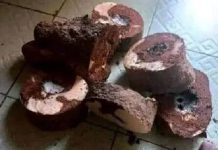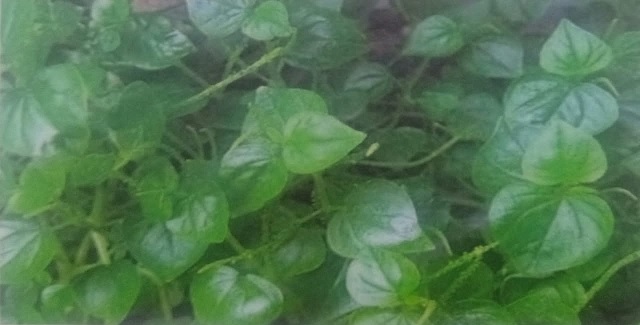
Poke root, botanically known as Phytolacca americana (family Phytolaccaceae), is a perennial flowering shrub with reddish-pink stems and blackish-purple berries. It is native to the south-western and eastern regions of the United States but is also found in parts of South America, Europe and Asia. Poke root is referred to as gurbata in Hausa, nkwu or nku in Igbo, and pokoi in Yoruba. Common names include pokeweed, pokeberry, inkberry, American nightshade, American scoke, pigeonberry, red plant, and pocan.
Constituents
Poke root contains alkaloids (phytolaccin and phytolaccanin), saponins (including phytolaccagenin), lectins, polysaccharides, phytolaccic acid, resins, tannins, mucilage, proteins, histamine and gamma-aminobutyric acid (GABA).
Preparations
Poke root is sometimes cultivated for culinary or ornamental purposes. However, it must be prepared carefully to reduce its toxicity and extract its beneficial constituents. It is available in various forms, including salves, oils, tinctures, creams, ointments, liniments, dried powder and infusions.
Pharmacological actions and medicinal uses
Poke root has been reported to possess muscle-relaxant, anti-rheumatic, emetic, purgative, antifungal, antiparasitic, antiviral, antibacterial, analgesic, anti-inflammatory, immunostimulant, antitumour, expectorant and diuretic properties. It has also been reported to reduce inflammation within the lymphatic system and promote lymphatic drainage, thereby improving inflammatory conditions affecting the upper respiratory tract.
In traditional medicine, poke root has been used to stimulate lymphatic drainage, reduce swollen glands (lymphadenopathy), and treat skin conditions such as boils and acne. It has also been applied in the management of mastitis and chronic infections. Traditionally, it has been used for swollen glands, tonsillitis, mumps, streptococcal throat infections, rheumatism and various cancers, particularly breast cancer. The dried powder may be infused with castor oil to enhance absorption when applied topically for joint pain. Likewise, topical creams or infused oils (for example, poke root blended with castor oil) are sometimes gently massaged over swollen lymph nodes.
Some authors have suggested that Esculentoside A, a compound found in poke root, may inhibit the growth of breast cancer cells, while Esculentoside H may reduce the migration of certain human cancer cells. Earlier studies have also suggested that compounds isolated from pokeweed seeds, namely americanin A and isoamericanol A, may possess anticancer activity against colon and breast cancer cells. However, these findings are based largely on laboratory and preclinical studies, and further clinical research is needed to establish their safety and effectiveness in humans.
Adverse effects/Contraindications
Poke root products are considered unsafe for children, pregnant or breastfeeding women, and individuals with autoimmune diseases or kidney disorders. Whether taken orally or applied topically, pokeweed may cause nausea, vomiting, abdominal cramps, diarrhoea, weakness, hypotension and tachycardia. In rare cases, severe poisoning from high doses of poke root may be fatal.
Economic uses and potential
Historically, poke root has been used as food, in traditional herbal medicine, and as a natural dye for fabrics and wine. The dried plant sells for approximately N6,000 per 50 g. Oil-infused dried poke root powder costs between N22,000 and N44,000, while a pack of fifty 100 mg capsules costs approximately N17,000. Plain poke root powder sells for about N4,800 per 50 g.
Reference
Healthline (2024). The Potential Benefits and Side Effects of Poke Root. Retrieved 11 July 2026 from https://www.healthline.com/health/poke-root.
By Pharm. Ngozika Okoye MSc, MPH, FPCPharm
(Nigeria Natural Medicine Development Agency)
Email: ngozikaokoye@yahoo.com