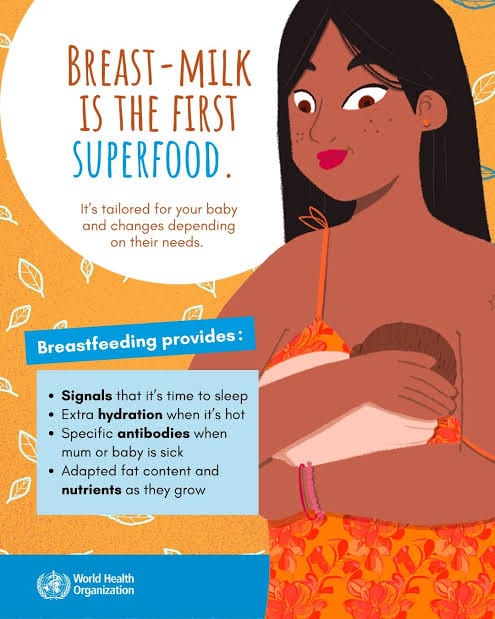
The World Health Organisation (WHO) has underscored the need for sustained investments in strengthening health systems globally, saying resilient healthcare systems are critical to achieving optimal breastfeeding and improving the health of mothers and newborns.
According to the apex health agency, stronger health systems will significantly improve breastfeeding practices by ensuring mothers have uninterrupted access to quality maternal and child health services, skilled counselling and breastfeeding support.
Highlighting progress made over the past decade, WHO noted that the global rate of exclusive breastfeeding among infants under six months increased from 37 per cent in 2012 to 47 per cent today, while continued breastfeeding up to two years rose from 38 per cent to 50 per cent. Although the gains are encouraging, the agency stressed that they remain below global targets and called on governments to strengthen health systems to accelerate progress.
WHO further stated that scaling up breastfeeding could prevent nearly 400,000 child deaths and about 140,000 maternal deaths annually.
“Every US$1 invested in breastfeeding promotion generates an estimated US$59 in economic returns through lower healthcare costs, improved cognitive development, higher educational attainment and increased lifetime earnings,” the organisation said.
Similarly, the Federal Government has launched a new initiative aimed at improving maternal and infant nutrition by promoting optimal breastfeeding and appropriate infant and young child feeding practices throughout the first 1,000 days of life, from conception until a child’s second birthday.
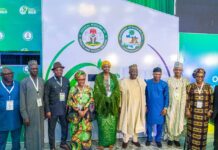
The initiative, tagged the 1,000 Days of Life Social and Behaviour Change (SBC) Campaign, was unveiled on Monday in Abuja as part of activities marking the 2026 World Breastfeeding Week, themed “Breastfeeding for a Sustainable Start in Life: Strengthen What Works.”
The campaign reinforces the Federal Government’s commitment to improving child survival, reducing malnutrition and ensuring every Nigerian child has the healthiest possible start to life.
Speaking at the launch, the Permanent Secretary of the Federal Ministry of Health and Social Welfare, Daju Kachollom S., described breastfeeding as one of the most effective, life-saving and cost-effective interventions for child survival and development.
“Every child deserves the healthiest possible start to life. Protecting the first 1,000 days is one of the smartest investments we can make for Nigeria’s future, and breastfeeding remains one of the most powerful tools to achieve that,” she said.
Citing findings from the 2023–2024 Nigeria Demographic and Health Survey (NDHS), Kachollom noted that although about 95 per cent of Nigerian mothers breastfeed, only 36 per cent initiate breastfeeding within the first hour after birth, just 29 per cent exclusively breastfeed for the first six months, while only 23 per cent continue breastfeeding up to two years—figures that fall below global recommendations.
She said the statistics underscore the urgent need to strengthen interventions during the first 1,000 days of life.
According to her, delayed initiation of breastfeeding, harmful cultural beliefs, inadequate counselling, limited workplace support and the aggressive marketing of breastmilk substitutes remain major barriers to optimal breastfeeding in Nigeria.
She said government efforts to address these challenges include strengthening the National Maternal, Infant and Young Child Nutrition Strategy, expanding the Baby-Friendly Hospital and Community Initiatives, enforcing the International Code of Marketing of Breastmilk Substitutes, building the capacity of healthcare workers and promoting breastfeeding-friendly workplaces.
Kachollom explained that the new campaign would mobilise families, communities and health workers to promote improved maternal nutrition, early initiation of breastfeeding, exclusive breastfeeding for the first six months, appropriate complementary feeding, and continued breastfeeding up to two years and beyond. It will also encourage greater utilisation of Primary Health Care Centres for maternal and child health services.
Also speaking, the Director of Nutrition at the Federal Ministry of Health and Social Welfare, Olufunmilola Adegbite, described the initiative as a strategic investment in Nigeria’s human capital, noting that improved nutrition during the first 1,000 days lays the foundation for healthier lives and national development.
Development partners, including UNICEF, reaffirmed their commitment to supporting the Federal Government through technical assistance, advocacy and community-based social and behaviour change interventions.
The Federal Ministry of Health and Social Welfare reaffirmed its commitment to working with state governments, development partners, healthcare workers, employers, communities and families to strengthen breastfeeding support systems, improve maternal and child nutrition, and ensure every Nigerian child receives the healthiest possible start during the first 1,000