.. Holds Inaugural Conference June 23-25
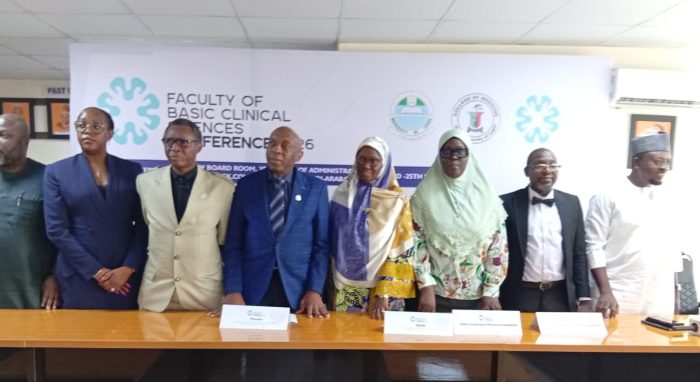
The Faculty of Basic Clinical Sciences, College of Medicine, University of Lagos (CMUL), is set to host its inaugural conference, with a strong focus on precision in diagnostics, therapeutics, and clinical insights, thereby advancing patient-centred care in Nigeria and across Africa.
The conference, with the theme “Precision in Practice: Integrating Diagnostics, Therapeutics, and Clinical Insights for Patient-Centred Care,” will hold from June 23 to 25, 2026, at the College of Medicine, UNILAG, Idi Araba, Mushin, Lagos State.
Speaking at a press conference ahead of the event, the Provost of the College, Professor Ademola Ayodele Oremosu, described the conference as a strategic milestone aimed at repositioning basic clinical sciences as a central driver of healthcare delivery, innovation, and improved patient outcomes.
He noted that the faculty, though less than a year old, represents a deliberate evolution to align medical training, research, and service delivery with the future needs of the health system.
He said “this conference will mark a significant milestone as we deliberately reposition basic medical sciences as a central driver for healthcare delivery, innovation, and patient outcomes”.
Oremosu emphasised that the theme of the conference reflects a commitment to bridging the gap between scientific discovery and clinical application, stressing that improved alignment between research, diagnostics, and treatment is critical to enhancing healthcare quality.
“We must change the statistics of healthcare delivery in Nigeria. This faculty stands at a pivotal point in helping to improve outcomes, including reducing mortality rates”, he added.
While highlighting the importance of the faculty, the provost pointed out that institutions of higher learning are primarily to generate new information, and that is research. According to him, the faculty of basic Clinical Sciences, in particular, consists of departments such as anatomic and molecular, pathology, clinical pathology, chemothology, and microbiology, noting that the reason why it’s called basic clinical is that it’s the interface between what needs to be known about the patient and how the clinician will then use all the knowledge, all right, to treat the patient.
“So this faculty is very important in generating the necessary information that will lead to better health outcomes when the patient sees the clinician in the various clinics”, the provost said.
In her remarks, the Dean of the Faculty, Professor Fatimah Abdulkareem, described the conference as the faculty’s first major public demonstration of its vision to drive innovation, impactful research, and globally relevant medical education.
She noted that the faculty established about nine months ago is intentionally designed to connect science more directly with clinical practice and patient care.
She said “this Faculty is not new in spirit; it is a formal expression of work that has been built, refined, and sustained over the years. For decades, we have trained and empowered some of Nigeria’s finest medical professionals. What this new Faculty represents is clarity of purpose, a stronger identity, and a renewed commitment to excellence.
“This conference is our first major public demonstration of that vision. It is not just about presentations, but about creating a platform where ideas translate into action, partnerships are formed, and solutions emerge”, prof. Abdulkareem said.
She added that beyond scientific sessions, the conference would include community outreach initiatives and recognition of retired and senior academics who have contributed to the growth of the college.
Speaking on the theme of the conference, the Dean said “The theme, “Precision in Practice: Integrating Diagnostics, Therapeutics, and Clinical Insights for Patient-Centered Care,” speaks to the realities of healthcare today. It challenges us to move beyond silos and ensure that research, diagnostics, and clinical decision-making are better aligned in delivering quality care to patients.
“As a Faculty, we are deliberate about building a culture of excellence, collaboration, and relevance. This conference is part of that journey. It is not just about presentations, but about creating a platform where ideas can translate into action, partnerships can be formed, and solutions can emerge”.
Also speaking, the Conference Chairman, Professor Titi Adeyemo, said the event would feature plenary sessions, panel discussions, and multidisciplinary engagements aimed at fostering collaboration across the healthcare value chain.
She added that the conference would solve the problem of precision in diagnostics and therapeutics, and ultimately enhances precise diagnosis for better patient outcomes.
“Our theme reflects a deliberate shift from isolated efforts to a more coordinated system where diagnostics, treatment, and clinical expertise work seamlessly together to improve patient outcomes,” she said.
Adeyemo noted that the conference would also showcase innovations in medical training, including the application of artificial intelligence and machine learning, as well as integrated clinical training models.
She added that the conference would serve as a platform to engage stakeholders across sectors, including pharmaceuticals, finance, diagnostics, and digital health to collectively shape the future of healthcare delivery.
In his contribution, the Executive Director of Health Business Academy for Africa (HBA), Abdulwasiu Adeniyi Busari, who is the conference partner said the conference represents a shift toward more integrated and outcome-driven healthcare systems.
“The future of healthcare will not be shaped by clinical excellence alone, but by how well we connect science, systems, and strategy,” he said.
Busari noted that HBA’s partnership would ensure that the conference delivers measurable impact, adding that follow-up engagements such as training programmes and strategic collaborations would extend its outcomes beyond the event.