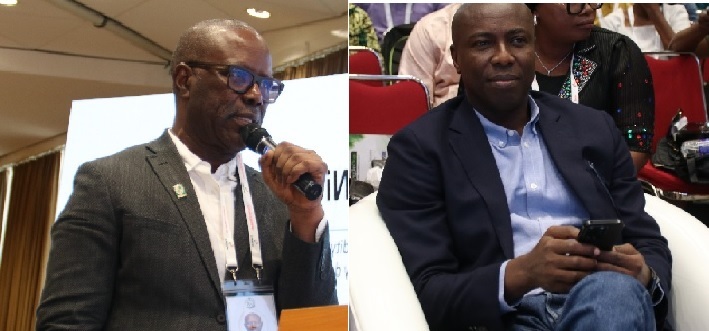
The National Chairman of the Pharmaceutical Wholesalers and Distributors Association of Nigeria (PWDAN), Pharm. Ogheneochuko Omaruaye, has warned that Nigeria’s weak and largely unregulated drug distribution system continues to expose millions of Nigerians to unsafe medicines, urging stronger collaboration among regulators, government and pharmaceutical stakeholders to protect public health.
Omaruaye gave the warning in an interview with Pharmanewsonline on the sidelines of the 45th Annual International Scientific Conference of the Association of Community Pharmacists of Nigeria (ACPN), tagged Unity 2026, following a presentation by PWDAN National Vice-Chairman, Pharm. Ukagha Igwe, on the need to strengthen Nigeria’s pharmaceutical supply chain.
According to Omaruaye, the presentation was aimed at drawing attention to a challenge that has existed for decades but continues to receive insufficient attention.
“We all know about these challenges, but we often gloss over them. Many health conditions that should be successfully treated become worse because medicines are not properly stored or do not pass through a supply chain with integrity,” he said.
He stressed that healthcare investments must go beyond hospitals and infrastructure to include a secure pharmaceutical distribution system.
“Government and the private sector are investing heavily in healthcare facilities, but equal attention must be given to medicine security. PWDAN members operate under government regulation and international standards, and we are calling for stronger collaboration to improve compliance across the sector.”
In his presentation, Igwe described Nigeria’s drug distribution system as operating on two parallel channels — a regulated system and an unregulated one that allows falsified, expired and substandard medicines to circulate.
He explained that while the regulated supply chain involves licensed manufacturers, importers, wholesalers and distributors who follow Good Distribution Practice standards before medicines reach pharmacies and patients, the unregulated channel exposes Nigerians to medicines whose quality, safety and effectiveness cannot be guaranteed.
Igwe linked the challenge to Nigeria’s poor health outcomes, noting that all stakeholders must take responsibility for improving the system.
“To be the economic powerhouse of Africa and still have one of the lowest life expectancies should concern all of us. We must take responsibility within our various areas of influence,” he said.
He disclosed that during regulatory enforcement operations in 2025, medicines worth over ₦1 trillion were seized from major open drug markets across the country, adding that many warehouses inspected failed to meet basic Good Distribution Practice requirements.
According to him, several facilities lacked proper ventilation, temperature control, shelving, humidity monitoring and pest control, conditions that could compromise medicine quality before expiry dates.
Igwe also warned that medicines are generally expected to be stored within ambient temperatures of 18°C to 25°C, stressing that prolonged exposure to higher temperatures can accelerate degradation and reduce therapeutic effectiveness.
“The patient may not know that the medicine has deteriorated. The body is often the first indication that the medicine is no longer working as expected,” he said.
Both PWDAN leaders urged community pharmacists and healthcare providers to patronise regulated wholesalers and distributors who comply with approved standards.
Omaruaye noted that although recent enforcement activities by regulatory agencies were commendable, sustained monitoring was necessary to prevent illegal operators from returning to the market.
“Enforcement must be continuous. If you want to engage in pharmaceutical wholesaling and distribution, you must do it properly. The standards are clear, and those who comply should be supported.”
He further disclosed that PWDAN would host a continental pharmaceutical wholesale and distribution forum in Lagos later this year, attracting stakeholders from across Africa to discuss medicine security and strengthen collaboration.
According to him, Nigeria’s role as a pharmaceutical hub for West and Central Africa makes reforms in its drug distribution system important beyond its borders.
“If Nigeria gets this right, Africa becomes safer. But if we fail, the consequences will affect the continent. We must build a pharmaceutical supply chain based on integrity, compliance and patient safety,” he said.