A new frontier in cancer treatment is emerging in Nigeria as the Federal Government and international nuclear medicine experts call for the adoption of radiopharmaceutical therapy and precision oncology to improve cancer outcomes and reduce some of the limitations associated with conventional treatment.
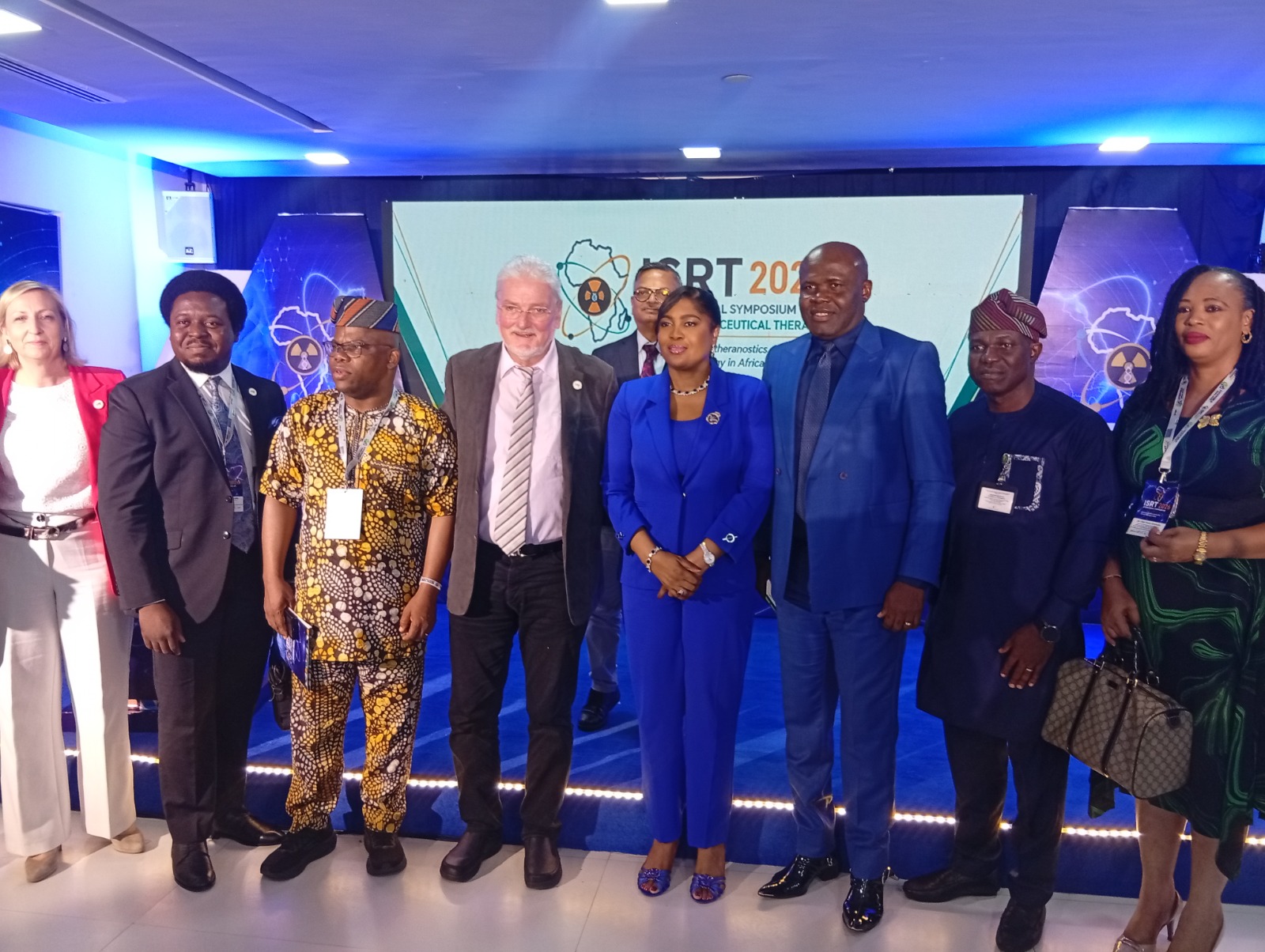
The call was made in Lagos at the International Symposium on Radiopharmaceutical Therapy (ISRT) 2026, themed “Advancing Radiotheranostics and Precision Oncology in Africa”. The symposium brought together health experts, researchers, clinicians and policymakers to explore ways of expanding access to targeted cancer diagnosis and treatment in Nigeria and across Africa.
Speaking at the opening ceremony, the Minister of State for Health and Social Welfare, Dr Iziaq Salako, represented by the Director of Research at the Nigerian Institute of Medical Research, Dr David Oladele, described radiopharmaceutical therapy as an important frontier in modern medicine, saying it could provide more targeted and effective cancer treatment.
He said the growing cancer burden in Nigeria requires the country to move beyond conventional cancer services and embrace innovation, research, skilled manpower and the infrastructure needed to deliver advanced therapies safely and sustainably.
“Radiopharmaceutical therapy represents an important frontier in modern medicine. By combining advances in nuclear medicine, molecular imaging, pharmaceutical sciences, oncology, and medicinal medicine, it offers opportunities for more targeted and effective treatment for cancer while potentially reducing some of the limitations that are associated with conventional therapies,” he said.
Salako said Nigeria needs to develop the capacity to make the emerging technology accessible to patients, stressing that the Federal Ministry of Health and Social Welfare remain committed to strengthening the health system through research-driven solutions, partnerships and an enabling environment for translating scientific discoveries into healthcare services.
He urged participants at the symposium to deepen collaboration between Nigerian and international institutions, facilitate technology transfer and develop local capacity to move radiopharmaceutical therapy “from the realm of scientific promise to something that is accessible to all Nigerians”.
The symposium also showcased the growing capacity of Loveworld Medical Centre, Lagos, to provide advanced nuclear medicine services. Organisers announced that Actinium-225 and Lutetium-177 tandem treatment would be performed during the event in what they described as a historic first for Africa.
Chairman of the Board of Loveworld Medical Centre and Executive Minister, Ministry of Healing, Health and Social Services, Dr Deola Phillips, said the objective of the technology goes beyond treating cancer to helping patients maintain their quality of life.
“At the heart of the ISRT is theragnostics, that is, bringing diagnosis and targeted treatment together to deliver a more precise and personalised care,” Phillips said.
She added that the approach focused on “preserving the quality of life, reducing unnecessary toxicity and the burden of side effects associated with conventional treatments, enabling patients to live well for as long as possible irrespective of the stage of their disease”.
Phillips disclosed that a patient with breast cancer had received free nuclear medicine treatment at the centre and experienced significant improvement after two cycles.
Also speaking at the event, the Chief Medical Director of Loveworld Medical Centre, Pastor Dr Emeka Eze, described radiopharmaceutical therapy as a major alternative to conventional cancer treatment because of its targeted approach.
“This is the future of cancer therapy. The more it’s adopted, the more affordable it will be and the beautiful thing about precision oncology is the fact that what we are dealing with is targeted care,” Eze said.
He explained that, unlike conventional chemotherapy, which can affect both cancerous and healthy rapidly dividing cells, radionuclide-based treatment is designed to target diseased cells.
“These radionuclide materials only target diseased cells. They don’t go after all rapidly dividing cells. So the side effect profile is almost zero and that’s a huge difference,” he said.
Eze, however, acknowledged that radiotheranostics remains expensive, but said foundations and other partners were helping to make treatment available to patients who could not afford it.
“There’s hope. Nigerians should know that they don’t have to go through the hell of conventional chemotherapy. They can seek an alternative and it’s not just an unproven alternative. This is medically, professionally, scientifically, should I say calibrated medical intervention but with a new set of pharmaceuticals called radiopharmaceuticals,” he said.
The Head of Nuclear Medicine and Director of Operations at Loveworld Medical Centre, Dr Marsha Maharaj, explained that theragnostics combines diagnosis and treatment by identifying a disease pathway and subsequently targeting the same pathway therapeutically.
“What we see, we can treat. That’s a beautiful link,” Maharaj said.
She explained that while chemotherapy could affect normal cells alongside cancer cells, theragnostics works by binding to receptors expressed by a tumour and targeting the cancer cells, thereby minimising damage to surrounding healthy tissue.
According to her, the approach had already produced encouraging outcomes in patients with advanced cancers.
“From stage four, we were able to bring patients into a curative state, and that’s published,” she said, adding that the treatment had also improved patients’ quality of life.
Maharaj disclosed that Loveworld Medical Centre had treated patients with several forms of cancer using the technology, including breast, colorectal, sarcoma, prostate and lung cancers, while treatment capability for pancreatic cancer was also being developed.
She said the symposium was partly designed to equip more doctors with knowledge about the technology and help them understand when patients should or should not be selected for such treatment.
“Our symposium is meant to also train doctors. More importantly, we want every doctor to know how to handle a patient, how to manage, when to select, when not to select,” she said.
Also speaking at the event, the Director of the Chris Oyakhilome Foundation International (COFI), Pastor Arinze Emmanuels, said the organisation was supporting the development of the radiotheranostic ecosystem through infrastructure, partnerships, research, professional training and patient access.
He said COFI’s intervention would cover professional training, infrastructure, research, access to radiopharmaceuticals, patient advocacy and partnerships among healthcare institutions, governments and researchers.
Emmanuels said Africa needed to move from being primarily a recipient of medical solutions to developing the capacity to create and sustain its own healthcare innovations.
The President of the World Federation of Nuclear Medicine and Molecular Biology, Dr Savas Frangos, in a goodwill message, described the symposium as an important example of international collaboration to strengthen nuclear medicine in Africa.
He said the World Federation, in collaboration with the International Atomic Energy Agency, the African Association of Nuclear Medicine and the World Association of Radiopharmaceutical and Molecular Therapy, was working towards identifying Africa’s strengths and challenges in nuclear medicine, with a view to developing sustainable strategies for its growth.