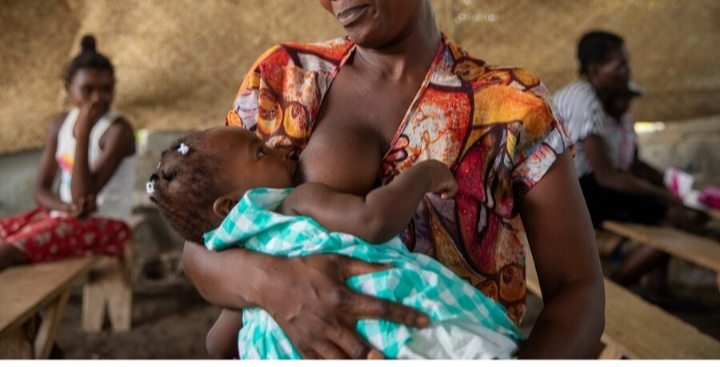
The inspiration for this title came from an insightful paper titled “Breastfeeding is a Public Health Priority: Why Are we So Badat If? “The question is thought-provoking. Medical science, global regulatory bodies, and intuitive maternal. instincts universally agree that breast milk is the absolute gold standard of infant nutrition. Yet many countries, including Nigeria, struggle with optimal breastfeeding practices; a glaring disparity exists between theory and practice.
If we know breastfeeding. is good, why are we still bad at supporting it? The issue is not whether mothers know breastfeeding is important (research has shown that they do), but whether our health systems, workplaces, families and communities make optimal breastfeeding possible.
Breast milk: A super food Breastfeeding is a global health priority and a public health Intervention. The World Health Organisation (WHO) recommends exclusive breastfeeding for the first six months of life, followed by continued breastfeeding alongside complementary foods until two years or beyond. Yet fewer than half of infants younger than six months worldwide are exclusively breastfed.
This matters because breastfeeding is one of the most effective ways to reduce child mortality. Often referred to as a baby’s “first vaccine,” breast milk provide complete nutrition while delivering antibodies and immune factors that protect infants against diarrhoeal diseases, respiratory infections and many other childhood illnesses.
Its benefits extend beyond infancy. Research consistently shows that children who are breastfed are less likely to become overweight, develop diabetes or suffer from several chronic diseases later in life. They also tend to perform better on intelligence and cognitive assessments. Mothers benefit too, with reduced risks of breast cancer, ovarian cancer, cardiovascular disease and type 2 diabetes. Breastfeeding is not just about feeding babies but building healthier populations.
Breastfeeding goes above and beyond mother and child
The impact of breastfeeding extends beyond the benefit for mother and child. Families save money by reducing expenditure on infant formula, feeding equipment and healthcare costs associated with childhood illnesses. Children who fall sick less frequently mean fewer hospital visits, fewer missed workdays for parents and less financial strain.
At the national level. breastfeeding contributes to stronger economies. Global estimatessuggest that inadequate breastfeeding results ng results in approximately US$300 billion in economic losses every year through increased healthcare costs, reduced productivity and poorer cognitive outcomes. Conversely, health economics show that every $1 invested in promoting and protecting breastfeeding generates an impressive $35 economic return.
If breastfeeding is this good, why are we so bad at it in Nigeria?
A 2025 article by UNICEF Nigeria reported that despite these enormous benefits, breastfeeding in Nigeria is largely under supported. While over 90p 90 percent of mothers breastfeed, data from the National Demographic and Health Survey (NDHS 2023-24) reveals a downward trend when it comes to optimal breastfeeding. Early breastfeeding initiation has declined from 42 per cent in 2018 to 36 per cent in 2023, while rates of exclusive breastfeeding rates have stagnated at 29 per cent, Additionally, only 23 percent of babies are breastfed up to the recommended two years of age. Only 12 of the 36+1 states have paid maternity leave for up to six months.
Successful breastfeeding is majorly shaped by society, but responsibility is placed solely on mothers while the surrounding systems remain unsupportive. A mother may leave hospital with good intentions but need to return to work after only a few weeks, without access to paid maternity leave, breastfeeding breaks or a private space to expressmilk.She
may receive conflicting advice from family members, lack access to trained lactation support when difficulties arise or encounter aggressive marketing of breast milk substitutes.
Cultural attitudes can become barriers. In many communities, breastfeeding in public is stigmatised and myth surrounding breast milk, maternal diet or milk insufficiency discourage exclusive breastfeeding. Mothers are expected to succeed in environments that make success difficult.
What successful countries are doing differently
To understand how to reverse these suboptimal trends, we must evaluate nations that have successfully engineered high breastfeeding rates. Countries with higher breastfeeding rates rarely achieve success by simply telling mothers that “breast milk is best.”; they invest in systems.
The stark contrast between the United Kingdom and Scandinavian. nations offers valuable structural insights. In the UK, historical data highlighted that only 17 pe cent of infants were exclusively breastfed at three months of age. This underperformance stands in sharp contrast to nations like Norway, where approximately 70 percent of infants are exclusively breastfed at three months, and Sweden, which maintains a 60 per cent EBF rate at four months of age.
Thus, it is not surprising that Norway and Sweden consistently report some of the highest breastfeeding rates globally. Their success reflects comprehensive maternity protection, generous parental leat leave policies, skilled postnatal care and strong community support. Nation with exemplary breastfeeding metrics achieve them by institutionalising comprehensive public health policies.
Many countries have implemented the WHO/UNICEF Baby-Friendly Hospital Initiative, ensuring mothers receive immediate skin-to-skin contact after delivery, early breastfeeding support and protection from unnecessary formula promotion,
Canada, New Zealand and several European countries also invest in community based lactation consultants, breastfeeding peer-support groups and public education. campaigns that normalise breastfeeding. One lesson emerging from global evidence is the importance of continuity of care. Support should begin during pregnancy, continue throughout childbirth and extend well into the months after delivery. it should follow her home. Healthcare workers should educate mothers on practical skills such as positioning, latching. recognising adequate milk intake and managing common. breastfeeding challenges. Support cannot end when the mother leaves the maternity ward;
What Nigeria must do better In Nigeria, the public health stakes are higher due to the burden of childhood malnutrition. and infant mortality. Nigeria has taken structured steps in the past. with the Baby-Friendly Hospital Initiative (BFHI) in 1992, the National Breastfeeding Policy in 1998, and relevant policies. However, these are not enough. We need a multi-sectoral strategy.
- Domestication and enforcement of maternity protections: The Federal Ministry of Health and social partners must aggressively advocate for all 36 states to implement the recommended six months of fully paid maternity leave. Workplaces must be legally mandated to provide clean, private lactation spaces and flexible hours for returning mothers.
- Revitalising primary healthcare (PHC) and community networks: Lactation support must be decentralised. Training and deploying community health extension. workers (CHEWs) and peer support groups can provide mothers with practical, hands-on guidance to overcome fears of pain and inadequate milk supply.
- 3. Strict enforcement of the international code of marketing of breast-milk substitutes: The National Agency for Food and Drug Administration and Control (NAFDAC) must tighten regulatory oversight on the inappropriate marketing of commercial formulas that mislead mothers and undermine breastfeeding duration.
- Cultural realignment and mindset shifts: Public health campaigns must engage religious leaders, community elders, and employers to dismantle cultural myths and misinformation. Normalizing breastfeeding across all social spaces is vital to ensuring that every child receives the healthiest start in life
Pharmacists, who are among the most accessible healthcare providers, can play an even greater role in counselling mothers, dispelling myths and identifying breastfeeding problems early.
Are we willing to build societies that make breastfeeding possible? If we believe every child deserves the healthiest possible start in life, then supporting breastfeeding cannot remain the responsibility. of mothers alone but must become the responsibility of all of us.
By Pharm Onyinye Chiekwe PharmD, MSc PH