– Says medicines are strategic national assets

The National Chairman of the Association of Industrial Pharmacists of Nigeria (NAIP), Pharm. (Sir) Bankole Aminu Ezebuilo, has called for urgent policy reforms to strengthen Nigeria’s pharmaceutical industry, warning that the country’s heavy dependence on imported medicines poses a serious threat to national health and economic security.
Speaking at the NAIP 2026 Economic Outlook and CEOs Forum held on 4 February, under the theme “Reimagining Nigeria’s Health Security: Local Production, Economic Sovereignty and Strategic Partnerships,” Ezebuilo said medicines, vaccines, diagnostics, surgical consumables and other healthcare inputs are no longer ordinary commodities, but strategic national assets that must be produced locally.
“Lessons from the COVID-19 pandemic, supply chain disruptions and currency volatility show that no serious nation outsources its survival plan,” Ezebuilo said. “Nigeria must urgently prioritise local production to secure its health system and economic sovereignty.”
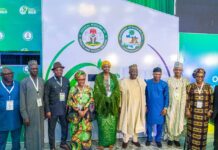
The forum attracted an extraordinary convergence of traditional authority, professional leadership and regulatory power, underscoring the national importance of the issues under discussion. In attendance were revered royal fathers, including the Emir of Kano, Mallam Muhammadu Sanusi II; the Obi of Onitsha, Igwe Alfred Nnaemeka Achebe; and the Ezechuamugha and Igwe of Ogidi Kingdom, Pharm. Alex Onyido. Also present was a former Minister of Health and Chairman of Our Lord Pharmaceuticals, Prince Julius Adelusi-Adeluyi.
The gathering further brought together the College of Past Presidents of the Pharmaceutical Society of Nigeria (PSN); senior industry leaders, including Pharm. Sam Ohuabunwa, Pharm. Anthony Akhimien, Pharm. Azubuike Okwor, Pharm. Olumide Akintayo, Pharm. U. N. O. Uwaga; and the President of PSN, Pharm. Tanko Ayuba.
Regulators also were strongly represented, with the Director-General of NAFDAC, Prof. Mojisola Adeyeye, and the Registrar of the Pharmacy Council of Nigeria, Pharm. Ibrahim Baba Shehu, in attendance. Past chairmen of NAIP, including Pharm. Ade Popoola, Pharm. Sola Solarin, Pharm. Lolu Ojo, Pharm. Gbenga Folabi, Pharm. I. G. Anukwu and Pharm. Ken Onuegbu, alongside chief executives of pharmaceutical companies and development partners, were also present.
Ezebuilo emphasised that the presence of royal fathers lent credibility and moral authority to the call for reform, noting that in Nigeria, the backing of elders provides stability and continuity beyond political cycles. He remarked that once the Khalifa, the Agbogidi (Obi of Onitsha), the Ooni of Ife and the Ezechuamugha of Ogidi Kingdom confirmed their attendance, confidence in the success of the engagement was assured. According to him, when elders stand with an initiative, the journey does not only begin well, it ends well.
He urged the Federal Government to designate pharmaceutical and medical manufacturing as critical national infrastructure and to provide targeted incentives, including tax relief, import duty waivers on inputs, subsidised energy and concessional financing. He also called for the strategic use of government procurement to guarantee demand for locally produced medicines, stronger quality regulation, prompt payment to suppliers and the integration of health manufacturing into national industrial and economic plans.
Beyond government action, Ezebuilo appealed to commercial banks, development finance institutions, pension fund administrators and private equity firms to treat the pharmaceutical sector as a bankable, long-term industrial priority, stressing the need for patient capital and long-tenor financing to de-risk investments across the pharmaceutical value chain.
He further advocated backward integration into raw materials, packaging and research; increased investment in skills development, biotechnology and regulatory capacity; as well as expanded regional market access through ECOWAS and the African Continental Free Trade Area (AfCFTA). He stressed that partnerships must prioritise technology transfer, local manufacturing and workforce development if Nigeria is to compete sustainably.
Ezebuilo also highlighted NAIP’s efforts to strengthen industry capacity through its zonal structures and the NAIP Academy, a youth training initiative developed in partnership with regulatory and training institutions to equip the next generation of industrial pharmacists with technical and leadership skills.
He announced that NAIP’s 2026 Annual National Conference will hold in Kwara State in May under the theme “Collaboration and Innovation to Build Local Solutions for the Future of the Nigerian Pharma Industry.”
Ezebuilo expressed appreciation to stakeholders who honoured the forum with their presence, including the President of FEMPIA, Dr Okey Akpa, and the Chairman of the Board of Fellows, Pharm. Uche Apakama, noting that their leadership and institutional memory enriched the quality of deliberations. He also offered personal gratitude to his wife, whom he described as his friend, business partner and support system, acknowledging her role in sustaining both family and professional responsibilities.
Concluding, Ezebuilo said that while Nigeria does not lack talent, entrepreneurs, professionals, market demand or opportunity, stronger alignment of policy, investment, leadership and purpose is essential. “This forum must deliver decisions and implementation, not just speeches,” he said, warning that Nigeria’s health security and economic resilience depend on swift and decisive action.