-Over 1m sachets recycled into 1,013 school items
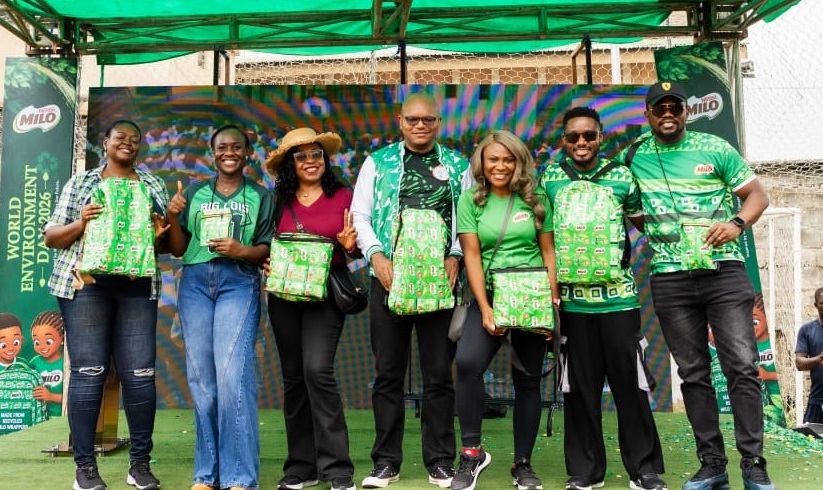
“I never knew that the MILO sachets we throw away could be turned into school bags and pencil cases,” exclaimed Treasure John, an eight-year-old recycling champion.
For the Basic 5 pupil of Local Government Primary School in Lagos State, the discovery changed how she viewed the empty sachets her family discarded after drinking MILO. Instead of seeing them as rubbish, she began collecting them and comparing her contributions with those of her friends.
“If I could make something else from the sachets, I would make raincoats! They would be useful when it rains and could help keep me, my family and my friends dry,” she said enthusiastically.
Young John is one of more than 60,000 pupils who participated in the MILO Elevate Recycling Initiative, which reached 100 schools in Lagos State. The children collected 1,036,650 empty MILO sachets, which were transformed into 1,013 school items, including school bags, lunch bags and pencil cases. The initiative aims to inculcate responsible waste management habits among children.
Nigeria’s growing waste management burden
The World Bank’s What a Waste 3.0 report puts Nigeria’s annual municipal solid waste generation at between 32 million and 42 million tonnes. Globally, waste volumes are projected to increase by 50 per cent by 2050 if current trends persist, underscoring the need for more effective waste management systems.
The National Environmental Standards and Regulations Enforcement Agency (NESREA) has reportedly estimated that only 20 to 30 per cent of Nigeria’s municipal solid waste is formally collected, while recent Lagos State waste audits indicate daily generation of between 15,000 and 17,000 metric tonnes.
These figures highlight the need for coordinated action involving government, manufacturers, communities, schools and individuals. Beyond improving waste collection and disposal infrastructure, public education, recycling, and behavioural change are key to addressing the problem.
For children such as John, the lesson begins with something as simple as keeping an empty sachet off the floor. If reinforced consistently, such habits could influence how they manage waste at home and in their communities.
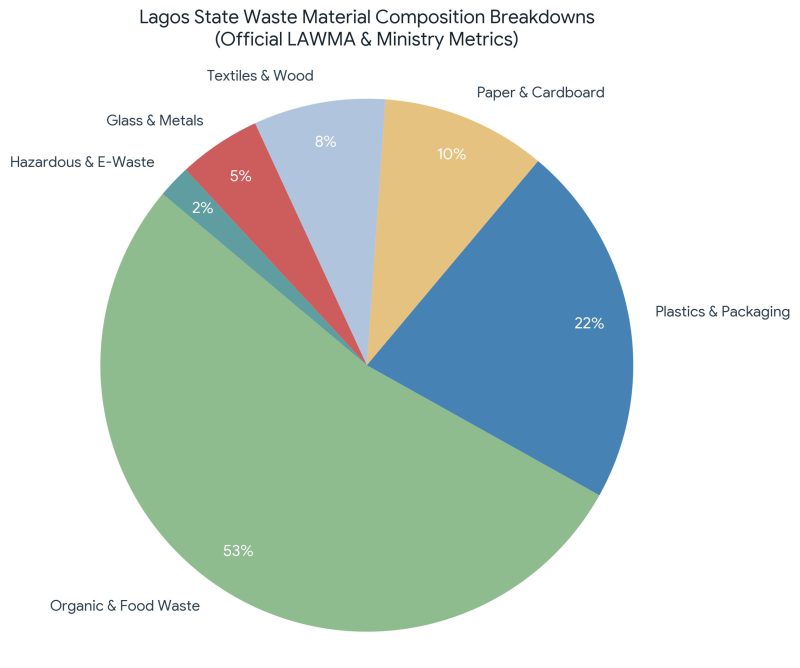
Hidden health cost of waste mismanagement
Improper waste disposal contributes to air, water and soil pollution, creates breeding grounds for disease vectors and exposes people to potentially hazardous substances. The World Health Organisation (WHO) warns that unsafe waste treatment practices, including open burning, can harm waste workers and neighbouring communities. Poor waste collection can also contribute to environmental pollution, while blocked drains can worsen flooding and create conditions favourable to the spread of certain diseases.
In an interview with Pharmanews, Philip Jakpor, executive director of Renevlyn Development Initiative (RDI), highlighted the challenges associated with multi-layer packaging (MLP), a category that includes some flexible plastic wrappers.
He explained that such packaging combines materials such as plastics, aluminium foil and chemical adhesives, making it difficult to separate and recycle through conventional processes. When improperly discarded, the wrappers can persist in the environment; burning them can also release harmful emissions.
According to Jakpor, “The environmental consequences of inadequate waste collection and disposal are the hazardous discharge and foul air that translates to respiratory illnesses where the dumps are or where burning of waste occurs, water-borne infections around dump sites where leaching occurs and occupational hazards that the informal waste pickers are exposed to.”
Regarding multi-layer packaging, he added, “They usually end up in landfills or water bodies because they are hard to recycle. Since they are mostly non-biodegradable, they constitute long-term waste problems in the environment.”
His observations underline why responsible disposal and effective recovery systems are important, particularly for packaging that is difficult to recycle.
From discarded sachets to school essentials
Nestlé Nigeria introduced the MILO Elevate Recycling Initiative as part of its World Environment Day 2026 activities to sensitise schoolchildren to responsible waste management.
In an interview with Pharmanews, Gilbert Tweneboah-Koduah, category manager, MILO, Nestlé Nigeria Plc, said the programme exposed children to sustainability goals, including responsible consumption and production, climate action, and the protection of life below water and on land. It also encouraged them to understand that being a champion extends beyond the sports field to taking responsibility for the environment.
Explaining the collection process, Tweneboah-Koduah said the initiative began on 1 April 2026, with collection boxes placed in the 100 participating schools. Pupils deposited their used MILO sachets in the boxes, while teachers documented and tracked submissions to verify contributions. The three pupils with the highest verified submissions were recognised and rewarded.
At the end of the collection period, the wrappers were retrieved, sorted and counted against the recorded submissions before being passed on for transformation.
Through a partnership with Rotaract, the collected sachets were converted into school bags, lunch bags and pencil cases. Tweneboah-Koduah explained that transforming flexible packaging into durable products required specialised handling and technical expertise.
Nestlé’s role, he said, was to establish an effective collection and accountability process while working with a partner equipped to manage the transformation.
“The result was 1,036,650 wrappers collected by more than 60,000 pupils and transformed into 1,013 useful school items,” he said, adding that the achievement gave discarded wrappers a second life as useful products.
For little John, seeing the transformation made her happy because the materials she collected could contribute to something useful. Her experience illustrates how practical activities can make environmental education more meaningful by allowing children to see the results of their efforts.
However, the initiative’s longer-term environmental value will depend not only on the number of wrappers collected but also on effective material recovery, the continued use of the finished products and whether pupils maintain responsible disposal habits.
Turning recycling competition into enduring habit
Sustaining the lessons beyond the competition remains an important consideration. Asked how Nestlé intends to encourage lasting habits, Tweneboah-Koduah said the initiative was part of the company’s broader efforts to promote hygiene, safety and responsible waste disposal.
“For us at Nestlé Nigeria, sustainability cannot be limited to a competition or a single World Environment Day celebration. The MILO Recycling Initiative is part of our broader effort to encourage lasting habits around hygiene, safety and responsible waste disposal among children,” he said.
He identified MILO Building Champ (MBC), which runs for much of the year, as another programme supporting this effort. Through sporting and everyday activities, the programme encourages children to stay active while reinforcing lessons about hygiene, safety and responsible behaviour. During sampling activities, for instance, pupils are encouraged to dispose of their cups properly.
Tweneboah-Koduah added that distributing the recycled school items helped demonstrate the practical benefits of repurposing waste. The company had also received feedback from pupils who said they were encouraging parents, friends and relatives to dispose of sachets and other waste properly.
Such accounts suggest that the lessons may be reaching beyond the classroom, although follow-up with pupils, parents and teachers would be needed to establish whether these changes persist over time.
Regarding expansion beyond Lagos, Tweneboah-Koduah said the initiative had established a foundation from which the company could learn and build. Its focus, he explained, was to strengthen the model and explore opportunities to reach more schools and communities while ensuring meaningful engagement and impact.
For recycling champion John, the lesson is already taking shape. She now sees possibilities in discarded sachets and wants her family and friends to dispose of waste responsibly. “I tell them not to throw rubbish on the floor because it can block the drains and cause flooding. I also show them my pencil case made from recycled MILO sachets and tell them that sachets can be turned into useful things instead of just being thrown away,” she said.