The World Health Organisation (WHO) has called for stronger international partnerships to support Nigeria’s health sector reforms, emergency preparedness and efforts to tackle antimicrobial resistance.
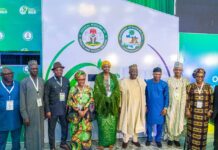
The call was made at the second Health Diplomacy Dialogue convened by WHO in Nigeria, which brought together more than 60 representatives from 35 diplomatic missions, United Nations agencies, development partners and media organisations in Abuja on October 20.
The dialogue examined ways to align Nigeria’s health priorities with regional and global decision-making, strengthen sustainable health financing and improve cooperation on public health challenges.
Speaking at the meeting, WHO Representative in Nigeria, Dr Pavel Ursu, said health diplomacy should translate discussions into practical actions that improve health outcomes.
He noted that diplomatic missions could help mobilise resources, strengthen partnerships and ensure Nigeria’s health priorities receive greater attention in international discussions.
The meeting also highlighted Nigeria’s efforts to strengthen its health system through the Nigeria Health Sector Renewal Investment Initiative and the Sector-Wide Approach, which aim to improve coordination and align investments with national priorities.
According to WHO, the organisation has supported Nigeria’s disease surveillance, outbreak preparedness, immunisation programmes, laboratory systems and emergency response over the past 12 months. It is also providing technical assistance to national authorities as part of Ebola virus disease preparedness, with personal protective equipment and laboratory reagents expected to arrive in the country.
Diplomatic representatives stressed the need for sustained investment in resilient health systems. Maricel Romero, honorary consul of Colombia to Nigeria, said the COVID-19 pandemic demonstrated the importance of countries working together to address shared health threats.
Similarly, Massimo De Luca, head of cooperation at the European Union Delegation to Nigeria, called for continued investment in immunisation, water and sanitation, and health system strengthening.
Antimicrobial resistance (AMR) was also a major focus of the dialogue. Estimates cited at the meeting indicate that AMR is associated with more than one million deaths annually in Africa, while global projections suggest it could contribute to as many as 39 million deaths between 2025 and 2050 without effective action.
Nigeria is scheduled to host the fifth High-Level Ministerial Conference on Antimicrobial Resistance in Abuja from December 6 to 8, 2026. The conference is expected to bring together political leaders, researchers, development partners and other stakeholders to advance global action against the threat.
Participants at the dialogue called for stronger political and financial support ahead of the conference, including backing for the proposed Abuja Compact.
WHO said it would continue to use the Health Diplomacy Dialogue to strengthen cooperation between Nigeria’s health sector and international partners, ensuring that global support aligns with national priorities and contributes to better health outcomes