Pharmanews, the foremost West African health journal introduces its official Android application-Pharmanews App. The mobile application, which can be downloaded from the Google Play Store, is designed to keep readers abreast of latest updates in the health sector.
It affords readers the opportunity to constantly follow up on their favourite columns as well as save contents for as long as they wish.
To get the app, go to Google Play Store, click the search button and type: “Pharmanews App”. Click to download and install it on your Android device.
Asthma awareness is crucial when living in the GCC, especially when we live in a climate which has significant environmental triggers such as sandstorms. Several studies conducted in the Arabian Peninsula countries with a high rate of sandstorms, confirmed the increased prevalence of asthma in those countries.[1] It was also reported that sandstorms frequently cause adverse health effects on the respiratory function and just 15 minutes exposure to smaller-size sandstorm dust particles have a greater potential of asthma [2]. Asthma requires long term treatment; however can be managed if precaution is taken to reduce the severity of the symptoms.
Knowing how to control your Asthma during sandstorms, can provide Asthmatics with a better quality of life. Mohamed Samir, Regional Medical Director at Mundipharma (www.Mundipharma.ae) shares with us six health and safety tips to survive this sandstorm season:
Stay Indoors – Stay indoors as much as possible during sandstorms and keep windows and doors closed. Reduce exposure to common allergens during the sandstorms that may provoke asthmatic attacks.
Check weather and pollution forecasts – It is recommended that Asthmatics regularly check daily weather and air quality reports, especially during the sandstorm season. Tuning in to your local weather station can help you plan ahead and manage daily activities.
Clean air conditioner vents– Living in a hot climate country means we are indoors more often and use air-conditioning regularly. Dust collection in air conditioning vents can be a harmful trigger if not cleaned and checked regularly. Air conditioning units need to regularly maintained and cleaned every six months to avoid accumulation of dust in ducts and vents.
Use an air-purifier – Sandstorms affect allergy and asthma sufferers the most. An air purifier can help reduce indoor pollution and help you breathe better. Although air purifiers are by no means a cure for asthma, they help to remove the allergens and particles which can trigger symptoms by directing air through a filter. If you are asthmatic, an air purifier can help you breathe more easily by improving indoor air quality.
Consider wearing a face mask if your outdoors – Consider wearing a medical face mask or use a wet towel during sandstorms to prevent inhaling the dust particles. Do not forget to regularly change face masks.
Stay hydrated- Fluids, especially water are just as important during sandstorms. Remember to keep hydrated or even spray water on face and eyes if you come in direct contact with dust.
[1] D’Amato et al. World Allergy Organization Journal (2015) 8:25
[2] Gupta P, Singh S, Kumar S, Choudhary M, Singh V. Effect of dust aerosol in patients with asthma. J Asthma. 2012;49(2):134-138.
Distributed by APO on behalf of Mundipharma Pte Ltd.
Patrycja Czoch, Mundipharma Corporate Communications Manager Middle East & Africa Region Tel: + 97 1 4 439 87 77 Mob: +97 1 50 85 12 700 Patrycja.Czoch@mundipharma.ae
By Mohamed Samir, Regional Medical Director, Mundipharma, Middle East & Africa Region
About Mundipharma: The Mundipharma (www.Mundipharma.ae) network of independent associated companies consists of privately owned companies and joint ventures covering the world’s pharmaceutical markets. These companies are committed to bringing to patients the benefits of pioneering treatment options in the core therapy areas of oncology, pain, respiratory, ophthalmology consumer healthcare and rheumatoid arthritis.
The Chairman of the National Association of Nigerian Nurses and Midwives (NANNM) Edo State Chapter, Mrs Catherine Eseine, has expressed her support for online degree programme in nursing, stating that it will be a great avenue for nurses to upgrade their knowledge in the profession.
Mrs Esseine, who made the remark during an exclusive chat with Pharmanewonline.com, however noted that such online institutions must be recognised by the Nigeria University Commission (NUC) before awarding certificates to nurses.
According to her: “The ongoing campaign for nurses to upgrade from diploma holders to degree holders is a welcome development and supported by NANNM. Online nursing programme is acceptable if it backed-up by necessary recognition by the Nigeria University Commission (NUC).
“All institutions which run nursing programmes must be accredited by NUC and Nursing and Midwifery Council of Nigeria (NMCN) before they are acceptable in the Country”.
For there to be a significant reduction in the alarming rate of maternal mortality in the country, the Federal government of Nigeria has been advised to extend the National Health Insurance Scheme (NHIS) to the informal sector and poor people in rural communities.
Governor Nasir El-Rufai of Kaduna State, who gave the advice, believes that the extension will lower the rate of maternal and child mortality.He explained that a partnership should be established between the Federal and State Governments.
According to a Channels TV report, the Governor spoke in Kaduna recently during the North-West Zonal launching of ‘Saving One Million Lives Programme for Results’ organised by the Federal Ministry of Health.
The Kaduna State Governor warned that if drastic interventions were not put in place to save the lives of pregnant women and children across Nigeria, the maternal and infant mortality rate would go higher.
“Maternal deaths in Nigeria have been described in many quarters as unacceptably high. Presently, Nigeria accounts for 14 per cent of maternal deaths in the world, a figure experts say is totally unacceptable if the country must make any meaningful progress”.
Delivering his keynote address at the occasion, the Minister of Health, Professor Isaac Adewole, explained that the programme was being funded from a $500 million credit that had been negotiated by the Federal Government with World Bank.
Professor Adewole stated that the fund was being disbursed to the states as an intervention in key areas such as maternal, new born and child health, improving child nutrition, immunisation, malaria control and the elimination of mother to child HIV transmission.
He said that the programme would be implemented by the States’ Ministries of Health based on an agreed plan of action.
Stakeholders at the meeting including the host Governor and Commissioner for Health in Jigawa State, Abbah Umar, highlighted some of the commitment by the state governments towards achieving the lowest minimum rate of maternal and child mortality in the rural areas.
The ‘Saving One Million Lives Programme for Results’ initiative is a Federal Government–led intervention effort focused at improving maternal and child health through a result based partnership with States’ Ministries of health.
As part of efforts to curb the menace of illicit drug use and misuse in the society, road transport workers, market women, parents, guardians, health workers, as well as students, have been advised to assist the government in sensitising people around them about the dangers of illicit drug use.
The call was recently made by Dr (Mrs) Moyosore Adejumo, director of pharmaceutical services, Lagos State Ministry of Health, while speaking at this year’s Association of Lady Pharmacists (ALPs), Lagos State Chapter Day, which was held at Mushin Local Government Secretariat, Palm Avenue, Mushin, Lagos.
A cross section of ALPs members, with representatives of secondary schools in Mushin LGA during the event.
Adejumo, who was represented by Pharm. (Mrs) Adenike Obileye, explained that drugs have the power both to improve and to damage health, depending on the type of drug used, the quantity consumed and the purpose for which it is taken.
She added that a drug is abused when it is not medically necessary or when used in excess of recommended dose.
According to her, drugs commonly abused include Amphetamine–type stimulants, cannabis, coca/cocaine, hallucinogens, opiates and hypnotic sedatives, all of which have immediate physical effects which might feel pleasant, but could turn one into an addict.
“In Nigeria, addicts have coded names for some of these drugs that are abused, including sepe, igbo, Alomo, eja, ogidiga and so on. Drugs can also severely hinder physiological and emotional development, particularly in young people who are mostly vulnerable to drug abuse.
“Majority of drug abuse starts in Adolescents, especially for the “gate way” drugs, alcohol and cigarettes which are usually the first substances used before other drugs are tried out,” Adejumo said.
Earlier in her welcome address at the event, Pharm. (Mrs) Modupe Ologunagba, chairperson of ALPs, Lagos, hinted that the reason for the annual “ALPs Day” was to create additional avenue for acquainting the public with the vital roles of lady pharmacists in health care delivery and social developmental work, adding that the group was delighted to celebrate this year’s edition with the people at the grassroots, especially the students of Mushin Local Government.
Ologunagba also noted that the reason for opting to speak with road transport workers, market women, parents, guardians as well as students of Mushin Community was based on ALPs concern and desire for improvement in the country’s health indices, especially as regards drug abuse, misuse and self-medication, which are common among the grassroots dwellers.
“We are celebrating ALPS Day which is a sub-section of the PSN Pharmacy Week that is on-going today in Mushin Community. We chose the theme, “Role of Lady Pharmacists in Curbing Drug Abuse and Misuse” because illicit use of drugs is a global issue, most especially now in Nigeria with the current economic recession.
“To tackle the challenge of drug abuse, awareness is key and that is why we are embarking on this awareness programme. Education is also important, but most importantly, the drug laws have to be more stringent while organisations that are saddled with the responsibility should be up and doing,” she said.
Researchers have developed ‘edible ginger-derived nanoparticles’ that they believe may be good medicine for Crohn’s disease and ulcerative colitis, the two main forms of inflammatory bowel disease. The particles may also help fight cancer linked to colitis, according to experiments in mice.
A recent study by researchers at the Atlanta Veterans Affairs Medical Center took them to a not-so-likely destination: local farmers markets. They went in search of fresh ginger root.
Back at the lab, the scientists turned the ginger into what they are calling GDNPs, or ginger-derived nanoparticles. The process started simply enough, with your basic kitchen blender. But then it involved super-high-speed centrifuging and ultrasonic dispersion of the ginger juice, to break it up into single pellets.
The research team, led by Dr. Didier Merlin with VA and the Institute for Biomedical Sciences at Georgia State University, believes the particles may be good medicine for Crohn’s disease and ulcerative colitis, the two main forms of inflammatory bowel disease (IBD). The particles may also help fight cancer linked to colitis, the scientists believe.
.
They report their findings, based on experiments with cells and mice, in the September 2016 issue of Biomaterials.
Going back more than 2,000 years in China, the herb has been used to treat nausea, upset stomach and help with digestion and diarrhoea.
Used in stir-fries and Asian cooking, the spicy, pungent underground rhizome of the ginger plant is firm with a striated texture. It may be yellow, white or red, depending on the variety, and is covered with a thin or thick brownish skin, depending on whether the plant was harvested mature or young.
A 2009 study found ginger supplements when taken alongside anti-vomiting medicine reduced chemotherapy-induced nausea in patients by 40 per cent.
“Therapeutically, it’s also used for poor circulation and lower back pain. On an emotional level, it can act as a catalyst if you are procrastinating and lack the drive to take action,” says Laurie Steelsmith, a licensed naturopathic doctor said.
Studies have shown it can also ease muscle pain, eliminate inflammation, help with painful menstruation and migraines, and may even slow or kill ovarian and colon cancer cells.
Nausea and motion sickness: Ginger is well known for its ability to ease nausea, and it’s helpful for motion and seasickness. Women suffering from morning sickness were given beverages with ginger during the first trimester of pregnancy, and when compared with women given a placebo, ginger alleviated the nausea in a large majority of the cases.
Diabetes complications: Studies show ginger may reduce urine protein levels, decrease water intake and urine output, and reverse proteinuria, which is kidney damage caused by too much protein in the urine. Ginger may also protect nerves in diabetics and lower blood fat levels. “Ginger can help increase circulation, thin blood, and lower both blood pressure and cholesterol,” says author Steelsmith.
Arthritis: A placebo-controlled, double-blind, crossover study published in the journal Osteoarthritis Cartilage found patients with painful arthritis in the knee who were given ginger vs. a placebo experienced significantly less pain and loss of movement compared to those taking the placebo.
Cold and flu: Chinese medicine practitioners commonly prescribe ginger to treat symptoms of colds and flu. The root acts as an antihistamine and decongestant, two cold-easing effects that can help with symptoms
Meanwhile, according to the latest study, each ginger-based nanoparticle was about 230 nanometers in diameter. More than 300 of them could fit across the width of a human hair.
Fed to lab mice, the particles appeared to be nontoxic and had significant therapeutic effects:
* Importantly, they efficiently targeted the colon. They were absorbed mainly by cells in the lining of the intestines, where IBD inflammation occurs.
* The particles reduced acute colitis and prevented chronic colitis and colitis-associated cancer.
* They enhanced intestinal repair. Specifically, they boosted the survival and proliferation of the cells that make up the lining of the colon. They also lowered the production of proteins that promote inflammation, and raised the levels of proteins that fight inflammation.
Part of the therapeutic effect, say the researchers, comes from the high levels of lipids — fatty molecules — in the particles, a result of the natural lipids in the ginger plant. One of the lipids is phosphatidic acid, an important building block of cell membranes.
The particles also retained key active constituents found naturally in ginger, such as 6-gingerol and 6-shogaol. Past lab studies have shown the compounds to be active against oxidation, inflammation, and cancer. They are what make standard ginger an effective remedy for nausea and other digestion problems. Traditional cultures have used ginger medicinally for centuries, and health food stores carry ginger-based supplements — such as chews, or the herb mixed with honey in a syrup — as digestive aids.
Delivering these compounds in a nanoparticle, says Merlin’s team, may be a more effective way to target colon tissue than simply providing the herb as a food or supplement.
The idea of fighting IBD with nanoparticles is not new. In recent years, Merlin’s lab and others have explored how to deliver conventional drugs via nanotechnology. Some of this research is promising. The approach may allow low doses of drugs to be delivered only where they are needed — inflamed tissue in the colon — and thus avoid unwanted systemic effects.
The advantage of ginger, say the researchers, is that it’s nontoxic, and could represent a very cost-effective source of medicine.
Like in most areas of businesses and professional life, possession of technical skills is necessary, but not sufficient to assure success. Individuals at the top echelons of organisations, be it private or public, require communication, interpersonal, leadership and change management skills to succeed personally and to drive excellent organisational performance. There is no gainsaying that recent development in public health issues, innovation, challenges of inadequate resources/finance, coverage, emerging disease/conditions, and management require a particular skill-set. This workshop is designed to address this cogent issues and capacity gaps.
We invite you to nominate participants for our 13th International Workshop on Leadership and Management taking place in Accra, Ghana.
Date: Tuesday 18 – Saturday 22 October, 2016
Time: 9.00a.m – 5.00p.m
Venue: Miklin Hotel (Accra), 7 Ako Adjei Street, Shiashie, East Legon, Ghana.
Target Participants
Pharmaceutical and Health Care Industry Leaders, MDs, CMDs, HODs, Doctors, Pharmacists, Nurses, Medical Laboratory Scientists and similar clinical, administrative, management and technical personnel in the health care and other sectors of the economy.
Course Contents
Overview of the Health Care Sector
Leadership DNA and Essential skills
Communication and Interpersonal skills
Leading Organisational Development in the Health Care Sector.
Essentials of Change Management.
Health Care Financing Models, including NHIS
Doing more with less: Personal Effectiveness and Self-Management
Learning Objectives
This course has been designed to enable participants to:
Develop the essential leadership skills and attitudes required to drive an effective and purposeful organisational development in the health care sector.
Understand the utmost relevance of change management in championing a productive health care system.
Develop increased personal capacity to lead and manage change in their organisations.
Understand effective models in achieving sustainable health care financing structure, the operational frameworks of the NHIS and emerging opportunities.
Achieve greater personal effectiveness.
Registration
$750 per participant before October 7, 2016.
$900 per participant after October 7, 2016.
Group discounts: 3 – 5 participants: 10%, 6 participants and above: 15%
Registration fee covers: City tour, workshop materials, certificates, tea/coffee break and lunch ONLY.
Participants are to take care of their travel expenses, hotel accommodation and dinner.
Hotel Accommodation
Participants will be accommodated at the luxurious Miklin Hotel (Accra) in East Legon at a reduced rate of $80 per night for a single room, and $100 for a double room (with breakfast).
Miklin hotel accepts Master Card and Visa Card. Payment can also be made on arrival. Kindly keep Pharmanews-White Tulip Training informed of any reservation with Miklin Hotel.
Confirmation
Confirmation of registration is by payment of the registration fee.
Cancellation
For cancellation of the registration fee, 70% of the fee will be refunded, if cancelled at least seven (7) days to the workshop and the cancellation is communicated to us by sms or email: training@pharmanews-whitetulip.com
There will be no refund if cancelled thereafter.
Method of Payment
Participants should pay registration fee into Pharmanews Domiciliary Account: GTB A/C No. 0005082226 and send their full names and bank deposit slip numbers by sms or email to training@pharmanews-whitetulip.com
Arrival and Departure
Participants are expected to arrive Tuesday 18 and depart Saturday 22 October.
However, evening flights are usually available for those departing on Friday.
City Tour
There will be a tour of Accra city on Wednesday 19, for participants and their guests. Accompanying persons would be charged $50 for participating in the city tour.
For the tour, we advise casual wears with shoes suitable for walking. Cameras will be useful for pictures. Participants will have the opportunity of visiting one of the markets for shopping during the tour. Take some money along as bureau de change offices are available in the market places. We would also be spending time by the sea shore, so dress appropriately.
Travel Information
By Air: Intending participants are advised to contact the following airlines which fly to Accra: Aero Contractors and Arik Airline, Hahn Air, South African Air and Kenya Airways. Booking ahead online with the Airlines usually attracts lower fare.
By Road: Several transport companies have air conditioned buses on the Lagos-Accra route. Some of them are: ABC Transport, Cross Country Ltd, Chisco Transport, Young Shall Grow Motors, Effex Bus Service.
Transforming the Nigerian pharmaceutical industry into a foremost player in the global market requires some strategic changes that will involve all stakeholders and affect all sectors of the industry, renowned pharmaceutical scientist and entrepreneur, Prof. Isa Odidi, has said.
Speaking in a recent interview with Pharmanews, Prof. Odidi, who is the chief executive officer and co-founder of Intellipharmaceutics International, a Canada-based revolutionary pharmaceutical company, specialising in the research, development, manufacture and marketing of generic controlled-release and targeted-release oral solid dosage drugs, said that, given the right conditions, the Nigerian pharmaceutical industry should be a major source of foreign exchange earnings, aside from helping to sustain the economy and promoting quality of life of the nation.
The Kano State-born innovator, who is regarded as one of the most cited African pharmaceutical scientists in patent and intellectual property history, noted that a major shift in current business strategy and practices will go a long way in repositioning the country’s pharmaceutical sector, adding that the first place to start the required transformation is the National Agency for Food and Drug Administration and Control (NAFDAC).
NAFDAC, according to Prof. Odidi, must be overhauled, reorganised and empowered to function more effectively and efficiently as other similar regulatory agencies in the world, especially the FDA in the United States.
The celebrated technocrat, who was recently appointed a member of the Strategy and Development Committee of the Global Leadership Foundation, urged pharmaceutical companies in the country to willingly embrace new business models based upon external networks and third party partnerships.
He further tasked the companies to reconfigure their manufacturing facilities to meet FDA and European regulations, reinvent their production models to focus on high-end manufacturing, as well as foraying into other areas, such as medical devices, high value OTC and consumer health care products.
Citing the success story of Intellipharmaceutics, which is publicly traded on the New York Stock Exchange (NASDAQ) in the United States and the Toronto Stock Exchange (TSX) in Canada, Prof. Odidi stated that in order to survive the seemingly harsh business environment and take their businesses to the next level, pharmaceutical entrepreneurs must think radically and be ready to identify and leverage opportunities for expansion.
He added that the government, on its part, must be committed to the growth of the pharmaceutical industry by investing massively in research and development, and creating conducive economic environment for the sustainability and viability of the industry.
Below are excerpts from the interview:
It is not easy to qualify for quotation and listing on the stock exchange as a public company. But Intellipharmaceutics International is already quoted both on the New York Stock Exchange and the Toronto Stock Exchange. How did you achieve this?
Taking Intellipharmaceutics public and listing it on two of the best international stock exchanges in USA and Canada is not an easy thing. It happened in a reverse takeover – when Intellipharmaceutics bought the public company, Vasogen, and merged it with Intellipharmaceutics.
We had always wanted to make Intellipharmaceutics public and even had applications made for the listing. But then the opportunity to reverse takeover a public company came up and we took it. Of course, that meant dilution of our holdings and going into partnership/ownership with others; but it was for the better. It is better to own a chunk of a big company rather than whole of a small company. One per cent share in a billion dollar company is better than 100 per cent of a million dollar company. This is one thing entrepreneurs should understand!
However, bringing in outside investors comes with some risk. The biggest hurdle we faced in going public was investors asking us to consider stepping down from management position and focusing on the laboratory research. One of the things they were putting in front of us was, ‘We will give you somebody to manage the company. This is an issue many entrepreneurs, particularly immigrants here in Canada and the USA, face because people believe we don’t have the management skills and they want to replace the entrepreneur with someone who has an MBA.
The irony is that I had an MBA from the reputable Rotman School of Business Management at the University of Toronto. There was a lot of negotiation and pressure when going public, but it is important to note that Intellipharmaceutics is a technology company and needs technology management expertise with an entrepreneur’s flair.
We have since proved many of those investors wrong over the years through dedication to the company’s growth. We have invested a lot in the company — money, time, everything. Our life is in this company and we have the passion to drive it, therefore our interests are aligned with the company succeeding. Frankly speaking, we are smart people to have come this far so we think we should continue to run the company and we’ll get to a point where we might decide someone else should run this but not now!
How can the Nigerian pharmaceutical industry benefit from your success story?
Generally speaking, the pharmaceutical industry is very important because of its role in growing and sustaining the economy, as well as promoting social wellbeing and quality of life of a nation. In developed nations such as Canada and the USA, it is a major source of medical innovation and foreign exchange earnings.
Take the example of the USA. The pharmaceutical industry is a major contributor to the US economy. The sector generates high-quality jobs and powers economic output for the US economy. These economic impacts are as a result of the fact that the industry is well regulated and the industry’s research and development (R&D) enterprise.
The US pharmaceutical sector invests more in R&D relative to sales than any other manufacturing industry, investing more than six times the average for all manufacturing industries. The US pharmaceutical sector’s economic output, which represents the value of the goods and services produced by the sector, totalled more than $558 billion in 2014. The sector also supported another $659 billion through its vendors and suppliers and through the economic activity of its workforce, for a total of $1.2 trillion. This is an eye-opener and underlines what can be done in Nigeria.
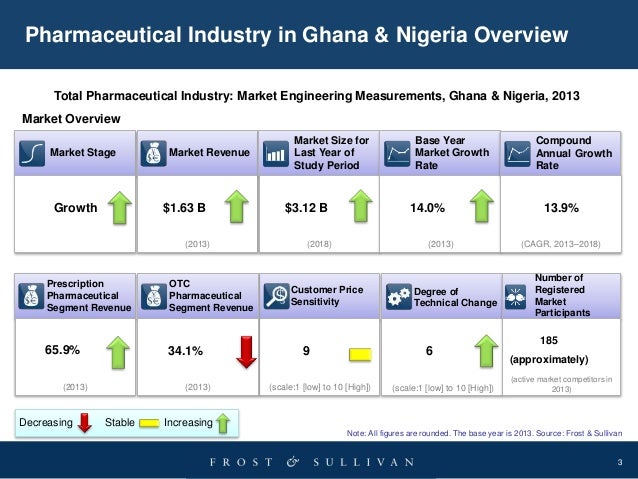
Unfortunately, in Nigeria, this is not the case. Nigeria has neither a comparative nor a competitive advantage in pharmaceutical research, development, manufacturing and sales. Nigeria’s pharmaceutical sales is forecast at 0.89 billion dollars or 0.19% of GDP for 2015 and basically the size of a medium-sized pharmaceutical company abroad. These estimates are projected to get worse with every passing year. Thus, the share of Nigeria’s pharmaceutical industry in the global industry is basically zero, especially exports which are virtually non-existent.
It is about time that the pharmaceutical industry in Nigeria help support a vibrant scientific and economic ecosystem that is vital to the Nigerian economy and our country’s competitiveness in the global market. Given the current state of our pharmaceutical industry, it will require a tectonic shift in current business strategy and practices if we are to succeed in repositioning Nigeria’s pharmaceutical industry. However, the first place to start these seismic changes is with our regulatory agency, NAFDAC.
NAFDAC needs a complete overhaul and retooling. The key focus here is bringing its regulatory role to the fore. Currently it is not playing the part of a true regulatory agency, such as say, the FDA in the US. It needs very competent leadership that can “hit the ground running” from day one of being appointed. It needs leaders with relevant pharmaceutical/food industry regulatory experience, be it from being embedded in or having interacted (successfully and repeatedly put products through the application and approval process) with a first class regulatory agency such as the FDA in the US.
What about the pharmaceutical companies?
On their part, Nigeria’s pharmaceutical companies need to have a sharp focus on research and development (R&D) enterprise, which is currently non-existent. This should be with the objective of targeting lucrative international export markets, such as the USA and the rest of North America, Canada, Europe and Japan. They also need to adopt new business models built upon external networks and third party partnerships in order to avail themselves to new growth opportunities.
They need to position themselves to take advantage of current trend towards a business model that relies on outsourcing of many business functions, including manufacturing, and thus be in a position to provide contract manufacturing and other services to international clients.
Nigeria’s pharmaceutical companies need to reconfigure their manufacturing facilities to meet FDA and European regulations; reinvent their production models to focus on high-end manufacturing; and foraying into other areas, such as medical devices, high value OTC and consumer healthcare products.
It goes without saying that these reforms will enhance the ability of Nigeria’s pharmaceutical industry to successfully compete with other countries on many keys factors including cost, talent and market attractiveness – as defined by regulatory requirements, market access, IP legislation and pricing controls.
One other area of weakness is the non-existent of Phase 1-4 clinical research facilities and activities in Nigeria. Nigeria needs state-of-the-art clinical research organisations (CROs), primarily devoted to clinical research management, instead of pure research through conducting trials for drugs under development by the pharmaceutical industry etc. A vibrant clinical research environment is not only a necessary adjunct to a thriving pharmaceutical industry, it is a money spinner and potential source of foreign exchange earnings as clinical research spending tend to be a significant portion of R&D costs.
What role should the government be playing in all these?
On the part of the government, there is need for massive investment in R&D and granting of generous research tax credits and tax incentives to pharmaceutical manufacturers and R&D focused companies. An offer of highly productive manufacturing facilities with flexible production capacity by Nigeria’s pharmaceutical industry, combined with investment and tax incentives from the government can position a jurisdiction with a small domestic market purchasing power to attract generic investment, mainly to produce for export markets.
Adequate nutrition should be viewed as important part of the healing process for patients seeking treatment in hospitals. However, it is not uncommon for nutritional status of many patients who have just undergone surgery to decline because the metabolic response to trauma, surgery and in some cases infection resulting in increased energy demands for such major stress are not adequately compensated for. The rate of proteolysis and lipolysis is greatly accelerated by the release of glucocorticoids and cytokines such as interleukin-6 and lymphokines resulting in the depletion of glucose and fatty acids stores to meet the energy demand. Protein stores are not spared as well, because the skeletal muscle relies on free fatty acids and its own catabolised protein as its primary source of energy.
Postoperative patients may require 35-45 kcal/kg per day and 2 -3gkg-1 of protein per day while patients with severe burns may require even more. When a patient is not able to ingest enough food it may be appropriate to supplement the diet with high calorie- high protein preparations to meet the short term caloric and protein needs. However, some patients may be unable to ingest solid food or to digest complex mixtures of food adequately, elemental diets which consist of glucose, dextrins, fats, amino acids, vitamins can be administered as substitute via a nasogastric tube.
It is noteworthy that when a patient is unable to absorb food normally, parenteral nutrition (PN) is necessary. The least invasive method is to use a peripheral, slow-flow vein IV infusion. The main limitation of this method is hypertonicity. However, a solution of 5% glucose and 4.25% of amino acid can be used safely. This solution will provide enough protein to maintain positive nitrogen balance, but will rarely provide enough calories for long term severely catabolic patients.
The most aggressive nutritional therapy is total parenteral nutrition. Usually an indwelling catheter is inserted into a large fast flow vessel such as the superior vena cava, so that the very hypertonic infusion fluid can be diluted rapidly. This allows solutions of up to 60% glucose and 4.25% amino acids with lipids to be used, providing sufficient protein, essential fatty acids and most of the calories for long term maintenance.
Any of the method mentioned can be used to prevent or minimise the negative nitrogen balance associated with surgery and trauma. The choice of the method depends on the patient’s condition. As a general rule, it is preferable to use the least invasive technique.
Source:
Thomas M Devlin (2006). Principles of nutrition 1: Macronutrients. Clinical correlation 27.3. Textbook of Biochemistry.
I found it overwhelming to continue this piece from where we stopped the last time, as I had to dig deeper into the topic, so we would not end up leaving out some crucial parts of the problem when trying to proffer solutions to these challenges through ICT.
One part of this conundrum was to try and do a better job at identifying all the challenges of the pharmaceutical industry in Nigeria and then proceed to see how ICT can help to solve these problems. The second part obtains from the first in that I then proceeded to see how ICT is helping to solve these problems in other climes and make healthcare better and improve the lives of their citizens. Let me say again that I was overwhelmed.
To say that we are way behind the world in the progress made in the pharmaceutical industry is an understatement as is obvious from the WHO ranking of the country’s healthcare sector at 187 out of 191 countries and the country ranks a high 15th on the Failed States Index globally. The question we now want to answer is: What can we do? These answers will not be easily found but that wouldn’t stop us from attempting.
Before we start however, there is a need to demystify the acronym ICT of its mysterious meanings and definition as it is now seen as a millennial invention that is just for millennials. Information and Communications Technology refers to an “umbrella term that includes any communication device encompassing radio, television, cellular phones, computers and network hardware and software, satellite systems” that help to relay communicate information. It is said that we are in the jet age also known as the information age. ICT is therefore that device that helps you relay information so that the aphorism that Knowledge is Power now becomes real. It only now makes sense to imagine that the more information you have at your disposal, the better decisions you are able to make and the more efficient a market or an industry becomes or in fact the more efficient your business.
Having said that, we will now try to answer the question which can then be rephrased from the above as saying Can Nigeria’s Pharmaceutical Challenges be solved if Pharmacists and Stakeholders possess and can communicate more information?
The pharmaceutical sector is phased into three broad categories and so are the challenges that contribute to the overall heart-wrenching health care status ranking – Production, Markets and Care. To try and propose a one fit all solution through ICT will not just be making a mistake, it will be proferring no solutions at all and as such the solutions targeted at each of these sub-sectors will be specific to them and proffered one at a time.
For this particular piece, let us start with the sub-sector of least resistance – Markets. The pharmaceutical market in Nigeria by which I refer to the distribution network in the country handling the demand and the supply of medicines and medical products. 54.9% of this market belongs to those who are neither pharmacists or healthcare professionals and about 18% of most drugs bought are counterfeited with that figure rising to as high as 30% for anti-malarials.
How can ICT solve this problem?
The Radio Frequency Identification Technology (RFID) being adopted by NAFDAC is one of the existing examples of solving the counterfeiting problems in the market and this simply entails the consumer confirming the authenticity of a product simply by sending a code to a phone number or by calling a phone number to confirm. At the back end, RFID tags ensure that the integrity of the drug supply chain is more secure by tracking the product path as it moves through the supply chain from manufacturer to distributors to wholesalers to retailers and then the final consumers. Information available to the final consumer helps such consumer to decide whether the purchased drug is then counterfeit or not.
This approach however only guarantees that the consumer is armed with information as to whether the medicine s/he is about to take is counterfeit or not. Is there a way to ensure that the consumer does not even get a counterfeit drug at all or that the consumer does not come in contact with as many counterfeit drugs as s/he used to? Can access to information(ICT) help solve that?
As much as we could go ahead and say Government can make the efforts to ban all unlicensed suppliers and distributors, in the end, most consumers of counterfeit drugs still buy from licensed retail pharmacies who buy from licensed wholesale pharmacies and at times unlicensed wholesalers in the open market. There would be a need to make a business case here as a retail pharmacist would rather prefer to buy from a trusted wholesaler who is unlicensed and offers a cheaper price than a licensed wholesale pharmacist with a higher price.
The catch however is this, Brick and Mortar wholesale pharmacies who have more clients and are robust enough to handle the logistics of delivery will be able to afford retailer-friendly prices, but information about retailers in need of restocking their pharmacies at the point where they need it is crucial to driving that price down. If the source of distribution is clean enough, end users can be guaranteed of original and authentic medicines and medical products.
On the business side, how do we ensure that Pharmacists who go through the rigors of pharmacy schools are the ones in charge of the $1.28 billion that comes in annually through the distribution of drugs. Can access to information (ICT) help solve that too?
The attempt by the FG in recent times to develop a Mega Distribution Center which will then distribute products to regional hubs is one of the steps being taken, but since the initiative took off in 2009, there is still yet to be a headway. My thoughts on that will be to opine that good intentions do not necessarily make bad models work. As we speak, there are pharmacy professionals who are currently stakeholders in the whole distribution chain. What does not exist is the ability to locate those who are in need of medicines for their retail stores and where they are – Information. When we then compare this demand with the statistic of 10 pharmacist per 10,000 Nigerians, what we find is a gap that has to be filled by those who are non-professionals.
With a robust data-backed ICT Infrastructure, Pharmacists can have access to licensed and professional supply of drugs and can then provide the logistics need for the distribution of medicines and medical supplies from these channels to those who need it. Without information however, there is very little that can be done and the vacuum will end up being filled by those who are not trained or equipped to do such at the detriment of our country’s healthcare systems and the overall health of the nation.
All these processes and the infrastructure needed to drive these solutions are embodied in what is called e-marketing and e-commerce and as much as it is currently only obtainable in other markets in the country, the value it could bring to improving the pharmaceutical markets in Nigeria cannot and should not be underestimated.
In the next episode of this article, we would take up pharmacy care and how ICT can literally transform that sub sector too.
The Pharmacists Council of Nigeria (PCN) has cautioned patent medicine vendors against the prescription and sales of drugs outside the approved list given to them and that they should also desist from injecting their customers.
The Registrar of the Council, Pharm. Elijah Mohammed, gave the warning during the week in Osogbo, the capital of Osun State, insisting that violators will be punished accordingly.
Pharm. Mohammed, who spoke during the opening of the orientation course for 110 newly licensed patent medicine vendors , was represented by the Director, South West Zonal Office of the PCN, Mrs Yejide Oseni, said the council would not relent in ensuring that the unwholesome practices by medicine vendors were stopped.
In a report broadcast by Channels TV, he urged the vendors not to violate any of the laws put in place to regulate their practice. “Anyone caught would be dealt with according to the law,” he said.
The PCN boss also promised that the medicine vendors would be protected from being harassed by some government agencies, but advised them not to go outside the guidelines regulating their practice.
“The PCN has received reports across the country, of harassment of vendors by some government agencies. The registry has initiated talks with some of the government agencies, with the aim of ensuring that patent and proprietary medicine vendor license holders are protected from every form of harassment from any agency provided they abide by the list, display their license and signpost,” he told the vendors.
No matter how grand your culinary intentions, it is always tempting to just use the microwave.
It’s easy, fast, and – for the eco-warriors – energy-efficient. But that shortcut comes with a plethora of health risks.
WHY IT IS DANGEROUS
‘The most important thing for people to know is that microwaves leak radiation,’ Professor Havas explains. ‘They aren’t meant to. They have a metal mesh that’s supposed to protect the waves from leaking.
‘But I’ve tested over a dozen of the most popular brands, and every single one that I’ve tested has leaked.’
HOW IT AFFECTS YOUR FOOD
‘Microwaves reduce the nutritional content in all food.
‘Enzymes are denatured by the process of radiation, meaning you get a fraction of the nutrients you would get otherwise.’
To put that into context, Professor Havas explains why microwaves were banned from the sheep farm she used to work on.
Many plastic containers leak carcinogens into the food when they are heated up
When lambs are born, like babies, they need their mother’s first milk because it contains colostrum, which has high concentrations of nutrients and antibodies.
‘We normally milk out a sheep and store the colostrum in the freezer in case other sheep cannot produce milk and their lambs need it,’ Professor Havas explains.
‘We are specifically told not to put it in the microwave oven because it destroys the colostrum.’
HOW IT AFFECTS YOU
The radiation waves used in your oven are actually designed to heat water.
Our bodies are majority water so our bodies naturally absorb microwave radiation.
Cataracts
There are conflicting opinions on the dangers of a microwave.
One thing that almost all scientists agree on is that it causes cataracts.
Cataracts are the most common cause of poor vision in people over the age of 40.
They are also the principal cause of blindness in the world, ahead of glaucoma.
Aside from trying new glasses and anti-glare sunglasses, the only effective treatment is surgery.
‘Standing in front of your oven watching your food go around unequivocally causes cataracts,’ Professor Havas says.
‘If you do it over and over and over again you will damage your eyes.’
HOW TO FIND OUT IF YOUR MICROWAVE LEAKS…
What you need:
A cell phone with connection (not on airplane mode)
A microwave
What you need to do:
Place your cell phone in the microwave and close the door
Do NOT turn on the microwave
Ring the phone from another line
If it rings, that means the microwaves used to create that connection can pass through the protective metal mesh.
Cancer
There are carcinogens in many elements of a microwaved meal.
Firstly, many plastic containers leak carcinogens into the food when they are heated up.
Secondly, microwaveable food contains specific chemicals to aid the process, such as BPA, polyethylene terpthalate (PET), benzene, toluene, and xylene – which have all been linked to cancer.
Affects your heart
In her own research, Professor Havas found ‘unequivocal evidence’ that microwave frequency affects the heart.
She monitored the heart rate of people standing near microwave ovens.
Every person monitored experienced a variation in heart rate while the oven was on.
Changes your blood levels
A study in Switzerland found people who ate microwaveable meals experienced a drop in red blood cells, and a rise in white blood cells and cholesterol levels.
HOW TO AVOID THE DANGERS
Despite the dangers and her research, Professor Havas does own a microwave for speedy, energy-efficient dinners.
But she uses it in a very specific way.
When you use a microwave you should leave the room – and never let your children near it
Leave the room
‘It’s a personal choice, I’m not going to tell anyone not to use it because I understand how useful they are.
‘If you’re going to use it, go out of the kitchen.
‘Don’t just stand on the other side of a wall, really walk away. The waves travel through walls so you are still at risk.’
The need for a six-month exclusive breastfeeding for babies was re-echoed at the 2016 World Breastfeeding Contest organised by AfriBaby Initiative.
The event which held at MRC Hall, Lagos State University Teaching Hospital (LASUTH) on August 1, 2016 had several nursing mothers, doctors, baby products exhibitors and other stakeholders in the health care sector.
Speaking at the event, Mrs Fiju Iluyomade, a seasoned lawyer encouraged nursing mothers in attendance not to substitute the place of breastfeeding for cow milk.
Iluyomade urged the organiser of the annual event to continue pushing for companies and government parastatals to make room for a nursery where mothers can occasionally take a break to breastfeed their baby.
“Can breastfeeding change the world? Yes, it can! Exclusive breastfeeding, especially, has so many benefits. It makes the skin of a baby soft and robust. It reduces diarrhoea and provides natural immunity for the child,” she said.
Chief (Mrs) Bintu-Fatima Tinubu, chairman, AfriBaby Board of Trustees, called on other states to emulate Lagos extending maternity leave to six months to further encourage exclusive breastfeeding for nursing mothers.
Sharing a similar view, Prof Wale Oke, LASUTH chief medical director reiterated that there is no reason for anybody to replace breast milk produced by humans to that of a cow.
“Breast milk is quite essential for the smooth bonding of mother and child. The protein in it is natural and cannot be compared to inorganic milk which are mostly mixed with chemicals.
“When a mother breastfeed, ovulation is subdued thereby making it unlikely for her to be pregnant. The risk is minimal,” he said.
Oke, who came under heavy criticism after the celebration of 2015 World Breastfeeding Day for saying fathers should completely stay away from nursing mothers for the sake of infants, claimed that he was misquoted.
“I never mentioned that men shouldn’t have any intimate relationship with their wives during the weaning period. The press misquoted me. What I said was that fathers should not compete with babies over breast milk,” he interjected.
The highlights of the event witnessed two fathers competing over who can properly change babies diapers, clean up as well as dress up them up on time. The winner of that contest was Mr Segun Akintomiwa, a teacher in Joy-Marvy College, Iju Ishaga.
In the other category, Baby Afiyat Adewunmi emerged champion of the 2016 AfriBaby World Breastfeeding Contest.
The Health Care Providers’ Association of Nigeria (HCPAN) has applauded Delta for being the first to effectively launch the State Health Insurance programme in the country.
Tagged “Health Insurance In Nigeria – The journey so far and the way forward,” the meeting had several health management organisations (HMOs), officials of National Health Insurance Scheme (NHIS), government functionaries and pharmacists.
Speaking at the association’s mid year meeting which held at NECA House, Alausa, Lagos recently, Dr Umar Sanda, president of HCPAN explained that the scheme launched in 2005 by former president of the country, Chief Olusegun Obasanjo, has not lived up to expectations.
Sanda said that it is unfortunate to note that only Delta State has so far effectively started operating the State Health Insurance programme to date.
“Much as we like to acknowledge the fact that the scheme has made progress since inception about 11years, it is obvious to all that there are more problems than existing solutions. Not fewer than 4 per cent (%) of the population have so far registered and these are mostly Federal Civil Servants.
“Unfortunately, there are problems of low registration due to poor awareness of the scheme, HMOs, pharmacists and nurses also have grievances against NHIS and vice versa. On the other hand, we also cannot rule out the fact that providers too are complaining of non-payment, delayed payment and under payment by HMOs”, he lamented.
The Association of Hospital and Administrative Pharmacists of Nigeria (AHAPN) national has urged every hospital pharmacist to conform to the Pharmacists Council of Nigeria’s minimum standards for drug compounding.
The national body of the hospital pharmacists, which disclosed its resolution from the 18th annual scientific conference in a communiqué signed by the National Chairman, Pharm. Martin Oyewole and the National Secretary Pharm. Jelili Kilani, insisted that all pharmacists in the hospital must return to compounding of pharmaceutical products considering its advantages of access, affordability and cost effectiveness.
The document reads in part: “All compounding shall be carried out using documented standard operating procedures (SOP) and under the direct supervision of the pharmacist”.
It further stated that hospital and administrative pharmacists should embrace continuous education and learning to meet global changes and emerging challenges.
The Pharmaceutical Society of Nigeria (PSN) has expressed satisfaction with the world class indigenous pharmaceutical factory put up by Phamatex Nigeria Limited in Amuwo Odofin area of Lagos.
Speaking during a facility tour of the complex, which took place on August 12, 2016, Pharm Ahmed Yakasai, president of the society, described the gargantuan structure as a case study for the pharmaceutical industry.
“With what we have seen so far, let me congratulate the management on this laudable project. From the moment we entered here, I said ‘Yes, this is a place of quality.’ You have done well by thinking outside the box.
“I am now officially an ambassador of Phamatex and I can now start encouraging people to take Paratex (paracetamol),” he said.
In attendance were Prince Chris Nebe, chairman of Phamatex Group; Pharm Gbolagade Iyiola, PSN national secretary; Pharm (Mrs) Edith Nwachukwu, managing director of Audion Nigeria Limited; Pharm Ezeh Igwekamma, financial secretary, Lagos branch of Association of Community Pharmacists of Nigeria (ACPN) and Pharm Babayemi Oyekunle, PSN financial secretary (Lagos branch).
Others were Chief Joseph Ebowusim, executive director of Phamatex Group; Pharm Nnamdi Ikechukwu, superintendent pharmacist & senior regulatory affairs manager; Pharm Gabriel Akwaja, superintendent pharmacist / head of regulation; Pharm Funmilayo Ige, production manager; Vipul Desai, research and development manager; Pharm Augustine Otu, Phamatex Industries’ head of sales & marketing and Pharm Friday George, Phamatex Nigeria Limited.
Poised to reduce the huge statistics of Nigerians living with glaucoma, Pfizer has commenced awareness campaign against the disease, enlightening the Lagos Monarch and his chiefs on the importance of their initiative, stating that glaucoma is the silent thief of the sight.
The leader of the Pfizer delegates to the palace, Mrs Magaret Olele, director of corporate affairs, Pfizer Nigeria and East Africa Region (NEAR) said glaucoma comes slowly, that is why it is called the silent thief of sight. “Meeting the Oba Rilwan Akiolu of Lagos is a major landmark for us, and we are going to be doing more of this to give hope to patients, because a voice like this gives us hope, telling us that prevention of glaucoma is possible”.
Olele noted that as many advocates they have in the conversation around glaucoma the better for them, in terms of awareness and prevention, adding that the stronger the voices, the better the outcome. She said they need strong advocates like the voice of the monarch, to propagate the information about the importance of screening and prevention of the disease.
Third from left, Commercial Director, Pfizer Nigeria and East Africa Region, Yinka Subair; sixth from left, Director Corporate Affairs, Pfizer NEAR, Margaret Olele; first from right, Medical Director, Pfizer NEAR, Dr Kodjo Soroh; and members of Glaucoma Patients Association LUTH; during the courtesy visit by Pfizer to the Oba of Lagos.
“We do a lot of screening, actually in the area of non-communicable diseases; Pfizer is really strong for pushing out screening on cardio vascular diseases, and now we are including glaucoma to our advoc.acy list. We are doing a lot of screening in partnership with Ophthalmology Society of Nigeria, and a lot of centres on this”, Olele stated.
Responding to the laudable gesture of the organisation, Oba Akiolu expressed his interest in their initiative, disclosing that he was a patient of glaucoma 40 years ago, but he was able to nip it in the bud at the initial stage through regular eye screening and treatment.
Oba Akiolu also urged the people to maintain good hygiene, while urging Pfizer to spread their advocacy against glaucoma to the market places and religious houses in the state, stating that they will get the people in the numbers in these places.
The world’s leading developer of custom laser solutions, PhotoScribe Technologies, has launched upgrades to their LMC and LMF lasers, specifically for the pharmaceutical manufacturing industry. Solving the need for reliable, high quality marks on caplets and tablets, both laser systems are ideal for large-scale production lines. The consummate solution for the Drug Supply Chain Security Act (DSCSA) compliance, PhotoScribe’s laser marking solutions make tracking easy and reliable from manufacturing floor to the end consumers.
LMF and LMC series lasers provide traceability when packaging is being marked with UID (unique identification), branding of pills with logos, and do not use any consumables, making integration of the laser cleaner and more cost-efficient. With the upcoming DSCSA compliance serialization deadline in November 2017, the pharmaceutical industry is converting to full traceability methods, lasers like the LMC and the LMF, provide solutions to multiple pharma needs.
The LMC laser is exceptionally rapid, with the ability to mark on the fly at the rate of up to 410,000 pills an hour with dual laser head usage. The LMC is exceptional for drilling as well, particularly for fast and slow time release of medication. A CO2 laser, available in either air or water-cooled versions, it has a fully sealed design providing superior performance and reliability.
The LMF-UV, a new UV marking laser specifically designed for caplets and tablets, produces a very high resolution with laser sensitive additives, multilayered coatings, and caplets marking. The technology provides nearly perfect beam quality and exceptional stability over the operating range for highcontrast, low damage marking. The LMF-UV spot size can go down to 5 microns in diameter, for crisp, high resolution marking.
David Benderly, CEO of PhotoScribe, says, “We continue to see growth and acceptance of lasers which establish them as the tool of choice in the pharmaceutical industry, replacing older marking technologies. The most exciting development is the availability of affordable UV lasers, enabling very high resolution marking without the thermal impact of more commonly used infrared lasers.”
For more information about the LMF and LMC lasers in pharmaceutical manufacturing, contact PhotoScribe directly at 800-746-8672, or use the contact form on the website. For press inquiries, contact Pietra PR at info@pietrapr.com or call 212-913-9761.
About PhotoScribe Technologies:
Founded in 1998, PhotoScribe Technologies is based in New York, with offices in Minnesota and Germany. Global leader in the development of laser systems specializing in micro-marking, micro-manufacturing and microfabrication, PhotoScribe Technologies creates turnkey systems across medical, pharmaceutical, security, jewelry, packaging, and automotive industries, amongst others. Innovating solutions in customer laser development, the company has become the international “go to” for tailored solutions across the photonic, laser and “micro” spaces. PhotoScribe Technologies can be contacted via email at sales@photoscribetech.com or by calling 1-800-7468672.
The Global Leadership Foundation (GLF) has appointed Prof. Isa Odidi as a member of its Strategy and Development Committee. This is in recognition of his outstanding role as an innovator, inventor, technocrat and business entrepreneur dedicated to bridging the worlds of design, science, technology, innovation and entrepreneurship with focus on how these can all be utilized to further economic and social advancement in developing economies.
The renowned pharmaceutical scientist and entrepreneur is one of the 14 distinguished personages recently appointed to formulate and spearhead strategies that will ensure effective implementation of the foundation’s objectives.
The GLF is a network of former presidents, prime ministers, senior government ministers and other distinguished leaders who support political leadership and good governance around the world by providing necessary guidance to present national leaders.
Founded in 2004 by Nobel Peace Prize laureate and former prime minister of South Africa, F.W. de Klerk, the not-for-profit foundation operates discreetly and in confidence, with members typically working in small teams to give candid and private advice on specific issues of concern to Heads of Government and on general governance issues.
Prof. Odidi’s appointment is considered historic as he has never been a political leader. He is however widely consulted by governments from all over the world for his vast experience in pharmaceutical innovation and entrepreneurial strategy.
He will be expected to replicate the monumental success he has achieved through his company, Intellipharmaceutics, in helping to champion and advance the cause of the GLF.
Communique issued at the end of the 18th annual scientific conference held from the 8th to 12th of August 2016, at the Olusegun Obasanjo presidential library Abeokuta Ogun state.
PREAMBLE
The 18th Annual Scientific Conference of the Association of Hospital and Administrative Pharmacists of Nigeria (AHAPN) with the theme “Enhancing Pharmaceutical Care through Hospital based Compounding”, was held at the Olusegun Obasanjo Presidential Library (OOPL) in Abeokuta, Ogun State, from 8th to 12th August, 2016. It was kick started by a tree planting exercise and health walk led by the first lady of Ogun State, Her Excellency Dr. (Mrs) Olufunso Amosun, ably represented by Dr Yetunde Lawson. Theme of the healthwalk was “Uplift Your Health, Consult your Pharmacist.” The keynote address speaker was Professor Peace Babalola, Dean, Faculty of Pharmacy, University of Ibadan. The chairman of the occasion was Chief (Mrs) Alaba Lawson, (MFR) the Iyalode of Yoruba Land, represented by Deacon Kunle, while the special guest of honour was the Executive Governor of Ogun State, His Excellency, Senator Ibikunle Amosun. He was represented by the special adviser on health, Dr Babafemi Adenuga. The opening ceremony was also graced by His Royal Majesty, Dr Olusanya Adegboyega Dosumu (CON), Olowu Kanguere the Olowu of Owu. Other dignitaries in attendance included president of the Pharmaceutical Society of Nigeria (PSN), Pharm (Alhaji) Ahmed Yakassai and the Honourable Commissioner for Health, Ogun State, Dr Babatunde Ipaye represented by Dr Nasir Aigoro, Permanent Secretary, Ogun State Ministry of Health. Also in attendance were Dr. Fidelis Ayebae, Managing Director and Chief Executive Officer of Fidson Healthcare Plc, former chairman of the board of Pharmacists Council of Nigeria (PCN), Professor Ogunbona, and the Chairman, Association of Community Pharmacists of Nigeria, Pharm. Dr Albert Alkali. In attendance were Dr. Daniel Orumwense, deputy President (South) of the Pharmaceutical Society of Nigeria, and Pharmacist Martin Oyewole, National Chairman of AHAPN who was the chief host and several others.
Plenary discussants at the ceremony included the registrar of the Pharmacists Council of Nigeria, (PCN) Pharm Elijah N. Mohammed, who spoke on the topic “Standards and Protocols for Hospital based Compounding” and Dr. John Alfa, Director of Pharmaceutical Services, National Assembly Health Clinic, Abuja. He discussed “Minimizing Drug Shortages through Hospital based Compounding”.
CONFERENCE OBSERVATIONS
Conference noted that the pharmacist is a key health professional that helps patients achieve best results from their medications by ensuring individuals receive proper drug and therapeutic treatments for health issues. This can be achieved by working in tandem with other healthcare professionals, pharmaceutical companies and the public.
It was also noted that there are currently global changes to pharmacy practice in the areas of hospital pharmacy, clinical pharmacy, ambulatory care pharmacy, compounding pharmacy, consultancy pharmacy, internet/online pharmacy, veterinary/animal pharmacy, nuclear pharmacy/radiotherapy, military pharmacy, pharmacy informatics, public health/social pharmacy etc.
Conference agreed that before mass production of medications became widespread, compounding was a routine and core activity among pharmacists
Despite their many benefits, most mass-produced medicines still failed to meet some required and individualized needs of patients.
Compounding is the process of preparing medicines (drugs) extemporaneously according to a given formula to meet the unique needs of individual patients or categories of patients.
Compounding is ethical and legal as long as the medications are prescribed by a licensed practitioner for a specific patient and compounded by a licensed pharmacist.
Compounding is also crucial to research and drug development.
Key requirements for standard compounding include personnel, premises, equipment, sanitation, quality control, record keeping, labeling, packaging and proper storage.
Pharmacists Council of Nigeria (PCN) has stipulated minimum standards/requirements for hospital-based compounding.
Compounding can ensure access to affordable and quality medicines which are critical for functioning health systems and fundamental for obtaining universal health coverage.
Compounding can improve drug shortages defined as ‘’the time when demand or projected demand for a medically necessary drug exceeds its supply”. This shortage which is due to the continuous devaluation of the naira against major world currencies is a threat to the healthcare system.
Current strategies to reduce drug shortages such as centralised/decentralized procurement system, direct cash procurement, drug revolving fund scheme (DRF), and National Health Insurance Scheme (NHIS), must include compounding and hospital based drug production.
Hospital Pharmacy Compounding is cost effective, provides professional satisfaction, advances teaching and learning and offers job creation opportunities.
CONFERENCE RESOLUTIONS
Conference resolved as follows:
That compounding of pharmaceutical products must be encouraged considering the advantages of access, affordability and cost effectiveness.
All hospital pharmacies must comply with the Pharmacists Council of Nigeria’s minimum standards for drug compounding.
All compounding shall be carried out using documented standard operating procedures (SOP) and under the direct supervision of the pharmacist.
To meet global changes and emerging challenges, hospital and administrative pharmacists should embrace continuous education and learning.
That the Association of Hospital and Administrative Pharmacists of Nigeria (AHAPN) and its affiliate branches remain part of Association of Healthcare Professionals of Nigeria (AHPA) and Joint Health Sector Union of Nigeria (JOHESU) and demands that government releases necessary circulars forthwith, and implements in full, all agreements signed with JOHESU as well as those ordered by the courts.
AHAPN notes with dismay, the continuous stagnation of pharmacists by some hospital managements in tertiary and specialist health institutions against all known civil service regulations and despite various circulars by the Federal Ministry of Health (FMOH) on this subject matter, and hereby calls on affected institutions to as a matter of urgency, implement in full, the circular on career progression for all our affected members.
Lagos State was announced as host state for the 19th annual scientific conference billed for 2017.
CONCLUSION
The Chairman on behalf of the National Executive Committee (NEC) and National Council wishes to thank the executive governor of Ogun State, His Excellency, Senator Ibikunle Amosun, the first lady Dr. (Mrs) Folusho Amosun, all our invited guests as well as the generality of the good and peace loving people of Ogun State, for the hospitality and warm reception accorded delegates during the 18th Annual Scientific Conference. Special thanks to the keynote address speaker and all guest speakers and facilitators, corporate and individual sponsors, special donors, exhibitors, gentlemen of the press, conference planning committee (CPC) members, Local Planning Committee (LOC) members and all delegates and participants.
The Minister of Health, Professor Isaac Adewole, has disclosed that the Federal government has released the sum of 420 million Naira each to every state, for the revamping of their primary healthcare facilities.
Professor Adewole , who was on a two-day working visit to the University College Hospital, Ibadan , at the weekend, said it is part of efforts to reverse and stop medical tourism in Nigeria.
The minister said that the hospital was one of the seven health facilities chosen for comprehensive upgrade. He added that the 60-year-old institution must be assisted to continue to provide leadership in quality healthcare delivery.
According to a Channels TV report, Professor Adewole has directed that henceforth, critical care and emergencies must be attended to promptly, without any demand for money until the patients were out of danger in any federal hospital across Nigeria.
He also hinted that the model primary healthcare facility under the UCH would be replicated in over 112 primary healthcare centres adopted by the Ministry of Health, to boost healthcare delivery at the grassroot and decongest teaching hospitals.
He said that intense deliberations were ongoing between the Federal Government and all stakeholders on ways of curbing industrial action in the health sector.
The Chief Medical Director of UCH, Professor Temitope Alonge, in his remarks described the visit as a crucial one that would go a long way in assisting the hospital for better efficiency.
First Lady Margaret Kenyatta, Kenya Ministry of Health and Roche Pharmaceuticals Limited (www.Roche.com) has launched key activities that will facilitate access to improved care for patients with breast cancer in Kenya. The launch builds on the country’s 2015-2020 National Strategy for the Prevention and Control of Non-Communicable Diseases and represents a comprehensive approach to battling the disease.
The program also complements the campaign from the African First Ladies who are committed to expanding access to prevention and treatment services for women with breast cancer.
First Lady Margaret Kenyatta, Markus Gemuen, Andre Mendoza
The public-private partnership’s planned activities include breast cancer awareness programs, improvements in screening and diagnostics, including the placement of a diagnostic instrument capable of advanced testing for seven types of cancer. Additionally, the collaboration will train five new oncologists and six oncology nurses, provide surgical oncology training, support the development of best practice national treatment guidelines and an increase the number of cancer treatment centers in Kenya. Access to medicine will be made available patients seeking treatment at public institutions with the government of Kenya and Roche jointly covering the costs. The aim of these measures is to improve access to timely and precise diagnostic services and tailored cancer treatment to make cancer therapy much more effective.
“Strong, healthy women are the foundation of families, of our country, and today in Kenya their health is threatened by a disease that we must catch early. Many women are being diagnosed with breast cancer too late and are dying needlessly when there are treatments available that give them a chance to fight this disease,” said First Lady Margaret Kenyatta. “This partnership between the Government of Kenya and Roche demonstrates that we all must play our part to ensure that our mothers, sisters and daughters have the opportunity to fight and win the war against breast cancer.”
Breast cancer remains the leading cause of cancer in women in Kenya with more 50 percent of the cases presenting in women below the age of 50. This places their families and the economy at a great disadvantage. Every year approximately 4,500 patients are diagnosed with the disease and 2,000 patients lose their lives to this disease. This burden reflects an increasing trend in the number of women being diagnosed with the disease. Early diagnosis and treatment could greatly reduce the burden of breast cancer and improve treatment outcomes.
The Kenya agreement is part of Roche’s Africa Strategy which began in 2015 in seven countries: Nigeria, Ghana, Kenya, Côte d’Ivoire, Angola, Ethiopia and Gabon. Based on country needs and capabilities, Roche is implementing a wide selection of activities in collaboration with local partners, including healthcare system strengthening, such as local data generation and advocacy for healthcare prioritization; disease management support, such as awareness, advocacy campaigns and treatment guidelines; and education and market access solutions, including healthcare professional training, private health insurance with local companies and price-volume agreements with governments.
“We are honored to have First Lady Margaret Kenyatta here today to launch this important initiative for breast cancer patients and to demonstrate Kenya’s commitment to improving cancer care,” said Markus Gemuend, Head of Roche Sub-Saharan Africa Region. “With access to healthcare, women are empowered to build the futures they want for themselves and their families. This comprehensive agreement ensures that breast cancer patients in Kenya will have not only improved access to care and life-changing medicines, but also that the overall healthcare system is stronger to support all Kenyans battling cancer.”
Breast cancer in Kenya
Breast cancer is the second most common type of cancer in Kenya recording 4,500 new cases every year with 1,969 deaths. Although it occurs in both men and women, more than 90 percent of the cases present in women. Risk factors include: gender (being female), family history, alcohol and tobacco use, being obese or overweight and exposure to estrogen hormones through contraceptives. In terms of frequency, breast cancer comes second after cervical cancer and is followed by prostate cancer. Aside from the investments in public-private partnerships, the Ministry of Health is installing mammography machines through the Managed Equipment Services project to enhance early detection and diagnosis of breast cancer countrywide. It is also providing specialized training opportunities for cancer healthcare professionals to boost capacities at the county level.
Distributed by APO on behalf of Roche Pharmaceuticals Limited.
Media Relations: First Lady press contact: Sarah Wambui, MOH, Mobile: +254 724 436 855 | Email: sarahwambui@gmail.com Lisa Slater, Roche, Mobile: +41 79 771 5494 I Email: lisa.slater@roche.com
About Roche: Roche (www.Roche.com) is a global pioneer in pharmaceuticals and diagnostics focused on advancing science to improve people’s lives. Roche is the world’s largest biotech company, with truly differentiated medicines in oncology, immunology, infectious diseases, ophthalmology and diseases of the central nervous system. Roche is also the world leader in in vitro diagnostics and tissue-based cancer diagnostics, and a frontrunner in diabetes management. The combined strengths of pharmaceuticals and diagnostics under one roof have made Roche the leader in personalized healthcare – a strategy that aims to fit the right treatment to each patient in the best way possible. Founded in 1896, Roche continues to search for better ways to prevent, diagnose and treat diseases and make a sustainable contribution to society. Twenty-nine medicines developed by Roche are included in the World Health Organization Model Lists of Essential Medicines, among them life-saving antibiotics, antimalarial and cancer medicines. All trademarks used or mentioned in this release are protected by law.
The leadership of the Pharmaceutical Society of Nigeria (PSN) have called on the Federal Government of Nigeria to come up with a new economic blueprint, with the intention of salvaging the businesses of local manufacturers from a total collapse, in the face of the ongoing economic downturn.
The top pharmacists who narrated how their members in the industry, have been grappling with the exchange rate for some time now without any palliative measure or structure to cushion the effect, said the government must act fast in order to prevent further termination of businesses.
Barely a year after the World Health Organisatio (WHO) delisted Nigeria from polio-endemic nations, Nigerians were taken aback on Thursday, to hear that there was an outbreak of wild polio virus in Borno State.
Confirming the epidemic , the Minister of Health Prof. Isaac Adewole in a statement said the outbreak had affected two children from Gwoza and Jere Local Government Areas of the state.
According to a Vanguard report, the minister said the fresh cases were detected during a surveillance of north-eastern states by health officials from the ministry.
Adewole, who charged parents in the region to stay vigilant, said a national emergency response team had been sent to Borno State for immediate polio vaccination to prevent the spread of the virus locally and internationally.
“Local health officials with the support of partners including WHO and UNICEF are conducting detailed risk analysis to clearly ascertain the extent of circulation of the virus, and to assess overall levels of population immunity in order to guide the response.
“As an immediate response, about one million children are to be immunised in four local government areas in Borno State. Children in adjoining states of Yobe, Adamawa and Gombe will also be immunised bringing the number to about five million in the four states,” the minister stated.
WHO in a statement in Geneva on Thursday also confirmed the two new cases in Nigeria.
Its Regional Director for Africa, Dr. Matshidiso Moeti, who said the organisation was saddened by the development, stated that it was collaborating with the Global Polio Eradication Initiative and the Federal Government to prevent more children from being paralysed.
Moeti stated, “We are deeply saddened by the news that two Nigerian children have been paralysed by polio. The government has made significant strides to stop this paralysing disease in recent years. The overriding priority now is to rapidly immunise all children around the affected area and ensure that no other children succumb to this terrible disease.”
The Director of Polio Eradication at WHO Headquarters, Dr. Michel Zaffran, revealed that genetic sequencing of the viruses were linked to a wild polio virus strain that was detected in Borno in 2011.
Zaffran stated that a resurgence of the polio virus was not a surprise particularly in areas where it was difficult to reach children with the vaccine.
The global health agency warned neighbouring countries such as Chad to stay vigilant.
He said, “We are confident that with a swift response and strong collaboration with the Nigerian Government, we can soon rid the country of polio once and for all. This is an important reminder that the world cannot afford to be complacent as we are on the brink of polio eradication — we will only be done when the entire world has been certified polio-free.”
Our correspondent also learnt that the Executive Secretary the United Nations Populations Fund, Prof. Babatunde Osotimehin, made an emergency visit to the country on Thursday morning.
He was said to have met with President Muhammadu Buhari and Adewole, in Abuja to devise a 48-hour strategy to quickly address the spread of the wild polio virus in Borno State.
The Lagos State University Teaching Hospital (LASUTH) has got a state-owned helipad for medical emergencies across the state and beyond. The official unveiling of the helipad, which was done by the state governor, Akinwunmi Ambode on Thursday at LASUTH, was coupled with the general inspection of the institute.
While commissioning the heliport, Ambode disclosed that the upgrading of the 247-bed and five Theatre Suits for pregnant women, popularly called Ayinke House, would be ready for use by 2017.
Governor Ambode, who also inspected medical facilities at the LASUTH complex, said as part of efforts to transform the health sector in the State for optimal performance, the Bola Tinubu Health and Diagnostic Centre will soon become operational, while approval had been granted for the rehabilitation, upgrade and bulk purchase of medical equipments required in 20 Secondary and 21 Primary health facilities across the State.
“This Helipad being commissioned today is a lifesaving asset and critical complement to the efficient functioning of this unit and other emergency services being rendered by the state. The Helipad will also aid the movement of patients from remote areas where healthcare facilities to provide the level of emergency medicines required are not readily available”..
Earlier, the State’s Commissioner for Health, Dr. Jide Idris said by the commissioning of the Helipad, LASUTH is now on the verge of being elevated as level one Trauma Centre, adding that the Helipad was the first to be certified in the country for any State Government.
It is apparent this is another big feat in the health care industry by the Ambode government. Do you agree with me?
Enterotoxins are poisonous substances which are produced by some pathogenic bacteria such as Vibrio cholera the causative organism of cholera; by enterotoxigenic strains of Escherichia coli just to mention a few. Enterotoxins are of 2 types the traditional enterotoxins and the cytotoxins. The traditional enterotoxins are either heat labile or heat stable and are represented by those produced by Vibrio cholerae and Enterotoxigenic Escherichia coli (ETEC). They act on enterocytes without causing any change in mucosal histology.
Patients with cholera, an intestinal infection by Vibro cholerae usually experience voluminous life threatening intestinal electrolyte and fluid secretion. When ingested, V. cholerae can cause diarrhea and vomiting in a host within several hours to 2–3 days of ingestion. During infection, V. cholerae secretes the cholera toxin called Choleragen, a protein that activates some biochemical processes which leads to gross NaCl secretions. As a result dehydration ensues, with symptoms and signs such as thirst, dry mucous membranes, decreased skin turgor, sunken eyes, and hypotension, weak or absent radial pulse, tachycardia, tachypnea, hoarse voice, oliguria, cramps, renal failure, seizures, somnolence, coma, and death. Death due to dehydration can occur in a few hours to days in untreated children.
However, there are other bacterials that cause toxigenic diarrhoeas such as Yersinia enterocolitica, Bacillus cereus, Aeromonas hydrophiliae, Clostridium perfringens, Clostridium difficile, Staphylococcus aureus among others. E. coli which causes travellers diarrhoeas that can be serious in infants produces a heat stable toxin that is functionally similar to heat liable cholera toxin which binds to guanylate cyclase C resulting to increased cGMP levels which stimulates Choride ions secretion and inhibits NaCl reabsorption. Oral rehydration solution (ORS) or electrolyte replacement therapy is the most common choice for treatment. Commercial (Pedialyte and others) or homemade preparations can be used. The World Health Organization (WHO) has provided this easy recipe for home preparation, which can be taken in small frequent sips:
Table salt—3/4 tsp
Baking powder—1 tsp
Orange juice—1 c
Water—1 qt (1l)
The presence of glucose in the orange juice allows uptake of sodium ions to replenish the body’s NaCl. The composition of sport drinks for electrolyte replacement is based on the same principle, namely, more rapid sodium absorption in the presence of glucose.
Worried by the recurrent Adverse Drug Reactions (ADRs) cases among patients across the country, members of the Association of Hospital Administrative Pharmacists of Nigeria (AHAPN) Lagos Chapter have taken the bull by the horn by matching out en mass to the Shomolu market, to enlighten the traders on the causes of ADRs and how it can be prevented.
The hospital pharmacists, who were celebrating AHAPN Day in the 2016 Pharmacy Week, thought it necessary to take the awareness campaign beyond the four corners of their respective hospitals, in order to reduce the statistics of ADRs among the populace. The outreach was however the second phase of the event of the day, as there were pre-campaign lectures to equip the druggists for the public enlightenment.
Prominent health professionals have decried the spate of infants’ infectious diseaseses, attributing it to poor breastfeeding among nursing mothers in the country.
The experts on maternal and child care, dieticians, health workers amongst others embarked on awareness programme to stress the need for the protection of the right of the child through healthy and adequate nutrition.
This was the emphasis of an awareness talk held at the Federal Medical Centre in Umuahia, the capital of Abia State, in southeast Nigeria
According to the Head of Nursing Department in the hospital, Mr Nwanyieze Mba, breastfeeding awareness was apt, as investigation carried out at the antenatal ward showed that the number of malnourished and dehydrated infant had increased from zero per cent to eighty per cent. A worrisome situation, which he said could be prevented.
Nursing mothers are therefore advised to exclusively breastfeed their children from the day of the birth to six months 8-12 times a day without adding water or any supplement.
A pediatrician, Dr. Amara Okafor, pointed out that it has been noted that about 37 per cent of mothers were not feeding their babies with breast milk, a trend which must end if Nigerian women wanted a healthy baby and a healthy future.
Mba noted that the consequences of not adhering to exclusive breastfeeding were enormous and includes high risk of bacterial contaminations in infants as well as the babies’ immunity being very low and making them vulnerable to diseases.
The breastfeeding awareness campaign is thus the key to a sustainable development and the only way to protect the right of the child.
There are evidences that breast milk prevents respiratory tract infection, otitis media, ear infection in children, gastro-intestinal infections and can also help prevent breast cancer in women.
Members of the Association of Community Pharmacists of Nigeria (ACPN) yesterday presented an award of excellence on community service to Oba Taofik A. A.O. Fatusi, Onifako of Ifako Kingdom, during their enlightenment campaign on the roles of pharmacists in the communities.
The community pharmacists, who were celebrating their Day in the Pharmacy Week, embarked on a walk from Ikeja to Agege axis, to educate the populace on the essence of seeking counsel from pharmacists, as regards their drugs usage.
The Federal Medical Center, Bida, has recorded another uncommon medical feat of delivering and managing another baby with 600gms baby weight.
The Honourable Minister of State for Health, Dr. Osagie Ehanire noted this achievement lately while on a visit to carry out an on the spot assessment of health care delivery in the hospital.
Conducted round the hospital by the Chief Medical Director (CMD), Dr. Mohammed A. Usman, the Minister said that such achievement underscored the high level of competence, commitment and quality of service delivery available in the centre.
In an interactive session, Dr. Ehanire commended management and staff of the hospital for striving to ensure standard healthcare delivery in spite of paucity of funds. He also endorsed the purchase and establishment of CT scan- advantaged diagnostic equipment and a Dialysis unit to enable the hospital cope with Kidney disease cases and other health challenges of patients in the state and their catchment areas.
He further implored the hospital management to look for remedies for diseases like kidney stone which was said to be prevalent in its environs.
He called for an improved attitude to work adding that if each staff puts in honest 8hrs daily it would translate into an effective 40 working hours per week. To this end, he urged the staff to embark on capacity building by task shifty. This, he said would improve efficiency and progress because in his words, ‘there is no end to improvement’
In his response, the CMD of the 240 bedded hospital with 1310 staff lamented shortage of manpower in the hospital and high cost of electricity supply amongst other challenges.
On these, the Minister advised that staff recruitment be restricted to areas of critical needs while critical departments and areas should be lighted with solar energy to save cost.
At his courtesy call on the Estu of Nupe, His Royal Highness, Alh. Dr. Yahaya Abubakar, represented by Wambai Nupe, Alh. Mahmud Abubakar, the Minister said his visit to the hospital was a response to the negative report published on social media about an alleged dearth of health services in the hospital.
On this, the Minister maintained that after having cross examined the authorities and carried out an on the spot assessment of the facility, the report was false as all departments in the hospital were functioning.
The Minister however urged Community leaders to appeal to health staff in their domain to desist from strike as it often put lives at risk adding that it was against thier professional ethics.
Responding, the Wambai Nupe, pledged the emirates support to the hospital.
Pfizer has announced the appointment of Mark Wagstaff as the Country Manager for Pfizer in Nigeria and East Africa Region.
According to the Press Release from the organisation, “Mark brings to the role a wealth of experience gained across a variety of pharmaceutical companies and markets. He has accumulated a significant experience working for multi-national companies within the pharmaceutical industry.
“Prior to joining Pfizer, the last 18 years of his have been spent in the emerging markets, primarily in senior commercial roles, living and working in seven countries across three continents including Nigeria.
“The roles include general management, business development, project leadership encompassing many pharmaceutical segments including vaccines, branded generics, innovative and established brands.
Mark Wagstaff
“With full responsibility for the leadership and development of Pfizer Nigeria and East Africa’s business, Mark will play a key role in meeting the company’s growth goals as well as building Pfizer’s outstanding reputation for quality medicines and healthcare delivery to host communities.
“We are delighted to welcome Mark Wagstaff into the Pfizer family,” said Margaret Olele, Director, Corporate Affairs.
About Pfizer Inc.: Working together for a healthier world™
At Pfizer, we apply science and our global resources to improve health and well-being at every stage of life. We strive to set the standard for quality, safety and value in the discovery, development and manufacturing of medicines for people and animals. Our diversified global health care portfolio includes human and animal biologic and small molecule medicines and vaccines, as well as nutritional products and many of the world’s best-known consumer products.
Every day, Pfizer colleagues work across developed and emerging markets to advance wellness, prevention, treatments and cures that challenge the most feared diseases of our time. Consistent with our responsibility as the world’s leading biopharmaceutical company, we also collaborate with health care providers, governments and local communities to support and expand access to reliable, affordable health care around the world. For more than 150 years, Pfizer has worked to make a difference for all who rely on us.
To learn more about our commitments, please visit us at www.pfizer.com
The Lagos State branch of the Pharmaceutical Society of Nigeria (PSN) has publicly declared the beginning of her 2016 annual Pharmacy Week, themed:” Human resource and pharmacy practice: Leadership in turbulent times”.
The event, which is bid to take off from August 6 to 13, 2016, will feature various activities from the different technical arms and interest groups of the society.
Addressing pressmen on the essence of the Week, the state’s chairman, Gbenga Olubowale explained that it is an enlightenment programme geared towards sustaining and improving the health values of the general populace at all times. He further noted that the annual event serves as a forum for educating and enlightening pharmacists, health professionals, government and the general public on issues pertaining to health.
Olubowale, who highlighted the sub-themes of this year’s event to include: Repositioning pharmacy practice in a challenging economy; and dealing with the scourge of adverse drug reaction, stated that the themes will discuss in details the issues of man power development in pharmacy practice as well as challenge pharmacists to provide needed leadership in their various areas of practice, in such trying times the nation is going through.
His words: “The impact of the Adverse Drug Reaction (ADR) on patients has again come into the forefront with recent development of Steven Jones Syndrome (SJS) among some users of c certain types of medication. It is a serious challenge as morbidity and mortality with the ADR is quite high.
“We need to educate the public about how to identify symptoms of ADR and appropriate report mechanism put in place to manage the situation to prevent unpleasant end result as recently being observed”.
Pharm. Madehin Gafar, secretary of the state branch, while fielding questions from journalists said that the Week will focus on access to pharmacists, who serve as important interface between the populace and their drugs usage.
He also explained why the masses need to consult their pharmacists regularly, in the wake of myriads of concoctions being displayed everywhere as herbal drugs, which are capable of destroying people’s kidneys.
The striking nurses of the Lagos University Teaching Hospital (LUTH), Idi-Araba, yesterday called off their strike action, which lasted for almost two months.
It will be recalled that the nurses had embarked on the strike, on June 10, after all alternatives proved abortive.The nurses however resumed yesterday, after several meetings with Federal Ministry of Health (FMOH).
According to the Lagos State Chairman of the Nigerian Association of Nigerian Nurses and Midwives (NANNM) Mr Olurotimi Julius Awojide, who broke the resumption news to Pharmanews, he said the strike has been suspended and nurses have fully resumed work.
In a statement credited to the NANNM’s President Mrs. Yemisi Adelaja , she said : “After extensive deliberation with the FMOH and LUTH management on issues raised by the NANNM chapter, it was resolved that we suspend strike and work resumed today. Some of the issues we raised were addressed; some were resolved while some are receiving attention by the Minister of Health and some other government agencies like IPPIS.” According to her, the issue of teaching allowances was resolved for payment.
She added that the allowances are being calculated for payment in this month’s salary. The Federal Ministry of Health, she added, has also signed the guarantor form that was required for the setting up of an independent power supply to generate uninterrupted power.
The emergence of a new model developed by Cambridge University scientists could be the beginning of the end to the alarming death records from prostate cancer, as the new test has got potentials to give accurate prognosis for patients.
This is nothing but a good tiding to all prostate cancer sufferers, as the researchers have assured that they will get better treatments, than those provided by existing models.
The model, as reported on Mail Online – takes information doctors already receive about cancer patients and uses it to put them into one of five groups in order of severity.
Patients can then be given more aggressive treatments if they are at one end of the spectrum or avoid unnecessary treatment altogether if they are at the other.
Currently patients are categorised into three groups on diagnosis – low, intermediate and high risk.
But these ‘broad’ categories meant patients do not always get the right treatment – with those in the intermediate group most likely to receive unpleasant procedure they did not need.
The lead researcher, Vincent Gnanapragasam, who led the research based on 10,000 British men, said the new system meant those ‘in the middle’ would get better treatments that were most suitable for their illness.
He said that the current system was only around 60 per cent accurate in predicting whether or not cancer patients would die, whereas the new system was between 70 and 80 per cent accurate.
He added: ‘There is a lot of variety within the cancer itself. Trying to categorise men into just three groups is very difficult.
‘You might be in a particular group but your outcomes and the decisions needed on whether to be treated or not treated could be very different (from others in that group).
‘The new model identifies who will do better from treatment and who will not. We want to avoid both under-treatment and over-treatment.’
Under the new system, medics can categorise patients using information from existing tests for levels of certain chemicals in the body, the stage of the disease and information from biopsies on the type of tumour.
The previous ‘intermediate’ and ‘high’ risk groups have been split into two, so that doctors can tell which patients in the intermediate stage would benefit from treatment and which would not.
It also means doctors will know whether to offer those in the highest risk group aggressive treatment or whether it is better to improve the patient’s quality of life during their final days.
The current system which is used to categorise prostate cancer patients for treatment is based on 20-year-old research from the US.
‘In the US they have a different type of population than the UK and more screening for cancer, so it is important that our research is the first to be based on British men,’ he added.
It is generally believe that refrigerators were produced to preserve veggies, fruits, and other food items from decaying, especially in summer, when the temperature is usually inimical to the survival of these items.
As good as that concept may sound, experts from the Good Housekeeping Institute, New York have picked a hole in that idea, stating that keeping of bread, tomatoes, and even cake in the fridge is a wrong concept.
The experts whose guide was published in the Mail Online recently, noted that not only does the fridge fail to make some foods last longer but can even ruin the taste of others such as coffee. Whereas some vegetables like onions, when stored there can affect the other items already in the fridge.
Below are the nine things that should not be kept in the fridge and explanations for being so:
Bread: It dries and goes stale faster in an airless fridge than in the bread bin. To keep it fresher for longer, use a bread bag in a cool, dry, place.
Onions: Ditch the salad draw and pick a dry, ventilated area and keep it dark to avoid them sprouting. In the fridge, their aroma can taint other foods.
Garlic: Also needs to be kept in a dry, ventilated area to last longer. The fridge does nothing to help it stay fresh for longer.
Avocados: Best kept in open brown bags if you don’t want them to ripen too quickly. If you do want to speed up the ripening process, put them in the fruit bowl next to a banana instead.
Tomatoes: The colder they get, the more of their natural taste they tend to lose. The best tasting tomatoes are those kept at room temperature.
Honey: Literally the only food that never goes off, so there is absolutely no need for it to go anywhere except in the food cupboard.
Cake: With the exception of those made with real cream, almost all others will last for just as long in an airtight container.
Melons: Uncut, the fruits, do not need to take up all that space on a fridge shelf. Once it’s been cut, wrap it in cling film and put it in the fridge – but not before.
Coffee: Although some foodies insist on having it stored cold, coffee actually absorbs the smells of other foods around it in the fridge. Best kept in an airtight container instead.
President Muhammadu Buhari has recently approved the appointment of new directors for five strategic health institutions in the country. The institutions affected by the restructuring agenda are the Centre for Disease Control (CDC), National Agency for the Control of Aids (NACA), Nigerian Institute for Medical Research (NIMR), National Primary Health Care Development Agency (NPHCD), and the National Health Insurance Scheme (NHIS).
According to a statement issued by the Director of Press and Public Relations in the office of the Secretary to the Government of the Federation, Mr Bolaji Adebiyi, the new head of the Centre for Disease Control is the Managing Partner of EpiAfric, a public health consultancy firm that focuses on Africa, Dr. Chikwe Andreas Ihekweazu. He takes over from Prof. Abdulsalami Nasidi.
Dr. Sani Aliyu, a consultant in Microbiology and Infectious Diseases at Cambridge University, U.K. is the new head of the NACA. He takes over from Prof. John Idoko.
The President also appointed Prof. Babatunde Salako as the head of the NIMR. He was the Provost, College of Medicine at the University of Ibadan before his new appointment. He takes over from Prof. Innocent Ujah.
A professor of Paediatrics and Public Health at the University of Nevada, in the United States, Prof. Echezona Ezeanolue was appointed the new Executive Director of the NPHCD. He replaced Doctor Mohammed Ado.
The NHIS is now headed by Prof. Usman Yusuf, who until his appointment was a professor of Paediatrics at St. Jude Research Hospital in Memphis, Tennessee in the United States. He replaced Mr Olufemi Akingbade, who was in acting capacity.
All appointments, according to the statement, takes immediate effect.
KPIT buyer Avara Prescription drugs takes the quick observe with KPIT PharmaEdge – to transition providers and streamline manufacturing integration. The PharmaEdge answer permits Avara to fulfill acquisition business deadlines, and supplies better perception into use of apparatus, procedures, knowledge, techniques, and personnel.
No fewer than 22 heads of pharmacy department, 13 chief medical directors (CMDs), six directors of pharmaceutical services (DPS)and consultants in specialty areas of cardiology, nephrology, endocrinology, obstetrics and gynaecology in various institutions in Lagos received the maiden Excellence Awards of pharmaceutical giant, Micro Nova.
The colourful occasion, held at Protea Hotel, Ikeja, Lagos on 23 June, had several pharmacists, stakeholders, key opinion leaders from the health sector, and the company staff in attendance.
Speaking at the event, Pharm. Bonaventure Agbo, Micro Nova’s marketing director expressed delight at the huge turnout of participants, despite having been invited on short notice.
“I like to thank you all for your presence at tonight dinner. We are celebrating excellence today because your belief in us has brought us this far,” he said.
Pharm. Harriet Amaefuna seemed to share a similar view when she explained that the awardees had been part of Micro Nova’s success story in Lagos, adding that they had partnered with the company in fulfilling its key vision.
Equally expressing his delight, Pharm. Tavinder Jit Singh Tasudeva, president and chief business officer of Microlab India, reassured participants at the event on the company’s products, noting that their drugs are well-tailored for the Nigerian market, which has a similar climate and demography with that of India.
“We don’t just import drugs into Nigeria without properly analysing the situation,” Singh said. “Therefore I urge you to feel free to ask questions and raise observations as we are all here to rub minds together this evening.”
In his earlier address, Mr Hemant Sharma, vice president (Microlabs India) and head of operations, Micro Nova Pharmaceuticals announced that the journey to the top had not been all rosy.
“However we are happy to associate with the Pharmacists Council of Nigeria (PCN), Pharmaceutical Society of Nigeria (PSN), Association of Community Pharmacists of Nigeria (ACPN), Association of Industrial Pharmacists of Nigeria (NAIP), National Agency for Food and Drug Administration and Control (NAFDAC), nephrologists, cardiologists and physicians across the country.
“We thank you for making us one of the fastest growing pharmaceutical companies in Nigeria. Come 2020, we are hoping to be among the first 10. Lastly, it is the desire of Microlab India and Micro Nova to turn the Excellence Award into an annual award,” he said.
Among the 57 winners of the Excellence Awards were Pharm. Oluranti Opanuga, head of pharmacy department, Lagos University Teaching Hospital (LUTH); Dr Akinyele Akinlade, Lagos General Hospital; Dr Stella Alagbe, Lagos General Hospital; Pharm. Segun Onakoya, head of pharmacy department, Ikorodu General Hospital; Dr Ojeh Aigbavboa, Lagos General Hospital; Dr Morufat Salau, Lagos General Hospital; Pharm. E.O. Akofi, head of pharmacy department, Lagos General Hospital; Dr Casmir Amadi, consultant cardiologist, LUTH; Dr A. C. Mbakwem, LUTH; Dr M.O. Mabayoje, LUTH; and Pharm. (Mrs) Margaret Obono, head of pharmacy department, National Orthopaedic Hospital, Igbobi.
Others were Prof. Wale Oke, chief medical director of Lagos State Univeristy Teaching Hospital (LASUTH); Pharm. (Mrs) Omotomike Akinbote, head of pharmacy department, Randle General Hospital; Pharm (Mrs) Hannah Efenure, head of pharmacy department, Apapa General Hospital; Dr Oyebola Oyeleke, LUTH; Dr Olusegun Joseph, LUTH; Pharm. Adefoluke Adeniyi, head of pharmacy department, Gbagada General Hospital; Dr Lateef Lawal, managing director and chief executive officer of Gbagada General Hospital; Dr Bolu Ojuroye, consultant cardiologist, Gbagada General Hospital; Pharm. (Mrs) Mary Iyogun, head of pharmacy department, Isolo General Hospital; Pharm. (Mrs) Abimbola Awofuwa, Ajeromi General Hospital HOD Pharmacy and Pharm. Bayo Adeleke, head of pharmacy department, Lagoon hospitals.
Micro Nova is a specialty division of Microlabs, which was established in 1973. It has presence in over 50 countries that cut across the United States, South East Asia, Australia, Africa and Europe. Among other things, the company has 300 scientists in its employ and a robust range of 520 brands.
Memory is the part of our mind in which information is stored and retrieved. It helps us to recall the when, who, where, what, why and how of everyday life. How would it feel if you could not easily recollect information? Or you quickly forgot things?
Pages of scientific journals are filled with evidence that memory tends to decay with age. For you to always be mentally alert as you age, you must keep stretching your mind. Constant learning is paramount. Learn a new language (I’m currently learning Arabic, it’s pretty mind-boggling). Acquire new skills. Keep growing your storage of knowledge.
IRA principle
Let me share with you the “IRA” principle, which has aided me in remembering most information with ease.The principle stands for impression, repetition and association.
Impression: This simply means concentration. Focus your attention on what you are learning, hundred per cent, and you have a high chance of remembering it. If you focus fully with your eyes and ears, the brain, which is the centre of memory, will store and retrieve any information.
Concentration is the secret of power. If you can concentrate your mind on whatever you wish to remember, have a vivid impression on it, you have a very big probability of remembering it.
Repetition: Repetition is the simple secret of genius. If you truly want to retain any information, read it over and over again intermittently, and it will set in your mind. The best form of repetition is at intervals. Your brain has the capacity of recalling any information passed to it on a repeated basis after giving the mind time to programme it over and over again. So, instead of spending 30 minutes to memorise a Bible passage or a Quran verse, spend 10 minutes at three different times to study it. And you will have a better chance of remembering it.
Association: Associate what you want to remember with information you’ve already stored in your mind and you will easily recollect it. Associate dates with important dates of your life or significant dates in history. Use mnemonics or acronyms to file information in your mind. Use pictures to give the information you want to remember life. Use ridiculous phrases or sentences to join your key information together. Do all these, and you have a clear chance of recalling any information stored in your subconscious mind.
I just gave you one of the principles that have helped me to be a thought leader and often remember information with ease. Apply it strategically.
ACTION PLAN
Get enough sleep regularly. Exercise like an olympics athlete. Keep learning new thing. Be active. Enjoy life. Keep the meditation processes going.
AFFIRMATION
I will be intentional in improving my mental alertness. I will always apply the IRA principle.I commit to a healthy lifestyle.
The leadership of the nursing profession in Nigeria has condemned what it described as unfair treatment of nurses in the country, noting that it is an unjust way to repay professionals whose dedication to the wellness of others has earned them the reputation of angels of mercy.
President of the National Association of Nigerian Nurses and Midwives (NANNM) Mr Abdrafiu Adeniji and Chairman, Lagos State NANNM, Mr Olurotimi Julius Awojide, who spoke to Pharmanews at different times particularly lamented the recent abduction of a nurse, Rita Aiwerela, in Edo State and the non-payment of the allowances of some of their members, called on the Federal Ministry of Health (FMoH) to intervene as quickly as possible.
Mrs Aiwerela, a staff of University of Benin Teaching Hospital (UBTH), had been kidnapped in Benin, the Edo State capital, on 22 May 2016, was released a week later, after the family had negotiated with the abductors over the N10 million requested from them. It is not clear how much was eventually paid for her release.
Speaking on the abduction, Adeniji asserted that kidnapping nurses is a great crime against humanity, as nurses are naturally harmless and only depend on the invisible God for their protection.
“It is highly scary to single out a nurse for such an evil act,” he said. “Nurses are peace lovers and should be considered in the spirit of our selfless work and sacrifice to humanity,” he said.
Expressing the same sentiments, Comrade Awojide said it was utterly outrageous for anyone to be targeting nurses for attacks, noting that even in war situations, nurses are usually well-respected and given adequate protection.
In his words: “It is rather very unfortunate that nurses have become the target of kidnappers. I wondered, what they really want from us, our salaries are barely enough for our domestic demands. In view of the current situation, the government should ensure that the security situation in each state is fortified.”
Awojide further counseled nurses to take steps to safeguard themselves by not wearing uniforms outside of their hospital premises, not walking alone in solitary areas, and above all, being watchful and prayerful.
On the ongoing strike embarked upon by nurses at the Lagos University Teaching Hospital (LUTH), Comrade Adeniji said it was an unfortunate occurrence that could have been prevented if the management of the hospital had not continued to ignore repeated complaints of unfavourable working conditions, even after several ultimatums.
Adeniji, who noted that the national leadership of NANNM was in full support of the strike, said there was no going back until the necessary issues were resolved.
According to him, “In this country, there is a reign of impunity and outright violation of public and civil service regulations. The government should not threaten the nurses with the CAP 432 that is being quoted in part. When the employer is found wanting and guilty of causing the condition that prompted the industrial action, it is not jungle justice that the employer will just adopt and implement unilaterally.”
The NANNM boss called on the federal government to intervene in the dispute, to prevent the strike from escalating to other health care institutions in the country.
On his part, Awojide explained that it was never the desire of nurses in LUTH to embark on strike at any point in time.
“We do not derive any satisfaction from the effects of strike actions on the public. As a responsible association, we do try our possible best to resolve grievances amicably. However, after exhausting all possible avenues and the powers-that- be are bent on depriving us of our legitimate rights, we do not have any other option than to embark on strike,” he stated.
Highlighting the issues that prompted the strike, the number one nurse in Lagos State said: “The working environment is not conducive both to the patients as well as the health workers, there are inadequate\obsolete equipment, irregular water supply for proper hand washing, lack of consumables, Inadequate manpower, no electricity, with nurses using torch light to attend to patients at night, lack of consumables etc.”
He continued, “Junior nurses employed over six years ago have not been promoted, whereas their counterparts employed at the same time in other Federal Health Institutions are already two grade levels above them. Nurses employed in June 2015 were not paid from June to December 2015, the excuse of the management is that the IPPS did not pick their names and that Federal Ministry of Health is the only one that can solve the nonpayment. The question is that are these nurses expected to go to Abuja to fix the problem themselves?”
He therefore pleaded for the federal government’s intervention in the situation, in order for calmness to return to the state.
It is naturally enclosed in a small spherical shell, but its teeny size does not limit its potency in any way, as researches continue to validate the efficacy of the African walnut as a fertility booster, immunity booster, as well as containing antiviral and inflammatory agents.
In the most recent study, Dada and Aguda, in the Journal of Aquatic Sciences, highlighted the fertility-aiding ability of the phytochemicals found in the black-shelled nut. Findings in the study titled, “Dietary effects of African walnut (Tetracarpidium conophorum) on the reproductive indices in male African catfish (Clarias gariepinus) broodstock, showed that supplementation of African walnut seed powder resulted in improved reproductive performance of male African catfish.
This indeed is a promising window of opportunity for health researchers and practitioners to conduct similar studies on humans with the prospect of curbing the rampant cases of infertility with the natural panacea in this nutrition powerhouse – especially as this is the season of the natural snack.
African Walnut
Another study conducted by researchers from the Department of Applied Biochemistry, Nnamdi Azikiwe University, Awka, Nigeria, suggested that the African walnut is an excellent food material with the potential of combating nutritional insecurity in rural communities where they are found. The research, titled: “Comparative proximate analyses of raw and cooked Tetracarpidium conophorum (African walnut)” showed that the nut is an interesting source of nutrient, being rich in fat with moderate values of crude protein and carbohydrate; while the ash and fibre content was shown to be very low. This explains why it is capable of warding off various viral infections and diseases.
Description
The African walnut, scientifically known as Tetracarpidium conophorum (T. conophorum), belongs to the family Euphorbiaceas. It is a woody perennial climber found in the forest regions of Africa and India. African walnut has a long history as food plant and is grown by peasant farmers across West African rain forest. The climber bears capsules which are greenish in colour when young and greenish yellow when fully ripe. The walnut kernel consists of two bumpy lobes that look like abstract butterflies. The lobes are off white in colour and covered by a thin, light brown skin.
They are particularly attached to each other, while the kernel is enclosed in round or oblong shells that are brown or black in colour and they are hard. They contain four shelled seeds. The seeds take four to six months to mature and are found in the local markets between the months of June and September.
Conophorum plant is cultivated principally for the nuts which are cooked and consumed as snacks. The cooked nuts, containing the edible seeds, are common articles of trade in Nigeria. A bitter taste is usually felt upon drinking water immediately after eating the nuts. This is attributed to the presence of chemical substances such as alkaloids.
Nutritional content of walnut
According to scientists from the Department of Applied Biochemistry, Nnamdi Azikiwe University, Awka, Nigeria, the proximate compositions of raw and cooked nuts of T. conophorum were quantitatively evaluated, using the methods of the Association of Official Analytical Chemists (AOAC). They found that raw and cooked walnuts contain 2.0 per cent and 31.0 per cent moisture and 19.39 per cent and 15.90 per cent carbohydrate respectively.
They also contain crude protein of 23.01 per cent and 28.00 per cent, crude fat of 52.1 per cent and 21.1 per cent, crude fibre of 1.0 per cent and 2.0 per cent and ash of 2.0 per cent for raw and cooked walnut respectively. The energy value for raw and cooked walnut was 638.5 and 365.5 Kcal respectively.
Another report succinctly puts the nutritional value of the nut as follows: Omega-3 Fatty Acids 94.6 per cent; Copper 20.0 per cent; Manganese 42.5 per cent and Tryptophan 15.6 per cent.
Phytochemical analysis of the African walnut revealed a high preponderance of phytochemicals, especially saponins and flavonoids in both the dried and wet samples. The high level of antioxidants in this nut has also been severally reported. Many researchers have equally reported on the level of polyphenolic compounds, such as Ellagic and Gallic acids.
Other phenolic acids have been found in African walnuts, such as phenylacetic acid, a strong antisickling agent, protocatechoic acid, syringic, vanillic acid and caffeic acid. These phenolic acids found have been associated with astringency, discolouration and inhibition of some enzyme activity.
Other health benefits of walnut
Prevents cardiovascular diseases: Omega-3 is a very important nutrient, which can prevent many diseases. Walnuts have a high concentration of these good fats, which lower the risks of cardiovascular diseases and promote better cognitive function.
Anti-inflammatory: Walnut has anti-inflammatory properties that protect against asthma, rheumatoid arthritis and other skin diseases related to inflammation like psoriasis and eczema.
Lowers cholesterol level: Walnuts can lower the cholesterol level, due to the nutrients it contains, like antioxidants, phenols, vitamin E, gallic acid and ellagic acid
Immunity booster: Ellagic acid in walnuts is an antioxidant compound that boosts the immune system. In a study titled, ‘“Anti-microbial potential of extracts and fractions of the African walnut – Tetracarpidium conophorum”, published in African Journal of Biotechnology by E. O. Ajaiyeoba and D. A. Fadare of the Department of Pharmacognosy, Faculty of Pharmacy, University of Ibadan, it was found that extracts of the walnut plant are strong antibiotic.
Helpful forthebrain: Walnuts are great brain food. It is not only due to the wrinkled appearance of their shell that resembles the brain, but also due to the fact that they contain high levels of omega-3 fatty acids which plays an important role in the process of important nutrients entering the brain cells, and the exit of waste cells. Nearly 60 per cent of our brain is structural fats which are primarily omega-3 fatty acids.
Sound sleep: Melatonin which is a powerful antioxidant and also induces a good night’s sleep, is present in walnuts in the bio-available form. Hence having a handful of walnuts before going off to bed helps in getting a sound sleep.
Anti-aging agents: Most nuts are good for the skin. Benefits of walnuts for skin are due to the antioxidants they contain. As nuts contain vitamins A and E, they protect the skin against free radical damage, thus preventing the signs of aging. Also, the good fats which are omega-3 in walnuts help to maintain a nourished and smooth complexion.
Helps prevent cancer: A research carried out in the Department of Chemistry, Ladoke Akintola University, Ogbomosho, found that the high ascorbic acid content found in the walnut indicates that the plant can be used to prevent or at least minimise the formation of carcinogenic substances from dietary material.
Fertility booster: In addition to latest findings on the fertility boosting potential of the nut, a study published by the Nigeria Natural Medicine Development Agency (NNMDA), noted that walnut seeds are used in the treatment of fibroid. It also indicated that chewing the walnut improves sperm count in men.
Reference
Dada and Aguda 2015 Journal of Aquatic Sciences 30(1A): 107-118 Dietary effects of African walnut (Tetracarpidium conophorum) on the reproductive indices in male African catfish (Clarias gariepinus) broodstockPhytochemical and nutrient evaluation of Tetracarpidium Conophorum (Nigerian walnut)root. P.B.Ayoola, A. Adeyeye, O.O.Onawumi2 & O.O.P. Faboya
Department of Science Laboratory Technology, Ladoke Akintola University of Technology,P.M.B.4000, Ogbomoso,Oyo State, Nigeria.2Department of Chemistry, Ladoke Akintola University of Technology, P.M.B.4000,Ogbomoso,Oyo State, Nigeria.
Phytochemical and biochemical compositions of African Walnut ( Tetracarpidium conophorum) ®Nwaoguikpe R N1, Ujowundu CO1, Wesley. Department of Biochemistry, Federal University of Technology, P.M.B. 1526,Owerri,Imo State,Nigeria. Journal of Pharmaceutical and Biomedical Sciences
Comparative Proximate Analyses of Raw and Cooked Tetracarpidium conophorum (African Walnut) *Udedi, S.C., Ani, O.N., Anajekwu, B.N., Igwilo,I.O., Ononamadu,C.J., Adindu, C.S. and Okafor, U.M.Department of Applied Biochemistry, Nnamdi Azikiwe University, Awka, Nigeria.
One major aspect of Body Language, also known as non-verbal communication, is the handwriting. The uniqueness of a handwriting sample is what makes it a useful tool for graphologists in personality assessment. As a matter of fact, handwriting analysis is about the fastest way of discovering someone’s true personality at a glance, before making an informed decision.
The importance of the handwriting cannot be over-emphasised because no two handwritings are the same. Just as the thumbprint or the DNA is unique to anyone, the handwriting of two individuals would always carry along with it the peculiarities of each of them.
Who you are on paper
Prof. Ben Ezeogwu defined handwriting as a “graphically frozen human thought”. And because every thought precedes an action – so much so that the writing impulses which are generated in the brain travel down the nerves to the muscles of the fingers before they are crystallised on paper – then it is safe to say that you are what you write.
Temper and tempo
For a while now, I have been following closely the presidential campaign in United States of America and recently I took some time out to examine the handwriting samples of the key players in the elections – Donald Trump (for the Republican Party) and Hilary Clinton (for the Democratic Party). Let’s look at the samples.
The above is the handwriting sample of Donald Trump. The pattern of the ‘t’ bars in this piece reveals someone with a big dream; however, when the ‘t’ bar is crossed above the stem, as it appears here, it shows that the person’s goals and dreams are not in touch with reality. These people often talk about what they are going to do instead of doing it.
People whose ‘t’ bars cross the stem closer to the base usually aren’t as ambitious as those whose ‘t’ bars cross at the very top of the stem. Could that be one reason Donald Trump is contesting for the presidency?
An area of concern, however, has to do with the frequency of angularity (sharp edges) in Trump’s handwriting, particularly in the way he signed his name in this sample currently examined. Anyone with a lot of angularity or sharp edges in his handwriting is either anxious or temperamental and the frequency (tempo) of this trait in a handwriting sample reveals how well the individual is able to exhibit self-restraint or discipline. It says a lot about the tolerance level of the person.
In my opinion, Donald Trump needs some anger management lessons or perhaps graphotherapy classes to start with. With respect to the slope of his handwriting, he, no doubt, is an incurable optimist; and the muddiness (thickness of the ink) of the handwriting sample shows a high level of aggression.
As the above sample shows, Hilary has a lot of vertical slants in her handwriting which, from the graphological point of view, shows a person who thinks from ‘the head’ and not from ‘the heart’. In order words, this handwriting sample shows someone who is rather objective than sentimental. She is not very aggressive as a person.
However, the loops in one of her upper zone letters (i.e letter ‘d’) shows that she is quite sensitive to criticism. So, the question is: Is she prepared for the heat Trump is likely to unleash on her? Maybe you are wondering who I feel would be better as the president of the United States in the coming election. Well, I leave that to the Americans to decide at the polls.
Watch out for more practical analyses in our subsequent editions. Until then, always remember, WHAT YOU WRITE IS RIGHT.
In the recent past, the nation, Nigeria, was heated by the news of President Muhammadu Buhari’s medical tourism to London for ear, nose, and throat (ENT) consultation and treatment. Many comments were made, most which I found amusing. For instance, a presenter of a radio programme in Jos said, “why should the president travel to London for an ear treatment when over four billion naira was budgeted for the Aso Rock Clinic, as in the 2016 Appropriation Bill?” Another person on another medium quoted the NMA President as saying, “President Muhammadu Buhari has done wrong for travelling to London for medical treatment.” He stated further, “the president made it public a few weeks ago that no public officer should travel abroad for medical treatment on government sponsorship.”
A question amongst others I asked myself is, “should Nigerians who can afford medical treatment abroad go on medical tourism?” I remember that a similar scenario had occurred in the area of education and I was made to understand that the President had said that his children attended schools abroad because he could afford it. If individuals are free to purchase health care overseas, should governments and other organisations purchase health care for their employees? Do Nigerians still need other necessities as clothes, vehicles, education, etc. from other countries?
“Medical tourism” has been defined as “the travel of people to another country for the purpose of obtaining medical treatment in that country.” In the Nigerian context, medical tourism might be interpreted to mean more than the definition above, but we can limit ourselves to the above definition for the sake of clarity. I have not known any country that has all it needs. Similarly, no person, family, community, organisation or association has all it needs for its survival. History has shown that some of the reasons for migration was “trade” and the search for a better life. I see medical tourism as a form of trade and the earlier Nigerian health care professionals and other citizens too see it as such, the better for us. India is one country that has embraced medical tourism in this sense. Germany, the United States, Singapore and many others have equally found their niche in the health care industry.
If the search for health care abroad (medical tourism) is banned, many sectors of the nation would be affected. These include the aviation industry, the financial sector, foreign affairs, commerce and industry, the health industry and the education sector. No man engages in trade with his enemies; likewise no nation engages in trade with a nation it is at war with. The Nigerian government can only send its officials and other citizens to countries it has good relationship with for their health care. Just look at the relationships and business engagements between USA and Cuba, North Korea and South Korea, Sudan and South Sudan, USA and Iraq, Britain and the other members of the European Union.
Could stakeholders in the health care industry wake up to the challenge of developing the industry to also attract foreign investors and clients too? We need to find our niche and specialise in it for a better competitive advantage. Nigerians can develop a niche in traditional medicine, bone-setting, treatment of infectious diseases, or even in invitro fertilisation (IVF) procedures . These areas of health care can earn Nigeria foreign exchange in billions of naira, if properly harnessed and medical tourism is developed and encouraged.
Watch Patrick Vallance, President, Prescribed drugs R&D, focus on GSK’s second quarter outcomes 2016. View all outcomes supplies on our web site: http://www.gsk.com/en-gb/traders/quarterly-results/
GSK – Do extra, really feel higher, stay longer. Discover out extra on http://www.gsk.com
Observe @GSK on Twitter: http://twitter.com/GSK Like GSK on Fb: http://www.fb.com/GSK Observe GSK on LinkedIn: http://www.linkedin.com/firm/glaxosmithkline Subscribe to GSK on YouTube: http://www.youtube.com/subscription_center?add_user=gskvision See extra images on GSK Flickr: http://www.flickr.com/images/glaxosmithkline Observe GSK on Google+: https://google.com/+GSK
Pharm. Nwakaku Onwudike is a former chairman of the Pharmaceutical Society of Nigeria, Imo State, and team leader of PCN inspectorate team to drug manufacturing companies in the southeast zone.
In this interview with Adebayo Folorunsho-Francis, the senior citizen relives how she pioneered the struggle for pharmacists in tertiary health institutions to rise to the peak of their career as directors . She also reveals why she feels there should be a dress code for pharmacists in different sectors of practice. Excerpts:Tell us about your early days, family and education
I am the fourth child in a family of 10 children. Before the civil war started on 6 July 1967, I was in Upper 6th form at Archdeacon Crowther Memorial Grammar School (ACMGS), Elelenwo, Port Harcourt, Rivers State. I had my secondary education at Union Secondary School, Ibiaku in Akwa Ibom State and got my B. Pharm. degree from the University of Benin (1970–1975). Thereafter, I obtained M.Sc. in Pharmaceutics from the Obafemi Awolowo University (OAU), Ile-Ife in May 1979.
What about your work experience?
I worked briefly with the Food Directorate Headquarters, Umuahia (1968- April 1969) as a clerical staff and equally worked as accounts clerk, Bank of Biafra (June 1969 – December 1969).
I had my pharmacy internship at OAU Faculty of Pharmacy as research assistant in Drug Research Unit. In July 1977, I became graduate assistant and, later (in May 1979), assistant lecturer in the same faculty. I later moved to OAU Health Services Department as senior pharmacist.
I was, on different occasions, the principal pharmacist, assistant chief pharmacist, chief pharmacist, deputy director pharmaceutical services and director of pharmaceutical services in OAU, before my official retirement on 6 July, 2008.
Four months after I retired from the civil service (that is November 2008), I established THELIA Pharmacy Limited in Owerri.
Was your decision to study Pharmacy personal or circumstantial?
Yes, it was circumstantial because I was admitted initially into the Midwest Institute of Technology. However I later changed to the University of Benin (UNIBEN) to study Medicine. Unfortunately, there was no facility for the Pre-clinicals; and as there was opportunity for only 20 students to go to Ahmadu Bello University, Zaria, some of us who qualified were dropped.
Looking back, would you say studying Pharmacy was a good decision?
Yes, I believe so.
While studying for your degrees in Pharmacy, were there some memorable intrigues or controversies?
I really cannot think of any intrigues during the course of my obtaining degrees in Pharmacy, especially the first degree, because we were the pioneer students of the university. We were treated very well, or rather, pampered, as we were only 14 students admitted to study Pharmacy in the University of Benin.
How would you compare pharmacy practice today with your day?
I feel there is a lot of difference. Pharmacy practice in my day was faced with the challenge of physical space. We used to operate from a small hole in hospital setups and clinics. However, there has been a lot of improvement on the appropriation of adequate space in some establishments, although a lot more still needs to be done to improve our work environment.
Also, in my day, medical directors hardly allowed pharmacists to practise the way they should, without a ‘fight’ from the pharmacists. That was what happened during my years of service both at Obafemi Awolowo University, Ife, and FUTO Health Services – for the purchase, storage and dispensing of drugs, or inappropriate prescribing by doctors.
For instance, the medical directors would sometimes want to dictate what type of drugs and other medicinal products pharmacists procured and where they procured them. In a worst case scenario, some might even attempt to buy the drugs themselves with or without the Drug Formulary, which professionally had been produced by the Drug Formulary Committee to be employed for such purchases in the hospitals or health centres. This is because the doctors were considered as the ‘be all and know all’ in matters concerning health – even with drugs, which is the main thrust of pharmacists’ education and knowledge.
This has changed greatly in present day practice, even though there is still much to be achieved. There will be a great deal of improvement if each profession in the health sector is allowed to function adequately within its area of study, practice and professional ethics.
Furthermore, during our day, pharmacists had no input whatsoever in decisions taken in the establishments that affected the pharmacist in his or her promotions and the needs of the pharmacy unit. This is because, prior to the training of pharmacist, the first practitioners in the hospitals/clinics or health centres were drug dispensers who were trained on the job by doctors in the hospital. At least now, Pharmacy is a department of its own and therefore has a head of department who can speak for the pharmacists whenever decisions concerning them and the practice are to be taken.
In addition, pharmacists in our time were not employed at the highest level of entry in the Health Service; if employed at all, they were engaged at the lowest level where they would not be able to check or challenge the excesses of the doctor/ medical director who in Nigeria is the administrative head in any medical setup, unlike in most countries of the world. In fact, in some cases, rather than employing a pharmacist, a pharmacy assistant or pharmacy technician whose scope of studies only qualified him or her to dispense drugs was employed.
What do you consider as your major contribution to the pharmacy profession?
Pioneering the struggle for pharmacists in tertiary health institutions (using FUTO Health Centre as a case point) to rise to the peak of our career as directors in the university sector of the practice in April 2008 is what I consider as my epic contribution to the pharmacy profession.
As at that time, any graduate in any other profession got to the peak of the service except for the pharmacist. By God’s grace, this ‘struggle’ came into fruition, even though I only benefited from it for less than three months before I retired from service. I also saw to it that pharmacists who worked in the Polytechnics rose in their jobs, according to the “Career Structure for Pharmacists” where initially, the rectors of the institutions did not allow a pharmacist to be promoted above the level of Pharmacist 1 in such establishments.
My other contributions include being a member, Privileges Committee of PSN (2006 and 2009); member, Local Organising Committee and Finance Sub-Committee for the 79th PSN National Conference (2006); member, Accreditation Panel of PCN to Schools of Health Technology to Delta and Cross-Rivers States (2005); Member, Pharmacists Council Investigating Panel (2004-2008); Member and Secretary, Pharmaceutical Reconciliatory Committee on conflict between PSN and NAFDAC (2002); Member, Appointment and Promotions Committee, PCN (2000-2002).
It was during this period (2000-2002) that many of the pharmacists who are now deputy directors were employed into the Council.
In 2000, I was the team Leader PCN Inspectorate Team to Drug Manufacturing Companies in the South East Zone in Enugu, Anambra, Imo, Abia and Rivers States. And as the Imo State PSN Chairman (February 1999 to February 2005), we were able to improve the remunerations of pharmacists who were working for non-pharmacist directors in pharmacies to be better paid and not be intimidated or mistreated by their employers.
Do you have any awards or recognitions for your achievements in pharmacy practice?
Aside from being a Fellow of both the Pharmaceutical Society of Nigeria (FPSN) and the West African Postgraduate College of Pharmacists (FPCPharm), I have been honoured with the following awards: Merit Award for Noble Contributions and Service to the Profession of Pharmacy and to the Association of Lady Pharmacists ALPS (MAW, 2003); Distinguished Service Award of the Nigerian Association of Hospital and Administrative Pharmacists (2004); and the Valuable Service Award by the Pharmacists Council of Nigeria (2002).
What is your view about pharmacists in politics?
If the pharmacist going into politics has the interest of the profession at heart and not a personal interest or ulterior motive, I think it will be a noble cause, especially if he can cope with the intrigues in politics. This is because he or she will be a reliable ‘platform’ to ensure and enforce favourable professional decisions concerning pharmacists and our practice in general.
What do you think is the future of Pharmacy in Nigeria?
I think the future of Pharmacy is very bright, if only pharmacists would be proud of the profession and face the challenges and intrigues affecting the practice currently – especially with doctors, medical laboratory scientists and, worst still, patent medicine vendors posing and doing the jobs of pharmacists; as well as the establishment of departments for the training of so-called “pharmaceutical technologists” in some polytechnics.
If there are some things you can change about the pharmacy profession in Nigeria, what would they be?
First, there should be a body to oversee all the activities affecting the practice of the profession, apart from the regulatory role of the PCN. The body should be such that it can look immediately into external matters that affect the practice of the profession and report to the PCN. This is because I think the PCN is handicapped by lack of funds since it is a government agency.
Second is the establishment of a dress code for pharmacists in the different sectors of practice, as many still dress shabbily to their offices.
What is your advice to pharmacy students seeking to follow your footsteps?
They should have integrity, maintain the ethics of the profession, and not be focused on making money at all costs to the detriment of the profession and practice. They should be courageous and not be intimidated by any other professions in the health sector within any establishment where they are operating.
The alleged invasion of Ukpabi Nimbo community in Enugu State and the subsequent bloodbath by suspected Fulani herdsmen few weeks to this year’s Annual National Conference of the Association of Community Pharmacists of Nigeria (ACPN) which held at Nike Lake Resort, Enugu, Enugu State from 29 May to 3 June 2016, could have led to poor attendance or even outright cancellation of the conference, but for the prompt intervention of the Enugu State government and the federal government.
This was the disclosure of the national chairman of the association, Pharm. (Dr) Albert Kelong Alkali, during an interview with Pharmanews i shortly after the one-week-long event. Dr Alkali, who was full of appreciation to God for making the conference, his first as the national chairman, a success and, arguably, one of the best in the history of the association, promises that next year’s edition will be even greater. Excerpts
What is your assessment of the conference at Enugu, being your first conference as national chairman?
Enugu Coal City 2016 was a huge success and our colleagues can testify to that. I promised our colleagues before the conference that they should be expecting a well-organised and memorable conference. We give God the glory that it happened exactly as we promised. Of course, I cannot solely take credit for the success of the event. The Conference Planning Committee (CPC), under the chairmanship of the hardworking and resilient Pharm. Bridget Okocha, and the Local Organising Committee (LOC) gave their best to ensure that we recorded a huge success to the delight of all delegates, visitors and dignitaries at the conference.
I also want to hinge the success on the fact that we were focused before the conference. We knew what we wanted and we were determined to use all the available channels to achieve it. And I must say that the presence of the state governor at the opening ceremony, and that of his wife during the rally, despite the security challenges in the country, made us happy as it added more glamour to the conference.
Note that when I talk about the conference being a success, I’m not just talking of some aspects – I’m talking of the entire event. It was an all-round success, in terms of money, the turn-out of participants, the presence of dignitaries and government officials, and so on. In fact, we were overwhelmed because the only time we usually have that kind of turn-out is during election periods; but to our surprise, the number of our colleagues that came for the conference was unbelievable.
I will also not forget to mention the contribution of the National Executive Council (NEC), especially the national publicity secretary, for the success because our members were properly informed and adequately mobilised for the conference.
In fact, I was overjoyed when I saw so many of the Fellows of the profession; the present, the immediate past and the former presidents of the Pharmaceutical Society of Nigeria (PSN); the immediate past and former national chairmen of ACPN; the registrar of the Pharmacists Council of Nigeria (PCN); the executive governor of Enugu State and members of his cabinet; and so many others dignitaries.
What informed the theme of the conference, “Manpower Development in Community Pharmacy Practice – Adopting Global Best Practices”?
ACPN is a technical arm of the PSN, just as the PSN is a member of the International Pharmaceutical Federation (FIP). The norm is that whatever we are going to come up with as a theme in our annual conferences must be derived from the last theme of the PSN conference, while the PSN on its own part takes its themes from the FIP. The aim is to ensure that whatever information that is disseminated at the top gets to the last cadre. This is why we had that theme for our conference this year.
That aside, the theme was apt, as it was timely. The current economic situation in the country proves that we cannot afford to remain on the same spot if we want progress and development.
Did you harbour any concerns before the conference?
Honestly, one of our fears was that we might not have the honour of having the state government in attendance – which was necessary to further enhance the development of our practice in the country, especially in Enugu State. But we thank God it turned out well.
Another major fear was that delegates might not be as many as we expected, since it is not an election year, but to our surprise the attendance was beyond our expectation.
However, our greatest fear before the conference was the security issue in the state, especially the alleged herdsmen attack on a community in the state. The incident generated fears in the minds of people and we too were concerned that it would affect the turn-out of participants and sponsors. Nevertheless, we were assured by the LOC that the state government was on top of the situation and that the community where the attack happened was far from the capital city.
And indeed by the time we came to the state ahead of the conference with members of NEC, security wasn’t an issue to be worried about any longer; so we quickly passed the information down to all our members and interested pharmaceutical companies that the state was safe. Kudos must be given to the publicity secretary for ensuring that the information was properly disseminated.
There were speculations that the number of participants at this year’s conference was more than that of last year, despite the fact that last year was an election year, how true is this?
I think the speculations were true because, going by the information coming from the registration desk, the participants that attended this year could be close to 1000, if not more. And if we add others who are not community pharmacists, the total number could be between 1,500 to 2000 people.
What should your members expect at next year’s conference holding in Jos, Plateau State?
From the testimonies of the participants of the just concluded conference, one would have no option than to agree that the conference was a great improvement to all the conferences we had had in the past, and when the foundation is solid, it means the building is bound to be good. So we will ensure we build on the success we have recorded at this conference, while also taking steps to correct a few lapses noticed at the conference. So, by the grace of God, next year’s edition will be far better than this year’s.
“The principal mark of a genius, is not perfection but originality, the opening of new frontiers.” – Arthur Koestler
Every once in a while, the course of history is traversed and consequently transfigured by certain individuals, whose spectacular brilliance dazzles their contemporaries, brightens up the world around them and blazes a trail of excellence for those coming after them. The rarity of such luminaries lies not just in the enormity of their impact but in its far-reaching diversity. As I write, the pharmaceutical world and indeed the scientific world is witnessing the revolutionising impact of one of such pacesetters.
Meet Prof. Isa Odidi, the erudite pharmacist, celebrated scientist, distinguished innovator, first-rate technocrat and consummate entrepreneur, whose foremost passion is bridging the worlds of design, science, technology, innovation and entrepreneurship, with a view to maximising the outcome for economic and social advancement in developing economies such as Nigeria.
With over 100 issued and pending patents in the USA, Canada and other international jurisdictions, Prof. Odidi is globally recognised as a prolific inventor in pharmaceutics and pharmaceutical technology. He is acclaimed for pioneering controlled, targeted or timed release drug delivery technologies and their “reduction to practice” to allow commercialisation and use for the common good. A tireless researcher, his works have been cited in several publications and he has published over a hundred scientific and medical papers, articles and textbooks.
L-R: Prof. Isa Odidi, Dr. Amina Odidi, Sir & Lady Ifeanyi Atueyi at Intellipharmaceutics Inc., Toronto, Canada.
It is no surprise that his superior intellect, entrepreneurial acumen and tremendous contributions to the pharmaceutical sciences continue to be recognised and acknowledged globally. He has been honoured with several prestigious awards, including the Harry Jerome Award for Technology and Innovation(2004); the University of Toronto’s Black Alumni Association Award for Professional Excellence in Science, Technology, Engineering and Mathematics; the Planet Africa Award for Science and Technology (2010); the Scientific/Medical Achievement Award for excellence in pharmaceutical research, technology and innovative research (ANPA, 2001); and the Nigerian Canadian of the Year Award (2007). He has also been featured on global media outlets such as the CNN, VOA, BBC, the World Wide Web, as well as several Nigerian media houses.
Currently, Prof. Odidi is chairman, chief executive officer and chief scientific officer (CSO) of Intellipharmaceutics International Inc., Toronto, Canada, a pharmaceutical company specialising in the research, development, manufacture and marketing of generic controlled-release and targeted-release dosage drugs. The Fortune 500 company, which was co-founded with his wife, Dr Amina Odidi – herself a world-class scientist – boasts of state-of-the-art R&D facilities and a fully approved cGMP pharmaceutical manufacturing plant that operates with the highly coveted Health Canada & FDA licences.
With all these, however, it seems only a fraction of Prof. Odidi’s vision has been accomplished. He continues to work assiduously to ensure a world that is holistically transformed through the power of innovation and entrepreneurship. Surely, there’s a lot to glean from his experiences.
The making of a maestro
Prof. Odidi studied Pharmacy at the Ahmadu Bello University, Zaria, Nigeria. It was in the course of his studies in ABU (between 1976 and 1979) that he met the beautiful and brilliant Amina, the lady that would become his lifelong companion in marriage and a destiny-helper in career success.
Both students had been in the same practical research group in the faculty of pharmacy, where Amina had stood out in conduct and countenance. Young Odidi couln’t help falling for her charms. To use his words, “Amina stood out and struck me as very intelligent, responsible, caring, selfless, and trustworthy…”
The two soon became friends and as they found out that they shared same belief, interests and worked well as a team (a remarkable synergy that has continued to this day), their fondness for each grew inevitably. And so strong was the attraction that the two decided to get married as soon as they graduated in 1979. That union would eventually produce five children for the couple and countless innovations for the world.
Learning continues
In 1982, the couple were sponsored by the Kano State government to attend Kings College, University of London to study for a Master of Science degree. Prof. Odidi graduated in 1984 with distinction in M.Sc. Pharmaceutical Technology and was awarded the Abbott Laboratories Prize for best student. Dr Amina also graduated in the same year and obtained an M.Sc., degree in Biopharmacy.
In 1986, Prof. Odidi was awarded the commonwealth scholarship to study for a Ph.D. degree and proceeded to the School of Pharmacy, University of London. That same year, Dr Amina was sponsored by the Kano State government to undertake a Ph.D. degree in the same institution. Both of them graduated in 1990 with a Ph.D. in Pharmaceutics.
The sojourn and experiences of these uncommon couple at Kings College and School of Pharmacy University of London seemed to have been divinely preordained as the catalyst of their impressive rise to prominence. As Prof. Odidi would later say, “We were privileged to have attended these institutions during the period when the science and research into cutting edge pharmaceutical technologies, physico-chemical properties of pharmaceutical excipients, formulation development, manufacture and function of pharmaceutical dosage forms of capsules, dry powder inhalations, pellets and tablets were at their height…These experiences more than anything else precipitated the renaissance of our drive towards cutting edge pharmaceutical research, drug development, testing and manufacture.”
A lifelong learner, Prof. Odidi further obtained an MBA from the Rotman School of Management, University of Toronto, Canada in 2007, before subsequently obtaining the Executive Education certificate in Innovation for Economic Development (IFED) at the Kennedy School of Government, Harvard University, in 2013. He was also awarded a Doctor of Science (D.Sc.) degree Honoris Causa from the University of Benin, in the same year.
The Biovail connection
Prof. Odidi’s global reputation as a maverick inventor began to fully manifest shortly after he joined Biovail Corporation, Canada, in July 1995. His mission was to help establish the first viable controlled release drug delivery company in Canada. Meanwhile Dr Amina had also decided to work exclusively for Biovail as a consultant.
At the time the couple started working for Biovail, the company was merely a start-up firm as far as research was concerned. It had no research facility or team. Yet, as the Odidis, with their Midas touch of excellence, got to work, the company’s status was transformed from a state of near bankruptcy to being a billion dollar pharmaceutical company through a series of inventions, manufacturing successes and exceptional management style. In fact, through the couple’s contributions, the company soon became the biggest controlled-release drug research outfit in North America.
In Prof. Odidi’s words: “Our work was ground-breaking in every respect; it impacted pharmaceutical research and development, manufacturing, quality control and testing, quality compliance and regulatory affairs. It helped to put Canada on the world map as one of the best country for controlled drug delivery technologies and impacted positively and significantly on the Canadian economy’’.
Having successfully established the company’s research and development laboratories and training a team of first-rate scientists around him, Prof. Odidi went on to develop several popular drugs, including supergenerics of the very difficult to duplicate Adalat CC (Bayer) and Procardia XL (Pfizer). Soon, he was appointed chief scientific officer of the company, in addition to being the vice president – which was unprecedented for a person of colour, much less a Nigerian immigrant to Canada.
This feat seemed to further rouse his inventive spirit, as he subsequently led his team to invent and develop many other acclaimed drugs such as Diltiazem HCl CD capsules a generic of Cardizem CD; Metformin HCl extended release tablet; Tramadol extended release capsule; Buspirone extended release tablets; Gabapentin extended release tablets; and Bupropion extended release tablets.
Intellipharmaceutics: the incubator for innovation
On leaving Biovail in 1999, Prof. Odidi joined his wife at Intellipharmaceutics to be fully engaged in the business of research and innovation. Since then, the duo have invented, developed and patented a plethora of disruptive multidimensional controlled release technology platforms that can be applied to the efficient development of a wide range of existing and new pharmaceuticals.
Based on these technology platforms, Intellipharmaceutics has developed several drug delivery systems and a pipeline of products (which have received final FDA approval) and product candidates in various stages of development in therapeutic areas that include neurology, cardiovascular, gastrointestinal tract, diabetes and pain.
Intellipharmaceutics is certainly a success story by all standards. Currently, the company’s development effort is increasingly directed towards improved difficult-to-develop controlled-release drugs. The company has also increased its research and development emphasis towards new product development by advancing the product development programmes for drugs currently taken multiple times a day and inventing a once a day product e.g., Regabatin™ XR (pregabalin extended-release capsules). On the commercial side, the company now focuses on profit-splitting deals with many pharmaceutical giants, offering patented technologies and drug formulas on a royalty basis.
“When we were a smaller company,” Prof. Odidi says, “we used to sell our patents. But now we only license them to use our patents
Prof. Odidi certainly has every reason to describe Intellipharmaceutics as having become a mega company. Aside from its world class facilities and the transcending quality of its outputs, the company is publicly traded on two of the best international stock exchanges i.e., NASDAQ in the United States of America and TSX in Canada. In fact, history was made on 22 October 2010, when the couple were asked to ring the opening bell at the NASDAQ stock exchange in New York on the first anniversary of their company going public.
According to Prof. Odidi, “It was really the height of the whole struggle, the whole work, to be recognized at that level, where you have so many millions of people watching and people in industry watching. We’ve done what we’ve had to do. And we’ve gotten there and we’ve gotten recognized.”
The pharmacist as a patriot
One remarkable feature of the life of Prof. Odidi is that even though he is based in Canada, his heart continually yearns for the well-being of his native country, Nigeria. And thus, he has been actively involved in processes and campaigns that are aimed at ensuring good governance and promoting socio-economic growth of the nation.
He was appointed to serve as member of the National Political Reform Conference in 2005 as one of 200 eminent persons by Olusegun Obasanjo, then President of Nigeria, to help draft a new Nigerian constitution. In April 2007 he contested in the Nigerian presidential election under the New Democrats (ND) political party which he founded.
On 15 April, 2013, he was appointed coordinator of Diaspora Nigerians for Congress for Progressive Change (CPC). On 3 February, 2015, he was appointed to serve as a member of the Fundraising Directorate of the All Progressives Congress (APC) Presidential Campaign Council. He was one of those who worked relentlessly towards the election of Mohammadu Buhari as president of Nigeria.
When asked how he’s able to combine all he has to do as a scientist, entrepreneur and politician and still record outstanding success, his answer is unequivocal: “Heaven helps those who help themselves. It’s a lot of hard work, a lot of hard work. Prayer alone won’t do it — hard work as well, they go together.”
Your life, with all its ups and downs, has moulded you for the greater good. Your( life has been exactly what it neededbring to be. Don’t think you’ve lost time. It took each and every situation you have encountered to you to the current moment. And every moment of your life, including this one right now, is a fresh start. You just have to learn three little words that can release you from your past regrets and guide you forward to a positive new beginning. These words are: “From now on…”
Using failed relationships as an excuse
Life doesn’t always introduce you to the people you WANT to meet. Sometimes life puts you in touch with the people you NEED to meet – to help you, to hurt you, to leave you, to love you, and to gradually strengthen you into the person you were meant to become.
Changing who you are to satisfy others
No matter how loud their opinions are, others do not have to determine who you are. The question should not be, “Why don’t they like me when I’m being me?” It should be, “Why am I wasting my time worrying what they think of me?”
If you are not hurting anyone with your actions, keep moving forward with your life. Be happy. Be yourself. If others don’t like it, let them be. Life isn’t about pleasing everybody.
A person does not have to be behind bars to be a prisoner. People can be prisoners of their own concepts, choices and ideas. So, tell the negativity committee that meets inside your head to sit down and shut up.
When you dream, you better dream big; when you think, you better think big; and when you love, you better love truthfully. Happiness is a choice. There are no excuses for not trying to make the very best out of your life. There are no excuses for living in a way that consistently makes you unhappy.
Putting up with negative people and negative thinking
It’s time to walk away from all the drama and the people who create it. Surround yourself with those who make you smile. Love the people who treat you right, and pray for the ones who don’t. Forget the negative and focus on the positive. Life is too short to be anything but happy. Making mistakes and falling down is a part of life, but getting back up and moving on is what living is all about.
Overlooking what you have to focus on what you don’t
Most people end up cheating on others and themselves because they pay more attention to what they’re missing, rather than what they have. Instead of thinking about what you’re missing, think about what you have that everyone else is missing.
Focusing all of your( attention on another time and place.
Life isn’t about waiting for the storm to pass; it’s about learning to dance in the rain.
This day will never happen again. Enjoy it. Cherish your time. It’s often hard to tell the true value of a moment until it becomes a memory.
Someday you may discover that the small things were really the big things. So, learn to appreciate what you have before time forces you to appreciate what you once had.
If you hadn’t fallen down, you would never have learnt how to get back on your feet. If you hadn’t been forced to let go and move on, you’d never have learnt that you have the strength to stand on your own. If you hadn’t lost hope, you would never have found your faith.
The best often comes after the worst happens. You can either move on, or you can dwell on the things you can’t change. Either way life does move on with or without you. So learn from the past and then get the heck out of there. You will always grow stronger from the pain if you don’t let it destroy you.
Dwelling on the things you can’t change
Making mistakes and falling down is a part of life, but getting back up and moving on is what LIVING is all about.
Constantly sacrificing your own happiness for everyone else
Never let your own happiness wither away as you try to bring sunshine to others. Life is not just about making others happy. Life is about being honest and sharing your happiness with them.
Losing track of your own goals and ideals
Knowing who you are is one thing, but truly believing and living as yourself is another. With all the social-conditioning in our society, we sometimes forget to stay true to ourselves. Don’t lose yourself out there. In this crazy world that’s trying to make you like everyone else, stay true to your awesome self.
Dealing with the stress of deceiving others
If you say you’re going to do something, DO IT! If you say you’re going to be somewhere, BE THERE! If you say you feel something, MEAN IT! If you can’t, won’t, and don’t, then DON’T LIE.
It’s always better to tell people the truth upfront. Live in such a way that if someone decided to attack your character, no one would believe it. Live so that when the people around you think of fairness, caring and integrity, they think of you.
And remember, life will never be perfect, no matter how hard you try. Even if you pour your heart and soul into it, you will never achieve a state of absolute perfection. There will always be moments of uncertainty; there will always be days where nothing goes right. But as time rolls on you will learn that even the most imperfect situations can be made better with a little love and laughter which invariably help you in your journey to extraordinary leadership.
One-third of the world’s population is now overweight or obese, while 62 percent of these individuals live in developing countries (The Atlantic, 2014). In 2014, more than 1.9 billion adults, 18 years and older, were overweight, and of these over 600 million were obese (WHO, 2015). Despite new inventions and innovations of drugs, machines and other materials now available to the health care team members, no national success story has been reported in the control of obesity across nations in the past 33 years (TheAtlantic, 2014).
World Health Organization (WHO) estimates that 12.7% of African children will be overweight by 2020 compared to 8.5% in 2010, unless this is addressed soon.
What then is obesity?
Overweight and obesity are defined by the World Health Organization (WHO) as abnormal or excessive fat accumulation that may impair health.Body Mass Index (BMI) is a simple index of weight-for-height that is commonly used to classify overweight and obesity in adults. It is defined as a person’s weight in kilograms divided by the square of his height in meters (kg/m2)
For adults, WHO defines overweight and obesity as follows:
Overweight is a BMI greater than or equal to 25; and
Obesity is a BMI greater than or equal to 30.
Obesity is defined by National Institutes of Health as body mass index (a measurement obtained by dividing a person’s weight by the square of the person’s height) >/= 25kg/m2 and 30kg/m2 respectively, this definition however is not to be considered in some countries like Japan and China, who considered Obesity to be BMI above 25 and 28 respectively. A classification has grouped Obesity into five groups;
Group 1: BMI 30.0 – 34.9
Group 2: BMI 35.0 – 39.9
Group 3: BMI 40.0 – 49.9
Group 4: BMI 50.0 – 59.9
Group 5: BMI 60.0 and above
Another classification also exists:
BMI >/= 35 or 40 Severe obesity
BMI >/= 35 or 40 – 44.9 or 49.9 Morbid obesity
BMI >/= 45 or 50 Super obesity
Obesity and Developing Countries
Down the years, obesity has been thought to be a condition more pronounced in the developed nations. But the present rate of overweight and obesity in developing countries is alarming. Report says that the majority of people who are overweight or obese today can be found in the developing world rather than the developed world (Trans, 2014). Nigeria, a developing nation has a lot to do to curb this trend as data from the WHO shows that the prevalence of overweight and obesity increased by 20% between 2002 and 2010 in Nigeria.
In 2010, World Health Organization(WHO) surveyed data in Nigeria showed a prevalence of 26% and 37% in men and women respectively who are overweight, while a prevalence of obesity was 3% and 8.1% respectively.
Factors Predisposing to Obesity
Being a major public health concern there are several factors that have been identified to the causes and predisposition to Obesity, some of which are;
Genetic causes: Obesity is believed to ‘run’ in families, that is, there is tendency thatchildren whose parent(s) is/are obese, will likely become obese.
Poor Dietg Excessive alcohol intake, excessive intake of processed or fast foods, overeating, excessive intake of sugary drinks and foods, excessive high fat diets, snacking in between meals, eating faster taking less time to chew foods.
Lifestyle:Another risk factor is lack of physical activities, that is, living a sedentary lifestyle. Similarly, getting less than seven hours of sleep at night can cause changes in hormone that increase your appetite, thus leading to increase weight.
Medications: Some medications such as corticosteroid, antidepressants have been linked to the cause of obesity.
Endocrine factors such as hypothyroidism, hypogonadism and Cushing syndrome has also been highlighted.
The Effects of Obesity
Obesity has affected the health of individuals and the community at large in significant terms. Overweight and obesity are linked to more deaths worldwide than underweight (WHO, 2015). These effects include:
Cardiovascular disease (mainly heart disease and stroke) which were the leading cause of death in 2012
Diabetes
Musculoskeletal disorders (especially osteoarthritis – a highly disabling degenerative disease of the joints)
Some cancers (including endometrial, breast, ovarian, prostate, liver, gallbladder, kidney and colon (WHO, 2015)
Premature death and disability in adulthood,
Obese children experience breathing difficulties, increased risk of fractures, hypertension, early markers of cardiovascular disease, insulin resistance and psychological effect (WHO, 2015).
It has also affected the psychological health of people due to their perception and the way people isolate them.
Prevention and Treatment of Obesity
Obesity can be prevented and reduced by reducing weight through careful planning of diet, reducing dietary intake, reducing sugar and fat intake, Involving in exercise and physical activities, and drugs. Weight loss surgery offers the best chance of losing the most weight, but it can pose serious risks.
Institute of Nursing Research’s Recommendations
To The Individual:
Individuals should identify obesity as a threat to their health and immediately seek medical attention if noted
Individuals should take actions that prevent obesity by avoiding the predisposing risk factors.
To The Government and Non-Governmental Organizations
Government and NGOs should increase social marketing and education campaign, including training of women to prepare traditional low-fats, high vegetable meals.
Government and NGOs should increase public awareness about obesity through advertisement using Information Education and Communication (IEC) support materials such as posters and billboards showing information on Obesity and its effects
They should sponsor new innovations, inventions, drugs and techniques that can be used to combat obesity.
They should implement strategies and programs that can be used to reduce obesity and also enact laws and policies guiding food production in food industry.
To The Health Care Professionals
1.The role of the nurses and doctors in the prevention and control of obesity cannot be overemphasized. Adequate educations of pregnant woman at antenatal care, emphasizing the impacts of food during pregnancy, weaning process, encourage exclusive breastfeeding as all these contributes to the development of obesity. They should also advocate for daily exercise at least 30 min per day, educate the public on food monitoring taken by student to schools, enlighten food industries on types of food to be produced, encourage people to take more of naturally available foods than processed ones, and lastly develop structures for obese client on how to live healthy and many more. They should also develop new skills and techniques and to get new knowledge that can be used to manage obesity, this should be borne out of intensive research.
Pharmacists and pharmacologists should conduct more clinical trials in a bid to produce new drugs used in the treatment of obesity in addition to the existing ones and make them to circulate round the country as drugs used in obesity treatment are but a few.
Nutritionists should prepare a template of daily nutritional plan that can be followed by individual and family and making these available in written forms, they should also give health education to the community on the need for balance diet, and usefulness of each nutrient found in our diet.
If the above measures are taken, sooner than expected, drastic reduction will be recorded in the prevalence of obesity in our communities.
INR SAYS
Control your dietary intake!
Stay Active!!
Live Long!!!
Written By
Olawoore Samuel, Opeyemi Ajakaye, Olaniyi Gloria.
Institute of Nursing Research, Fellowship of Christian Nurses, South West Zone, Nigeria.
References
National Institute of Health (n.d) Causes of Obesity. Accessed 24th June, 2016. Available at: www.nhs.uk/conditions/obesity/page/causes.aspx
Strategies for intensifying the battle against HIV/AIDS and tackling impediments to its eradication dominated discussions, as world leaders, distinguished scientists and public health advocates working on the pandemic gathered in Durban, South Africa, from 18 to 22 July for the 21st International AIDS Conference, tagged: AIDS 2016.
Speaking at the opening press conference of the event, Ban Ki-Moon, UN secretary general, emphasised the need to do whatever was necessary to stamp out the disease, stressing the need to close the gap that keep people from accessing HIV/AIDS-related services and living with dignity. Affirming the urgent need to expand resources and efforts towards global eradication efforts, the UN boss urged all stakeholders in AIDS control to let AIDS 2016 signpost the commitment to a new era – the era of a fast-tracked response aimed at achieving the 90-90-90 targets by 2020.
According Ki-Moon, these targets, aimed at ensuring 90 per cent of people living with HIV know their HIV status, 90 per cent of people who know their HIV positive status are accessing treatment and 90 per cent of people on HIV/AIDS treatment have suppressed viral loads, is crucial to achieving the global goal of completely ending AIDS by 2030.
Nigeria, more than any other country, needs to pay particular attention to this crucial call from the UN. This is especially so, as available UNAIDS statistics have shown that, of the estimated 36.7 million people living with HIV, a significant percentage of whom are residing in Africa, Nigeria has been shown to have the second largest number of people living with the virus. This, indeed, is worrisome.
The Nigerian government should equally be concerned that while 17 million people are now receiving treatment for HIV/AIDS globally, the figure is still disproportionate as it shows that more than half of all people living with HIV, especially in countries like Nigeria, still lack access to treatment.
Additionally, the Joint United Nations Programme on HIV/AIDS (UNAIDS) in its Prevention Gap Report disclosed that while new HIV infections among adults and children have been reduced by 40 per cent since 1997, the decline among adults has stalled for at least 5 years, resulting in an estimated 1.9 million adults becoming infected with HIV every year for the past five years.
No other factor could have caused this intermission in the defeat of HIV/AIDS other than the fact that efforts to tame the disease have drastically dwindled in most countries, with Nigeria being a prime example. It is therefore paramount for stakeholders in the nation’s health sector to wake up to this challenge. It is our firm belief that if nothing is done about this timely alarm, the devastating consequences may be too late to contain later.
Nigeria must, in tandem with the theme of the 2016 AIDS conference: “Access Equity Right Now” scale up access to comprehensive treatment, prevention, care and support services for HIV/AIDS. Anyone tested and confirmed to be HIV positive must be on antiretroviral therapy as this not only helps to keep them healthy but also reduces their chances of infecting other people.
The only way to prevent HIV/AIDS from staging a comeback not just in Nigeria but the world at large is to avoid a reversal of the big gains recorded on the treatment front through complacency. Even though, presently, there are challenges with funding health and by extension important public health intervention programmes like HIV/AIDS control, especially because donor organisations are scaling down their support, the Nigerian government must still devise ingenious ways to surmount this challenges and ensure efforts to tame the disease are consistently sustained.
While we acknowledge ongoing efforts by scientists to come up with a preventive and perhaps curative vaccine to finally end the HIV/AIDS menace, it is our view that sustaining the tempo of HIV/AIDS control efforts of past years, especially the massive enlightenment campaigns, mass testing of people and ensuring access to antiretroviral drugs for those that are positive must not be jettisoned but sustained.