For many lovers of nuts, who panic over gaining excess weight, an observational study by researchers from Harvard Medical School in Boston, U.S, has found that there is no need to worry as eating walnuts, almond nuts, cashew nuts could help lower cholesterol when eaten as part of a balanced diet.
The scientists found that despite their high calorie counts, daily doses of nuts might help people keep off excess weight, especially when nuts are substituted for less healthy foods.
Researchers followed 126,190 healthy middle-aged adults of 20 to 24 years. At the beginning of the investigation, participants were typically at a healthy weight or slightly overweight. By the end of the study, about 17percent of participants had become obese.
According to the report on British Medical Journal, people who increased their total nut consumption by a half-serving a day (14 grams, or about half an ounce) were 3 percent less likely to become obese.
Study Links Daily Consumption of Nuts to Weight Loss
The report also showed that boosting daily walnut consumption by a similar amount was associated with a 15 percent lower obesity risk, while adding tree nuts like cashews and almonds was tied to an 11 percent lower obesity risk.
A senior study author Deirdre Tobias of Brigham and Women’s Hospital and Harvard Medical School in Boston, said increasing nuts in the diet may help maintain a healthy body weight in several ways.
Tobias advised that in order to get the most health benefit from eating more nuts, people should avoid nuts coated with salt and sugar.
Adding that, one possible explanation could be that chewing nuts takes a lot of effort, making people less likely to eat anything else. He also noted that nuts are high in fiber, which can increase the feeling of satiety and delay stomach emptying, thus suppressing hunger and making the person feel fuller for longer.
What is more, nut fiber binds better to fats in the gut, which causes more calories to be excreted, explained the authors.
Furthermore, nuts are high in unsaturated fats, which, according to some studies, increase the oxidation of fats and thermogenesis, helping turn calories into energy at a faster rate.
Xiaoran Liu, Ph.D., a research associate in the Department of Nutrition at the Harvard T.H. Chan School of Public Health, in Boston, MA, and colleagues wrote, “Our results indicate that increased consumption of total nuts or any types of nut (including peanuts) is associated with less long term weight gain, despite being calorically dense.”
They went on to conclude saying “Incorporating nuts as part of a healthy dietary pattern by replacing less healthful foods may help mitigate the gradual weight gain common during adulthood and beneficially contribute to the prevention of obesity.”
The Islamic Medical Association of Nigeria (IMAN), Lagos State Chapter, in collaboration with Nigerian Green Crescent Health Development Initiative (GHI), have called the attention of Nigerians to the need of building strong family bonds in order to rid the society of the scourge of drug and behavioral addiction, especially among youths.
The groups made the remarks at a workshop they organised recently on ‘Addiction Prevention’.
Eminent medical practitioners present at the workshop held at the CIPM Conference Hall, Alausa Ikeja, Lagos, including Dr A. B. Awesu, consultant psychiatrist, Federal Neuropsychiatric Hospital, Yaba, Lagos; Dr Tajudeen Abiola, consultant psychiatrist, Neuropsychiatric Hospital, Kaduna, and Dr Ibrahim Oreagba, associate professor of Pharmacology, Therapeutics and Toxicology, University of Lagos, Dr Hafsat Adeshina, a public health practitioner and pharmacist, described addiction as an act of surrendering or enslaving oneself to something, such as drug or any other activity.
A cross section of participants at the event.
In his presentation on the topic “Family as Core Addiction Prevention Entity in Society”, Dr Ibrahim Oreagba, noted that parents are the strongest influence and role models of children in a family, noting that addiction is much less likely to happen if parents provide guidance and clear rules about addiction, spend time with children and ensure they lay good examples.
Speaking further, Oreagba, a member of the GHI, and national vice-president, IMAN, noted that some of the factors that predispose so many youths to addiction, especially drug addiction include: peer pressure, curiosity, ignorance, academic induced frustration, lack of parental care, indiscipline, lack of significant relationship with caring adult, lack of mutual attachment and nurture by parents and caregivers, among many others.
Dr. Ibrahim Oreagba, delivering his speech.
In his words,” Parents are the key role models in a family that everybody looks up to. You cannot tell a child not to drink, smoke or tell lies when parents do it, therefore, addiction prevention starts from the family, as family in conjunction with other families make a society.
Speaking in the same vein, Dr Tajudeen Abiola, and Dr (Mrs) Hafsat Adeshina, noted that the issue of drug addiction, especially family centered addiction had reached an alarming proportion in the country, adding that if care is not taken, the country is sitting on a keg of gun powder.
Other dignitaries at the awareness campaign include: Dr Mustapha Alimi, chairman, IMAN, Lagos State Chapter, and chief medical director, National Orthopaedic Hospital, Igbobi, Lagos; Dr. Ibrahim Olajide Opeewe, consultant psychiatrist, Federal Medical Centre, Abeokuta, and director, AL-HILAAL Hospital, Abeokuta, Ogun State; Dr Habeeb Musa Muhammad; Mrs Shekinat Abdulfatai, financial secretary, IMAN, Lagos State; Pharm. Afusat Adeshina, among others.
In January 1974, history was made in the medical profession in sub-Saharan Africa when a team of Nigerian surgeons carried out the first open heart surgery at the University of Nigeria Teaching Hospital (UNTH), Enugu. This remarkable surgical operation was spearheaded by Prof. Fabian Udekwu and Sir Magdi Yacoub (Egyptian-British citizen). It was performed on a 19-year-old man who presented with a history of dyspnoea, chest pains and fatigue, and was in heart failure.
After several hours of operation, the heart failure was reversed and the patient survived. Following the extraordinary feat, Udekwu led further open heart surgeries on six patients at UNTH between 1974 and 1980.
Udekwu was, indeed, Nigeria’s first fully certified cardiothoracic surgeon. He taught as a distinguished professor of surgery at the University of Nigeria Nsukka. He was a Fellow of the American College of Surgeons, the American Association for Thoracic Surgery, the International College of Surgeons and the West African College of Surgeons. He was also a founding member and Fellow of the Nigerian Academy of Science, and has several publications to his credit.
Background and education:
Fabian Anene Ositadimma Udekwu was born in 1928 in Enugu-Agidi, Anambra State, Nigeria. He attended St. Charles Teachers Training College Onitsha, where he was retained as a faculty member after graduation in 1947, teaching mathematics and geography. He did his London Matriculation Exams by correspondence and after having saved enough money, he proceeded in 1950 to the United States for further studies.
Udekwu did his pre-medical studies in Biology, Chemistry and Physics in Los Angeles. Subsequently, he attended Loyola University Chicago (Stritch School of Medicine), graduating as a medical doctor in 1957 and specialising in general cardiac and thoracic surgery in 1964. He did his surgical training at Cook County Hospital in Chicago.
Career
After his training at Cook County Hospital, USA, Udekwu returned to Nigeria in 1965 where he began his career in the civil service as paediatric thoracic and cardiovascular surgeon at the University College Hospital of the University of Ibadan. He fled Ibadan to Biafra at the outbreak of hostilities that marked the beginning of the Nigeria-Biafra war.
Prof Fabian Udekwu
From 1967, he served as a military surgeon and head of the Biafran Teaching Hospital in various locations, including Enugu and Emekukwu during the war. He was also the secretary to the Biafran Relief and Rehabilitation Association during the war.
After the civil war, Udekwu was appointed head of department of surgery of the University of Nigeria, Nsukka Teaching Hospital (UNTH) and was the administrative head of the Enugu campus of the university.
Udekwu is credited with building the department of surgery of the University of Nigeria. After several unsuccessful attempts at sourcing funds to establish a modern surgical department from many organisations in the United States, United Kingdom, Europe and through church aid, he was able to scrape together funding from the Enugu campus, aided by the contributions of individual Nigerians, to build the operating theatre and buy the equipment needed to establish facilities for open heart surgery in Nigeria. He was one of the pioneers of cardiac surgery in Nigeria.
Personal life
Udekwu was an avid sportsman, playing football and tennis throughout his life. He was a member of the Enugu Sports Club. He also played music as a hobby, attaining notability as the organist and choirmaster at the Holy Ghost Cathedral Enugu. Udekwu was married to Anna Brita. The marriage was blessed with ten children.
Udekwu passed away on 17 November 2006 in Uppsala, Sweden, at the age of 78.
Professor Isa Marte Hussaini is the new commissioner of Higher Education Ministry, Borno State. He was among the commissioners newly appointed by Governor Babagana Umara Zulum and cleared by the Borno State House of Assembly, recently.
Born in Maiduguri, the capital of Borno State, northeastern Nigeria, he had his elementary education at Yerwa Central Primary School Maiduguri, and thereafter attended Yerwa Government Secondary School Maiduguri, where he obtained the West African School Certificate in 1975.
Hussaini bagged a bachelor’s degree in Pharmacy from Ahmadu Bello University, Zaria. He later obtained a master’s degree in Pharmacology from Chelsea College, University of London in 1983, after having earlier completed the compulsory one year National Youth Service at the General Hospital Kontogora, Niger State in 1981.
Hussaini received his doctorate degree (PhD) in Pharmacology from King’s College, London, in 1987 and in 1997, he received an MBA from Averett University, a private non-profit college in Danville, south-central Virginia, USA.
Hussaini’s flair for research soon took him away from the university to join the National Institute for Pharmaceutical Development (NIPRD), Abuja as chief research fellow. He was later appointed head of Department of Pharmaceutics and Pharmaceutical Technology.
As an international scholar and researcher, he was invited to join the University Of Virginia School Of Medicine as a research associate In the Department of Pathology. He served in that capacity for two years before he was appointed in 1995 ad professor of research. After serving for five years in that capacity, he was appointed as visiting professor, Department of Pharmacology and Clinical Pharmacy, ABU Zaria.
In 2010, Hussaini relocated to Nigeria as Dean of Pharmacy and Professor of Pharmacology, Faculty of Pharmacy, University of Maiduguri, a position he held till 2014. A year before in , 2013, he had been elected as Fellow of the Nigerian Academy of Science, as well as visiting professor at the Department of Pathology, University of Virginia. In November 2015, he became a Fellow of the Nigeria Academy of Pharmacy NAPharm.
Hussaini, is a scientist with focus on the use of herbal plants in the treatment of cancer, and has made several presentations and findings locally and internationally on the subject. In recognition of his several findings and works, he has received numerous awards and fellowship to his merit.
He is a member of the Society for Neuroscience; American Association for Cancer Research (AACR); and the Pharmaceutical Society of Nigeria, to mention but a few.
The Forum for Local Government Nurses and Midwives (FOLGONM) Lagos State Chapter, an affiliate of the National Association of Nigerian Nurses and Midwives, is set to hold her 10th Annual Conference/ Scientific Workshop, from 15 to 18 October 2019, at the Adeyemi Bero Hall, Alausa, Ikeja, Lagos.
Themed “Sustainable Development Goals: Nurses at the Forefront of Transforming Lives Today and Tomorrow”, the conference is designed to equip participants with the necessary skillset in latest procedural and innovation in improved, universal and accessible health service delivery at the third tier of health services in the state.
FOLGONM Logo
Expected to be in attendance at the conference are : Nurses and midwives, chairman/secretary, primary health care board, executive chairman, local government service commission chairman/secretary, executive chairmen/secretaries of 20 LGAs/37 LCDAs, council managers/council treasurers, directors of administration and special duties, directors of finance, special advisers on health matters, wives of local government chairmen, supervisory councillors for health, leaders of local government health authorities, leaders of ward health committees, non-government organisations/allied health workers, and others.
With “No Health without Mental Health: Exploring Tools for True PHC Integration” as the sub-theme, the conference has a lot to offer all participants beyond the experiences of past conferences.
A cross section of nurses at previous FOLGONM conference.
Going by the large turnout of healthcare practitioners, about 1500 that will participate in the conference, Jospehine A. Ajayi, FOLGONM secretary, urged pharmaceutical companies, and corporate organisations to take advantage of the opportunity to showcase their products and services to the teeming members across health teams working in primary, secondary and tertiary health institutions within and outside Lagos.
Lagos Chapter FOLGONM Executives in a group photograph.
She said available promotional offers for pharmaceutical companies to latch onto are: advert placements in the conference bags, programmes or jotters, daily exhibition, advertising in back covers, banners, and stands e.t.c., at negotiable rates.
“Interested advertisers and exhibitors can contact the FOLGONM State Chairman on 08030782914 or the conference consultant Mr Esan on 08038263442 or 08023103293, for more information”, she stated.
Owing to the significant contributions made by Pharm. Paul Enebeli, as a member of the Delta State Advisory & Peace Building Council, for the first term, the Delta State Governor, Ifeanyi Okowa, has appointed him again as a member of the Council for another four-year- term.
The announcement of his appointment and other members of the Council was contained in a circular released by the Delta State Government, and signed by secretary to the state government, Chiedu Ebie.
Pharm. Paul Enebeli
The statement reads: “It is hereby announced for the information of the general public, particularly Deltans that the Governor of Delta State, His Excellency, Senator Dr Ifeanyi Okowa has reconstituted the Delta State Advisory and Peace Building Council as follows: Prof. Sam Oyovbaire – chairman; Chief Benjamin Elue – member; Prof. Amos Utuama – member; Prince Sam Obi – member; Chief Chris Agbobu – member; Alawei Brodrick Bozimo –member; Brig. Gen. B. Demeyeibo –member; Chief Mike Adiotomre –member; Chief Ignatius Agidi –member; Chief (Major) Patrick Egone (Rtd) –member; Mr. John Nwagimeje – Member; Senator Stella Omu –member; Pharm. Paul Enebeli –member; Senator Patrick Osakwe –member; Dr (Mrs) F. Nwaeze –member.
Other members include:” Prof. E.C. Nwanze –member; Dr Pius Sinebe –member; Chief Joseph Ejigba – member; Chief Eddie Sorhue –member; Chief (Mrs) Esther Uduehi –member; Chief E.D.O. Oborfakoro –member; Chief (Dr) Robert Ejifoma –member; Pa. John Edah –member; Chief Roland Oritsejafor –member; Chief E. E. Ebimani –member; Chief Judith Enamuotor –member; Rev. Gideon Oyibo –member; Mr Joseph Ikhena –member; Chief Denis Etaluku –member; Prof. Sam. Ukala –member; Chief Jonathan Uyeri – member; Chief Samuel Okoro –member; Barr. (Mrs) Felicia Adowei Ajagu –member; Chief (Mrs) Theodora Giwa-Amu –member; Chief (Mrs) Felicia Sani –member; Rev. Oke Akokotu –member; Elder Ayo Odonmeta – member; Chief Emmanuel Okumagba –member; Rear Adm. Mike Onah (Rtd) –member; Chief Magaret Unukegwo – member; Chief (Mrs) Grace Boyo –member; and Rt. Rev. Justus Mogekwu – member.
Enebeli, a native of Ndokwa land in Delta State, is the chairman, New Heights Pharmaceuticals, and former chairman of the University of Benin Alumni Association. He has also served as the vice chairman of the Pharmaceutical Society of Nigeria, Lagos chapter and one of the youngest fellow to be chairman of its board.
However, the inauguration of the chairman and members of the new council is yet to be announced.
The management and staff of Pharmanews Ltd join his family and friends to wish him a successful term of service.
Clove, botanically known as Syzyigium aromaticum (Fam. Myrtaceae ), is widely recognised all over the world for its medicinal and culinary qualities. It consists of a long calyx that terminates in four spreading sepals, and four unopened petals that form a small central ball. It is called albasa in hausa, kloovu in igbo and ata ile in Yoruba.
Constituents
Cloves contain calories, carbohydrates, fibre, manganese, vitamin K, vitamin C, calcium, magnesium and vitamin E. Other important essential oil constituents of clove oil include acetyl eugenol, betacaryophyllene and vanillin, crategolic acid, tannins, such as bicornin, gallotannic acid, methyl salicylate, the flavonoids eugenin, kaempferol, rhamnetin, and eugenitin, triterpenoids, such as oleanolic acid, stigmasterol, and campesterol and several sesquiterpenes.
Preparations
As a supplement, the spice can either be used in its whole form, ground form, or reduced to its essential oil. It may also be simmered whole in boiling water for five to ten minutes to make a soothing cup of clove tea. It can easily be incorporated into many dishes, beverages, cookies and cakes for its flavour.
Pharmacological actions and medicinal uses
Some research show that the compounds found in cloves can help protect against cancer. Test-tube studies found that clove extract helped stop the growth of tumours and promoted cell death in oesophageal, breast and cervical cancer cells, respectively.
Image of a clove bud
Cloves can help the oesophagus produce more phlegm and act as an expectorant, making coughs less severe and more productive. It can be used for treating bronchitis and asthma. The oil soothes the respiratory tract and also has an anti-inflammatory effect. The oil has been used as an antiemetic with inconsistent clinical results. Use of the oil in dentistry as an analgesic and local antiseptic continues today. It also has been used topically as a counterirritant.
A test-tube study showed that clove essential oil was effective in killing off three common types of bacteria, including E. coli, a strain of bacteria that can cause cramps, diarrhoea, fatigue and even death. Some animal studies show that clove extract and clove oil may increase the production of gastric mucus and help protect against stomach ulcers.
Cloves and nigericin were found to increase the uptake of sugar from the blood into cells, increase the secretion of insulin and improve the function of cells that produce insulin, thereby lowering blood sugar.
Animal studies show that clove extract and manganese may help increase bone mineral density. Studies have shown that cloves can prevent premature ejaculation, enhance testicular function and ultimately boost testosterone levels.
Clove can work as a repellant and insecticide against ants, mosquitoes and fleas. A new application of clove as larvicidal agent is a strategy worth exploring to combat dengue, which is a serious health problem in some tropical countries.
Different studies have confirmed the traditional use of clove as food preservative and medicinal plant, making this plant stand out for different applications
Adverse effects
Overdosing on clove oil may cause liver damage, especially in children. Its use may cause adverse effects if taken orally by people with liver disease, blood clotting and immune system disorders, or food allergies.
Economic potentials
Currently, the marketability of cloves brings a regular income to households, ensuring food security for them. Eugenol, found in clove, is a molecule of interest in a number of commercial sectors and poses great potential for the cosmetic industry, agricultural applications, human and veterinary pharmaceuticals and the food industry.
Still relishing on the remarkable events of 1 October , 2019, which witnessed the celebration of Pharm. (Sir) Ifeanyi Atueyi 80th Birthday and Pharmanews 40th Anniversary. As a man of many people and associations, he has got different commendable narratives from these people around him.
The Nigerian Healthcare Professionals Summit and Exhibition also known as Healthpreneurs summit and Exhibition is now Nigeria Healthcare Expo, and the fifth edition is scheduled to hold from 16 to 18 October 2019, at the Atrium Event Centre, Stadium Road, Port Harcourt, Rivers State.
It is a gathering of top healthcare professionals, policy makers and manufacturers from around the world to address healthcare challenges not only in Nigeria but in Africa.
For more information, visit:http://www.healthcareexpo.org
Report of events at the 40th anniversary of Pharmanews Ltd., and 80th birthday celebration of Pharm. (Sir) Ifeanyi Atueyi, held at the Sheba event centre, Ikeja, will be uncompleted without mentioning the presentation of appreciation awards to fifty pharmaceutical companies, and long service awards to six staff of Pharmanews, who have spent ten years and above with the organisation.
Speaking on the contributions of some of the pharmaceutical companies to Pharmanews, Atueyi narrated how the capital to start the business was divinely provided by Merck in exchange for advert placement in the journal.
Prince Julius Adelusi-Adeluyi, chairman of the occasion, presenting an appreciation award plaque to the Managing Director, HealthPlus Pharmacy, Pharm. (Mrs) Bukky George, while Pharm. (Sir) Ifeanyi Atueyi, Pharmanews publisher, with another guest watch in admiration.
He said: “In 1979, God provided the seed money to start Pharmanews through Merck, a subsidiary of E. Merck of Germany. This company paid us upfront for their adverts. God so blessed this seed that, since then, we have not borrowed any money to do our business.
Prince Julius Adelusi-Adeluyi, chairman of the occasion, presenting an appreciation award plaque to the Brand Manager, Elbe Pharma, Mr Augustine Aisabokhale; while Pharm. (Sir) Ifeanyi Atueyi, Pharmanews publisher, looks in admiration.
“During the depression years in the pharmaceutical industry caused by the onslaught of fake and counterfeit medicines in the 90s and early 2000, Orange Drugs Ltd kept us going with their adverts. Our recovery was facilitated by Medreich Nigeria Ltd, when the company came into our business with heavy adverts support in 2002, coupled with sanitization of the industry by Prof. Dora Akunyili, the then Director General of NAFDAC. At one time, Neros Pharmaceuticals Ltd dominated the adverts in Pharmanews. We appreciate all of them”, he stated.
The list of the fifty pharmaceutical companies and photographs are presented below:
Afrab-Chem. Ltd; Ajanta Pharmaceuticals Ltd; Alpha Pharmacy and Stores Ltd; Al-TinezPharma Ltd; Biofem Pharmaceuticals (Nig.) Ltd; Biomedical Ltd; Bolar Pharmaceuticals Ltd; Bond Chemical Industries Ltd; Dana Pharmaceuticals Ltd; Dortemag Ventures Limited; Drugfield Pharmaceuticals Ltd; Elbe Pharma Ltd; Embassy Pharmaceuticals & Chemicals Ltd; Emzor Pharmaceutical Industries Ltd; Expharlab Limited .
Others include: Euromed Ltd; Fidson Healthcare Plc; Geneith Pharmaceuticals Ltd; Goldmoore International Ltd; Greenlife Pharmaceuticals Ltd; HealthPlus Limited; Jawa International Ltd; JB Pharmaceuticals Ltd; Juhel Nigeria Ltd; Mark Pharmaceuticals Ltd; May & Baker Nig. Plc; Maydon Pharmaceuticals & Chemicals Ltd; Medreich Nigeria Limited; Mega Lifesciences Nigeria Ltd; Micro Nova Pharmaceuticals.
Therapeutics Laboratories Nigeria Ltd; Unique Pharmaceuticals Ltd; Vitabiotics (Nigeria) Limited; Vixa Pharmaceutical Co. Ltd; and World Wide Commercial Ventures Ltd.
Names of staff members presented with long service awards are :Yusuff Moshood, editor; Elizabeth Amuneke, administrative manager; Temitope Obayendo, online editor; Adebayo Folorunsho-Francis, senior correspondent; Andy Benson-Idima, graphic artist; and Chinedu Udeanyim, accountant.
The main hall of the Sheba event centre, Ikeja, Lagos, was filled to capacity on 1 October, 2019 as Pharmanews Ltd., celebrated its 40th anniversary of uninterrupted publication of the journal, Pharmanews, 80th birthday of the publisher, Pharm. (Sir) Ifeanyi Atueyi, and launch of Atueyi’s autobiography, titled “My Life and Pharmanews”.
Although the day was characterized with heavy down pour, but that was not enough distraction for the guests at the programme who trooped in their numbers to felicitate with the octogenarian on his special day.
Cutting of the 40th Anniversary cake at the occasion
List of guests that graced the memorable occasion cuts across different groups and association, including Prince Julius Adelusi-Adeluyi, chairman of the occasion; Pharm. (Mazi) Sam Ohuabunwa, PSN president; Dr Stella Okoli, C.E.O, Emzor Pharmaceutical; Prof. Fola Tayo, pro-chancellor and chairman, Governing Council of Caleb University, Imota, Lagos; Prof. Mbang Femi-Oyewo, chairman, PSN Board of Fellows; Sir Tony Ezenna, chairman, Orange Drugs Group; His Royal Highness, Igwe of Okija Town; Managing directors of pharmaceutical companies, leaders of Full Gospel Business Men Fellowship International, members of Great Ife Pharmacy Alumni Association, Old Boys Association of Dennis Memorial Grammar School, Anglican priests, relatives of Atueyi, and pharmacists from the various arms of the Society.
The management of Pharmanews Ltd., also seized the occasion to appreciate a total of 50 pharmaceutical companies, who have been supportive to the company from inception, with the presentation of appreciation awards.
While appreciating all present at the event, the celebrant wished them all long life and sound health, as they have dedicated the day to felicitate with him.
Pictures below captured some special moments at the occasion.
His words always are poured like a blessed elixir into my heart and like precious treasure to everyone that has met him, and his mentorship has taught me many lessons in life.
After reading so much tributes to celebrate him on his birthday, it became incumbent upon me as a mentee to draw a few lessons from this rare gem for young ones like me to imbibe in order to revive the image of our profession and live a meaningful life. So I decided to write a tribute to a star-pharmacist who has written tributes to hundreds of people, irrespective of their race, religion, and background.
Pharm. (Sir) Ifeanyi Atueyi
In scholarship, he was thorough and brilliant, dedicating his life to humanity, writing and mentoring. He was always available with listening ears to the low and mighty. His life is dedicated to service and advancement of human cause. I benefited greatly from his experience, guidance, advice, down to earth honesty and commitment to duties and responsibilities.
Pharm. (Sir) Ifeanyi Atueyi, who was 80 on 1 October, is one of the top Nigerian pharmacists and journalists in the past five decades. He was born on 1 October, 1939 at Okija, in Anambra State. He studied at the Dennis Memorial Grammar School (DMGS), Onitsha and the University of Ife (now Obafemi Awolowo University) Ile- Ife, where he graduated in 1964 with Diploma in Pharmacy and 1967 with B.Pharm Second Class Upper Division.
After his career in the pharmaceutical industry, he ventured into pharmaceutical journalism with the founding of Pharmanews, in 1979. He has edited several periodicals and authored/co-authored many books. Forty years after he began the publication of Nigeria’s leading global health journal, Pharmanews, the Managing Director/Publisher, Pharm (Sir) Ifeanyi Atueyi, launched his autobiography on Tuesday, even as he clocked 80 and to mark Pharmanews 40th anniversary.
Sir Ifeanyi Atueyi, flanked by dignitaries at the 40th anniversary of Pharmanews and his 80th birthday, while cutting his 80th birthday cake.
His passion for education-for-all is not hidden. It is no wonder he has broad and profound knowledge of so many themes, due to his several years in journalism. As a prolific writer, Atueyi wrote dozens of books that focused mainly on moral themes and education. His style of writing stirred young writers like me to think smarter, write better, read more, be consistent and above all, to project into the future.
At 80, he is still very active as a mentor and rallying point to many with a razor sharp mind. He is the type who doesn’t fancy the limelight, always ducking from cameras to avoid fame. All of his contributions come from the heart without a need for fanfare.
Williams Shakespeare wrote in his famous Twelfth Night that, “some are born great; some achieve greatness, while some have greatness thrust upon them”. Sir Atueyi’s humility is not only to his friends, colleagues, subordinates, but to the common man. He was always wearing a smile on his face. I can still vividly remember meeting him for the first time at Sheraton Hotel in Lagos. As he came inside the hall, I approached him and instead of stopping at verbal greeting, I extended my hand for a hand shake which he graciously obliged. This singular demonstration of humility has continued to ring in my memory.
Another instance was his modesty and not feeling high even among his subordinates. This was a testimony by those who worked with him or under his supervision. His uprightness and credibility earned him respect everywhere. He was blunt and disposed to rationalizing ideas. He likes practical solutions to challenges. He was ever ready to defend his opinions and justify his positions on issues. In spite of his enthusiasm for proper things to be done properly, he will still be full of jokes. He is always full of cheerful expressions. He would call you and his staff with a pet name or title or call your name in a jovial manner. I can still remember the other day we met, when he jokingly said to me “you’re the only Yusuf here with one ‘F’.
His passion for professionalism of the workforce manifested in various ways. A case in point was that he remained consistent in attending the annual national conference of the Pharmaceutical Society of Nigeria (PSN), describing it always as his yearly pilgrimage, having not missed an edition since 1973. November 2019 in Kaduna would be his 46th unbroken attendance for the Annual National Conference. He has written over 1000 articles and papers presented at conferences and seminars. I have personally read more than 30 bulletins, magazines and books containing his biography.
As a child who speaks the minds of many of his children who take him as an encyclopaedia in learning his culture of keeping accurate dates of events and places, we say a Happy Birthday to a Mentor.
Sir Atueyi has served his fatherland well and deserves our accolades. Happy Birthday to an Icon of hope, Pharm (Sir) Ifeanyi Ateuyi, as you turn 80!
By Yusuf Hassan Wada, the first-ever winner of the Pharmanews PANSite of the year award (2019). He wrote from Usmanu Danfodiyo University Sokoto.
September 25 was a day set aside in 2009 by the International Pharmaceutical Federation (FIP), and adopted at the World Congress of Pharmacy and Pharmaceutical Sciences same year to annually highlight the value of the pharmacy profession to global population.
In commemoration of this year’s event which had the theme “Safe and Effective Medicine for All”, the Association of Community Pharmacists of Nigeria (ACPN), Lagos State Chapter, has identified inappropriate and weak legislation, as well as lack of political will to implement policies on pharmacy matters as major hindrances to achieving safe and effective medicine in the country.
Speaking at an event organised to mark the 2019 World Pharmacy Day, held at Anthony Sport Complex and Youth Centre, Kosofe Local Government Area, Lagos recently, the Chairman, ACPN, Lagos chapter, Pharm. Olabanji Benedict Obideyi, lamented that pharmacists in the country have not been getting the required support by all and sundry through appropriate legislation to be at the helm of affairs on all matters relating to medicines.
L-R: Pharm. (Mrs) Olabisi Oyeleye, keynote speaker; Hon. Babs Afolabi Sofola, chairman, Kosofe LGA, and other honourables that accompanied the chairman to the event.
According to Obideyi, who was represented by the vice chairman, Pharm. Lawrence Ekhator, due to weak legislation on pharmacy matters, illegal premises are springing up on daily basis by charlatans who do not have any formal training on medicines, adding that the only motivation they have for venturing into drug business is to make profit at the expense of the citizen’s lives.
“In these illegal outlets, expired drugs are relabeled for sale to the unsuspecting members of the public, while some other medicines are being falsified at alarming rate. The regulatory authorities seem to be handicapped in this regard majorly due to inadequate infrastructures to carry out their jobs. However, if our medicines must be safe and efficacious, government would need to build the capacity of the concerned agencies by providing necessary tools to work,” he advised.
While speaking with pressmen, the Keynote Speaker, Pharm. (Mrs) Olabisi Oyeleye, managing director and chief executive officer, Pharma Solution Limited, emphasised that pharmacists are the only healthcare professionals uniquely trained in all matters relating to drugs and warned on the dangers in patronizing quacks.
According to her, this year’s theme, “Safe and effective medicine for all” is aimed to promote pharmacists’ role in safeguarding patient’s safety through improving medication use and reducing medication error, adding that pharmacists are trained to ensure access to medicines and their appropriate use, improve adherence, coordinate care transitions, and so much more, as against the evil intention of the charlatans.
“Meanwhile, the charlatans we are talking about don’t have the education in medicine and we know that medicine can be quite dangerous as they have benefits and they have side effects which can sometimes also cause other diseases and even death. Only the pharmacist is actually trained to be able to advise patients on the proper use of drugs,” she said.
In his speech at the event, the executive chairman, Kosofe Local Government, Hon. Babs Afolabi Sofola commended ACPN for what he termed as laudable gesture of the healthcare providers to organize such a great programme in the community, as well as offering free health screening and counseling to the teeming members of the Kosofe community, saying the effort had enlightened more people on the proper channel to seek safe and effective medication.
Speaking further, the elated Hon. Sofola advised the people of his community that whenever they are in need of healthcare assistance, they should not hesitate to approach any nearby registered pharmacy for ultimate preservation of their health.
For the Chairman, World Pharmacists Day Planning Committee, Pharm. Tolulope Ajayi, the day across the globe is set aside to celebrate the noble profession of pharmacy as well as the practitioners who are selfless, readily available and passionate about patient care, and who can do more for healthcare delivery system for the ultimate benefit of the patient.
The highpoint of the event was the free counselling and screening on Hepatitis B, blood sugar, blood pressure, malaria, hypertension, and other disease conditions offered to the people of Anthony, Maryland community and its environs.
Dignitaries at the event included Mazi. Sam Ohuabunwa, president, PSN, who was represented by Pharm. Bolanle Adeniran, chairman, PSN, Lagos State; Pharm. Samuel Adekola, national chairman, ACPN, who was represented by Pharm. (Mrs) Omokhafe Ashore, national financial secretary, ACPN; Pharm. Ismail Aminu, former chairman, ACPN, Lagos State; Pharm. (Mrs) Biola Paul-Ozieh, immediate past chairman, ACPN, Lagos; Hon. Ola Odunfa, supervisor for chieftaincy, Kosofe LGA; Hon. Oyetayo Oyeyemi, supervisor for Agric, Social, Youth and Sport; Hon. Idowu Olowo, councillor, Anthony Ward; Hon. Diekola Lawal, special adviser on media to the chairman, and many others.
Exactly 21 years before Nigeria gained her independence, a boy child was born on 1 October, 1939, at Okija in Anambra State, whose life purpose would be to use the power of words to help individuals attain freedom from ignorance and negativity.
Sir, Ifeanyi Atueyi, the publisher of Pharmanews was born to touch lives and shape destinies. His writings, books and speaking engagements have shaped tens of thousands of people’s lives for the last 40 years.
I first met Sir Atueyi through his column in Pharmanews in 2007 as an undergraduate studying Pharmacy at Olabisi Onabanjo University. His column is filled with wisdom, laced with biblical principles and crafted with so much simplicity and practicality. I always looked forward to his thoughts on a monthly basis.
Pharm. Sesan Kareem
In 2011, after publishing my own first book, titled, “Maximise Your Life”, I paid him a visit at Pharmanews headquarters in Lagos to present my book to him and also learn from his wisdom firsthand. Sir Atueyi shared some suggestions with me on how I could improve myself as a writer. He also gave me advice on the path I had chosen in life.
He said, “Oh boy, writing books, teaching principles and helping people to grow and become better is not a calling that quickly yields return on investment. But it is a fulfilling path. However, if you have made up your mind that this is your purpose, you must focus on impact not money, but with time the money and all other rewards will definitely come.
“You must be patient, committed, consistent and persevere if you want to enjoy the reward of your efforts. I am looking forward to your next book. I have made it a point of duty to publish at least one book in a year.”
The next time I called Sir Atueyi, he gave me feedback about my book. He said, “I was impressed about the truths in your book. They are going to help anyone who studies, understands and applies them. I am proud of you. Please keep it up.”
Listening to those kind words from an icon of publishing and a man of great wisdom inspired me to learn more, do more, create more, research more, in order to contribute more. Today, I have seven published books and hundreds of articles in my name.
You see, in our world where many elderly, successful and well-respected people act like semi-gods, Pharm. Atueyi is above personal aggrandisement. He is accessible to the old and the young, the accomplished and the budding in the profession.
I remember when I had the plan to start Achievers Forum. I booked a meeting with him to share my plan. As usual, he listened attentively to my thoughts, gave me some suggestions on what to do and what not to do, accepted to be part of the event as a facilitator and supported us before, during and after the event. Since then, he has always honoured me with his presence at any of my seminars. Honestly, it takes a very humane elderly person to keep honouring a young man who is like a grandson to him.
I have learnt a lot from Sir Atueyi in the last 12 years from his words but more importantly from his actions. Below are seven life principles that we can learn from his long and meaningful life and apply to our own journey so that we can also enjoy a long life, filled with impact, influence, peace of mind, sound health, joy and love.
Follow your passion. Discover your calling, develop your gifts and deploy them to make other people’s lives better. Our rent here is service to humanity. Sir Atueyi discovered his calling and pursued it wholeheartedly, even when success was not guaranteed. There is a worthy price for discovery. When you do what you love, you will always be fulfilled. Follow your passion.
Never stop learning. If service is our rent here on earth, then, our means of paying our rent is commitment to lifetime learning. Sir Atueyi keeps learning and growing despite his age. Keep growing your mind. Keep improving yourself. Keep becoming better and better on a daily basis.
Help people to grow. Within and outside the pharmacy profession, Sir Atueyi has mentored many people. He has shared his wisdom, experience and time with others to improve them and guide them appropriately. Don’t be selfish. Invest in people, especially young people coming behind who have shown seriousness and promise.
Humility will take you far. Sir Atueyi relates well with everyone, regardless of their age and stage in life. I strongly believe that there are very few people in the healthcare and publishing industry who are older than Sir Atueyi. But despite his age and experience, he doesn’t look down on any one. Be humble. Stay humble. Live humbly.
Be a blessing to your profession. In various ways for the last five decades, Sir Atueyi has served the pharmacy profession nobly in various positions and roles. In recent times, during the PSN-led administrations of my mentor and boss, Pharm. Ahmed I. Yakasai, he played key roles in various committees and events. Do what you can to add value to your profession. Don’t stand on the fence. Be part of the process. Do what you can do with honesty, discipline and probity.
Be a good family man. I always see Sir Atueyi and his wife, Mama Atueyi, at all the PSN conferences I have attended so far. The love and care he showers on his wife and family, including the Pharmanews family, is what we can all learn from and apply. Take care of your family, treat your employers well and be a complete gentleman at home and work.
Befriend God. Sir Atueyi is a man with the fear of God. He knows His words and lives by the words as a good ambassador of the gospel on earth. Despite his strong faith as a Christian, he doesn’t look down on other people’s faith. You have to befriend God. With him, you are unstoppable. When you put your trust in Him and live a godly life, you will never regret your life.
Proverbs 4:18 states, “The path of the righteous is like the morning sun, shining ever brighter till the full light of day.” May the life of Sir Ifeanyi Atueyi continue to shine brighter and brighter every day of his life because he is a righteous man.
May his wife and children continue to be sources of joy to him because he is a just man. May the good Lord continue to grant him long life in good health, joy, love and peace of mind because he is a good man.
Happy birthday to a mentor of mentors, a leader of leaders and a coach of coaches!
Happy birthday to a great son of Okija land, a great thinker of Anambra State, a great citizen of Nigeria and a great Ambassador of Africa.
Happy 80th birthday to my mentor, teacher and friend, Sir Ifeanyi Atueyi.
To mark this year‘s World Pharmacists Day, which is usually celebrated every 25 September, the Association of Community Pharmacists of Nigeria (ACPN), Oriade Zone, Amuwo Odofin Local Government Area of Lagos State, took awareness campaign to areas under its zones, including Satellite Town, Iyana-Oba, Volks, Mile 2 and others to educate citizens on the roles of pharmacists in the country.
Speaking at the event organised to commemorate the “World Pharmacists Day 2019”, held at the Lagos International Trade Fair Complex, Lagos, the Coordinator, ACPN, Oriade Zone, Pharm. Amos Megbuwes explained that the World Pharmacists Day is celebrated to commemorate and honour the contribution of pharmacists to the world, saying community pharmacists were at the community to show the public that pharmacists are at their service always.
Pharm. Moses Megbuwe, zonal coordinator, Oriade Zone, and Pharm. Oby Ikwu, financial secretary, ACPN, Lagos State, conducting screening exercise for one of the participants.
According to him, the theme of the global event, “Safe and Effective Medicine for All”, which was chosen to reflect the beneficial aspect of medicine when they are rationally administered by drug experts, as well as numerous contributions of pharmacists to the healthcare sector. He however assured the populace of their selfless services including medicine information, patient counselling, drug information and medication review, counselling as well as enlightenment.
Also speaking, Pharm. (Mrs) Oby Ikwu, a former zonal coordinator, ACPN, Oriade Zone and current Financial Secretary, ACPN, Lagos State, stated that safe and effective medicines is indispensable for all because without safe and effective drug, healthcare is not complete.
“In our day to day practice, we have realized that a lot of people are ignorant of how medicine works and as a result, series of abuse is ongoing in the country, to the extent that people now use drug for different purposes, other than the purpose the drug is meant to serve. Antibiotic abuse is on the increase, as well as abuse of so many other drugs. Thus, as pharmacists, we have set today being a very special day; globally aside to attend to people free of charge and meet their needs in the aspect of drug need and pharmaceutical care.”
A cross-section of pharmacists from Oriade Zone at the event
Pharm. (Mrs) Nennaya Charity Nwachukwu, chairman, World Pharmacists Day Planning Committee, emphasised that the reason for choosing the Trade Fair market, which she said is arguably the biggest and largest in Africa was to reach larger number of people, saying that pharmacists want every patient to get the best out of their medications.
While thanking the pharmacists for bringing the laudable campaign to their domain, one of the important personalities in the market, Mrs Rashidat Ajisefini, disclosed that many of them do not know the difference between a qualified pharmacist and a mere drug seller, adding that the programme afforded them opportunity to know where to get quality medicine.
The programme also offered free counseling and screening “on Hepatitis, blood sugar, blood pressure, BMI, and hypertension to the people of Satellite Town , Iyana-Oba community and its environs.
Pharm. Gbenga Olubowale, former chairman, Pharmaceutical Society of Nigeria (PSN), Lagos State Chapter, has noted that over 300 million people are unknowingly living with viral hepatitis worldwide, stressing that without identifying such people and linking them to care, millions will continue to suffer globally from the disease.
Olubowale disclosed this while speaking at a public awareness campaign on hepatitis, organised by the Rotary Club of Gbagada, District 9110, Nigeria, in partnership with the Association of Community Pharmacists of Nigeria (ACPN).
The hepatitis campaign simultaneously took place in August at the national secretariat of ACPN, Opebi, Ikeja, Lagos, Gbagada General Hospital, Gbagada Lagos and the New Iju Agege Garage, Agege, Lagos, with the focus being to enlighten and screen hundreds of patients as well as to administer vaccines free of charge.
Pharm. Gbenga Olubowale, undergoing screening during the programme.
Speaking further, Olubowale who is the chairman, Committee on Hepatitis Zero World Eradication Project, Rotary Club of Gbagada, defined hepatitis as an inflammation of the liver, which he said can either be self- limiting or progress to fibrosis, cirrhosis or liver cancer.
According to the former PSN chairman, the theme of this year’s World Hepatitis Day, “Find the Missing Millions” was strategic, coming at a time when there was need to create awareness among Nigerians on how to prevent hepatitis spread, adding that there was need to act immediately to stop people from dying needlessly from the disease.
Speaking in the same vein, President, Rotary Club of Gbagada, District 9110, Rotr Akinwale Odutola, said that the club had embarked on the initiative in collaboration with ACPN, as a way of carrying out its corporate social responsibility and improving the wellbeing of the people in the area in which it is domiciled.
According to him, viral hepatitis has remained a major killer of people with a vast majority of patients being unaware of their infection status until it becomes chronic or fatal, adding that dying of viral hepatitis in Africa is becoming a bigger threat than dying of AIDS, malaria or tuberculosis.
Speaking further, Odutola lamented the increase in the number of people with the disease, stating that this is largely due to ignorance of its mode of transmission, prevention and treatment.
In a show of gratitude, Rotr Odutola commended the leadership of ACPN, as well as Gbagada General Hospital, for creating an enabling environment for the hepatitis awareness campaign project. He also lauded the efforts of ACPN for the provision of vaccines and other logistic needs.
Speaking earlier, Pharm. Samuel Adekola, national chairman, ACPN, while admitting that the challenge of eradicating hepatitis had remained a tall order for mankind, however added that the global search for strategies to subdue the scourge, especially in Nigeria, necessitated the partnership with Rotary Club of Gbagada in order to organise the programme.
Highlighting the challenges currently facing Nigeria in tackling hepatitis, Adekola lamented that the cost of hepatitis test was out of reach of low-income Nigerians, saying many patients had abandoned treatment due to lack of fund or unaffordability of treatment cost.
According to the ACPN boss, the effort put in place by the association in collaboration with Rotary Club, Gbagada, by taking up the challenge to confront the scourge through mass awareness, enlightenment and screening, will yield positive results, one of which is reduction in incidence of hepatitis in the state.
We usually surround ourselves with loved ones, relations, friends, associates and mentors who influence our goals, visions and dreams. These have the potential to support or kill our aspirations or dreams. Therefore, there is need to demonstrate discernment and discretion in relating with them.
You will always need positive people in your life. These are the people God has planned to help you achieve your dreams and fulfill your destiny. The law of association states that you become like those with whom you spend time. The influence of those you spend time with has a powerful effect on how you will end up in life. It determines whether you will succeed or fail. An adage says, “Show me your friends and I will show you your future.”
Sir Ifeanyi Atueyi
You must be careful whom you allow to influence you because your vision will either be encouraged or destroyed by them. Proverbs 13:20 (NKJV) says, “He who walks with wise men will be wise, But the companion of fools will be destroyed.”
There must be people who want you to succeed and those who want you to fail. This is why you must carefully and wisely choose those you associate with. Nevertheless, those who want you to fail should not be treated as enemies because it is spiritually wrong; but they should not be embraced as friends. Wisdom demands that you dine with them with the proverbial long spoon. Reduce interaction with them and regard them as distant and unfriendly friends.
Many a time we think that God can use only those people who want us to succeed. This is normal human understanding. But God works in mysterious ways. He says in Isaiah 55:8-9 (NKJV), “For My thoughts are not your thoughts, nor are your ways My ways, “says the Lord. For as the heavens are higher than the earth, so are My ways higher than your ways, and My thoughts than your thoughts.” He does certain things in a way we cannot imagine. He can use that person you consider your enemy to do something remarkable in your life. He can also use the person you consider a friend to frustrate you.
Man is limited in knowledge. Only God is omniscient. But the consolation is in Romans 8:28 (NKJV) which says, “And we know that all things work together for good to those who love God, to those who are the called according to the will of God.”
In 2002, I decided to write a book on fake drugs. That was the period the menace of fake drugs was very topical and Prof. Dora Akunyili had just taken over from Prof. Gabriel Osuide, as the Director General of the National Agency for Food and Drug Administration and Control (NAFDAC). I looked round for those God might have planted to help me achieve my dream. Without doubt, Prof. Akunyili, a family friend, was in the right position. Therefore, I did not hesitate to take my proposal to her in her office. Expectedly, she welcomed the initiative with excitement and promised support. With her assurance of moral and financial support, I returned to my office with great hope for a successful project. It took us two years to complete the book with 12 different contributing authors.
The formal launching of the book was fixed for 4 August, 2004, at the Lagos Airport Hotel, Ikeja and invitations were sent out. It was at this stage that Prof. Akunyili not only changed her mind to support us but ordered the cancellation of the book launch, claiming that she was working on a similar book and that Kofi Anan, who was the secretary general of the United Nations, would be coming for the launch in December, 2004. The embarrassment, disappointment and financial losses we incurred can only be imagined.
Like a lamb destined for slaughter, I humbly accepted my fate and put everything into God’s hands. And He demonstrated that He had a better plan for me. Consequently, He gave me an idea to write a 30-chapter inspirational book titled “Your Best Pathway For Life”, which was completed and printed within one month and the launch fixed for 24 August, 2004, at the Muson Centre, Lagos.
I derived the title of the book from Psalm 32:8. The guests originally invited for the launch of the Fake Drugs in Nigeria book and celebration of the 25th anniversary of Pharmanews were invited to Muson Centre and the book was well appreciated.
With the successful launching of “Your Best Pathway For Life”, I became motivated to write a book every year. By God’s grace, we now have 19 books. Nobody can frustrate God’s plan for your life.
To Stream Programme Live on Pharmanews Facebook Page
Just four days left, and the D-day will be here, on 1 October 2019, when the management of Pharmanews Ltd., will roll out the drums in appreciation to God for sustaining the business for forty good years, and for keeping the Publisher, Pharm. (Sir) Ifeanyi Atueyi for 80 solid years.
Aside from the two anniversaries, the programme will also feature the launch of Atueyi’s autobiography titled “My Life and Pharmanews”, and there will be awards presentation to about 50 pharmaceutical companies, which have been supporting Pharmanews since inception.
The two-part autobiography chronicles Atueyi’s 80-year odyssey of life and circumstances that led to the birth and success of the 40-year-old journal.
Although the Sheba Event Centre, which is the venue for the programme, cannot accommodate all our friends, except those that have been specially invited, the interesting news is that everyone can watch the programme Live from any part of the globe, on Pharmanews Facebook Page, as the event will be commencing by noon.
In as much as attendance is strictly by invitation, we wouldn’t want any of our friends to miss out of the programme, so simply connect with us Live on our Facebook Page for 1 October, by 12 noon.
“Thanks for all your support over the years, we are most grateful”, said Atueyi in appreciation to all friends and family members, who have been in one way or the other part of the success story.
Pharm. Atueyi was born at Okija, Anambra State, on 1 October 1939. He studied at the Dennis Memorial Grammar School (DMGS), Onitsha and the University of Ife (now Obafemi Awolowo University) Ile- Ife, where he graduated in 1964 (Diploma in Pharmacy) and 1967 (B.Pharm Second Class Upper Division).
To mark the Annual Health Week of the Pharmaceutical Association of Nigeria Students (PANS), Faculty of Pharmacy, University of Lagos, the association recently held an awareness lecture on innovation and prosperity of a pharmacist.
The event themed: ‘Innovate or Die: About Technology in Pharmacy’, graced by a good number of Pharmacy students was the 18th annual symposium of the faculty. The first edition was held in 2001.
Speaking at the event, Prof. (Mrs) Gloria Ajayi, Dean of Pharmacy, UNILAG, said “Although, the theme for the symposium was innovate or die, I will rather title it as innovate and prosper”.
She explained that the reason is because; there are quite a number of challenges in the country at the moment, which require innovative solutions through the use of technology to unravel. She noted that any student who is willing to provide solutions to the problems in Nigeria using technology i.e the internet will definitely prosper.
L-R Abimbola Abass Jimi-Adebakin CEO of Advantage Health Africa
The professor also stated that Pharmacy is just the basis, it is not what one study in university that defines people, and it is actually what one makes out of it that defines people. “If one chooses to go into any field apart from Pharmacy, there is a possibility that one could be more successful than the person on the field”.
While stating the importance of learning from other fields of study, she explained that the dress she was putting on was made by one of her students, who graduated from the faculty of pharmacy some years back.
Ajayi added that there are quite a number of student s who studied something else and decided to dive into another field mainly to solve societal problems, like disposal of refuse.
“I read about a student in Kenya, who has developed a technology on how he can recycle waste, and he is making a lot of money, and the big thing is that he is creating job opportunities for people. It is not necessary that they need to practice pharmacy, they can veer into other areas not necessarily Pharmacy,” the dean stated.
Explaining the reason for choosing this topic for the symposium, Yusuf Sultan PANS president, said that the trend in Pharmacy is combination of technology with Pharmacy, noting that at the ongoing FIP conference, there was a display of a robot dispensing drugs, ‘who knew there would be a time like this’ he added.
Cross section of some of the intending graduate…
During the conference, the PANS president, also added that his next step after the four walls of university, he would like to go into public health pharmacy. He noted that public health pharmacists contribute to the broader goals of providing access to quality health care services, promoting the public health overall, and maximizing limited healthcare resources.
Advising pharmacists in attendants, Adeola Adeshina, a data scientist and a pharmacist, said the first thing is that new intake should never get too emotional about being a pharmacist.
He further added that the Pharmacy system is broken, and that was the first thing he discovered and that was why he decided not to practice pharmacy.
He counselled them by telling them to be objective and try not to be a regular pharmacist, “If that is what your dream entails no problem, but if you have a bigger dream, you have to aim for more” he said.
Adeshina also explained that Pharmacy training allows you to be more successful outside Pharmacy than inside the profession, adding that, if one should look at all those that are successful now in Pharmacy, they are not practicing Pharmacy. “Pharmacy imbibes some skill sets into you, however because the system is broken down, you can do less” the data analyst said.
Amongst the dignitaries at the event were Pharm. Olagunju Muyiwa, PSN, YPG president; Abimbola Abass Jimi-Adebakin CEO of Advantage Health Africa; and Pharm Shina Opanubi, project catalyst, Pharm. Alliance.
As pharmacists all over the globe commemorate World Pharmacists Day, an annual event established by the International Pharmaceutical Federation (FIP) which is usually celebrated on 25 September, pharmacists in Nigeria took to the street of Lagos, to educate citizens on the roles of pharmacists in the country.
The sensitisation walk, which was organised by the World Pharmacists Day Committee, of the Pharmaceutical Society of Nigeria (PSN) national, saw pharmacists from the different alms of the Society participated in the walk from the main gate of the Lagos University Teaching Hospital (LUTH) to Ojuelegba roundabout, displaying different placards on the roles of pharmacists in the community.
Pharm. (Mrs) Bolanle Adeniran, Lagos State PSN chairman,(3rd from left); Pharm. Daniel Egwu, chairman, PSN World Pharmacists Day Committee, (3rd from right); Pharm. Kingsley Okwunife, vice-chairman, PSN World Pharmacists Day Committee, (2nd from right); Pharm. Iyiola Gbolagade(right) and others, in a photograph during the campaign.
The PSN also seized the opportunity to call on the federal government to improve access to safe medicines for all citizens, as the welfare of the people is the obligation of the government.
Speaking with the Lagos State PSN chairman, Pharm. (Mrs) Bolanle Adeniran on the theme of the event : “Safe and effective medicines for all”, she stated that safe and effective medicines is indispensable for all because, just as it is impossible to do without food, so also it is impossible for humans to do without quality drugs.
On the circulation of fake and substandard drugs in the society, she urged patients to ensure that they get their medicines from the right and authentic source, to prevent falling victims of fake drugs. ”It is you the patient that should ensure that you get safe and effective medicines at all cost. The ball is in your court. Firstly, you should source your drugs from reputable outlets, ensure you get your drugs from a government hospital, a registered private hospital, and a registered community pharmacy. When you get there, ensure you talk to licenced professionals”, she said.
Members of the PSN World Pharmacists Day Committee in a group photograph, during the campaign.
Asked whether PSN should be involved in the provision of drugs for the masses, Adeniran said PSN is an association, just like other associations in the country, and on its own, it’s reaching out to people in so many ways almost on a weekly basis to alleviate the sufferings of the people, they cannot do more than that. “The responsibility of provision of medicines is that of the government, because they have the obligation to cater for the welfare and security of the people”.
“The government should look at all ways to make sure that drugs are available for the people at cheapest price possible. So it is the responsibility of the government not PSN, but then, we collaborate in health outreaches by ensuring that our pharmaceutical companies produce quality products, we also pleading with the government to reduce tariff on drug importation and raw materials, so that these drugs will be produced cheap for the people”, she stated.
For the Chairman, World Pharmacists Day Committee, Pharm. Daniel Egwu, the day is about celebrating the pharmacist, bringing into the public domain, what he does, what he emphasises and practices. ”A lot of people do not know how to celebrate the pharmacist, they just see him as one that dispenses drugs. But beyond that, we are the custodians of drugs, manufacturers of drugs and distributors of drugs. We undertake the processing from manufacturing till the patient gets the drug. That is our profession, and we also ensure safe handling, safe delivery and safe taking of the drug”, he noted.
Members of PSN World Pharmacists Day Committee in another group photograph at the LUTH main gate.
Asked on the popularity of pharmacists among the healthcare team, he said the public is getting increasingly aware of the role of a pharmacist, though pharmacists have not brought themselves to limelight in the past, but they are improving now by sensitizing patients on their obligations in the society.
“I must admit that in the past, pharmacists have not celebrated themselves and brought their services to the known of the society, because it is the way you project yourself that is how the society will accept you. So we are projecting ourselves, we are telling people this is what we do, this is what we can do and this is what we have been doing. Even though behind the scene, we are not content in staying behind the scene, because the pharmacist is equipped to do everything, even clinical pharmacy, from the basic role of drug dispensing, counselling, manufacturing” he explained.
Pharm. Kingsley Okwunife, vice-chairman, World Pharmacists Day Committee, emphasised on the message PSN is passing to all Nigerians, saying that pharmacists want every patient to get the best out of their medications.
His words: “As drug experts, we want all patients to get their drugs with advice from pharmacists, because if you get drugs without pharmacists’ advice, there is no way the outcome of that patient will improve”.
“That is why we are telling patients not to take medications without the advice of a pharmacist. If you have any issue with your medications, consult a pharmacist, because safe and effective medicines for all is the paramount concern of every pharmacist in Nigeria, and their goal is that every Nigerian taking medication must consult a pharmacist”, he reiterated.
The World Pharmacists Day celebration in Lagos, was not concluded without the free medical screening of patients’ at the Ojuelegba roundabout, as they were screened for hypertension, blood glucose level, and Hepatitis B.
Lere Baale, chief executive officer, Business School Netherlands (BSN) Nigeria, was recently conferred with an Associate Professor certificate, by the Business School Netherlands. He was described by his international partners as the driving force behind BSN Nigeria for almost 15 years.
Baale was also commended on the achievement of the school in having about 100 graduands during the 2019 graduation ceremony of the BSN Nigeria.
Lere Baale being presented with an Associate Professor certificate by his international partner.
First among his friends and associates who felicitated with him on this milestone feat was the immediate past president of the Pharmaceutical Society of Nigeria (PSN) Pharm. Ahmed Yakasai, who stated on his Facebook page that it was heart-warming and breaking news, “even though he has being my professor for the last three years. But this is special”.
Other colleagues of his who also joined in the celebration, included, Pharm. (Dr) Kingsley Amibor, national chairman, AHAPN; Yemi Adekunle; Joel Olatayo Babawale; Inusa Bello; Sola Bakare, and others.
The management and staff of Pharmanews Ltd, is wishing him a hearty congratulations and many more laurels ahead.
As Nigerians will be joining the rest of the globe to celebrate World Pharmacists Day on 25 September 2019, Pharmanews will be organising a day chat room for all our friends on its Facebook page by 1:00pm.
The theme of this year’s World Pharmacists Day is “Safe and effective medicines for all”, was chosen by the International Pharmaceutical Federation (FIP) in order to highlight the key role of pharmacists in protecting patient safety through improved medicine use and reduced medication errors.
Based on the theme, Pharmanews has decided to tag its World Pharmacy Day Chat Room “Impacts of fake and substandard medicines on public health”.
We shall be featuring two public health pharmacists, namely, Pharm. (Mrs) Aderonke Olowu; and Pharm. Isah Mohammed, chairman PSN-YPG Public Health Committee, for the chat.
The conversation, will be happening on our Facebook page with the account name Pharmanews Ltd on 25 September 2019, and it shall be anchored by the digital marketing executive Miss Famodun Omolola.
So join us with the hashtag #Pharmanews40, to ask all your questions bothering on fake and substandard medicines in Nigeria.
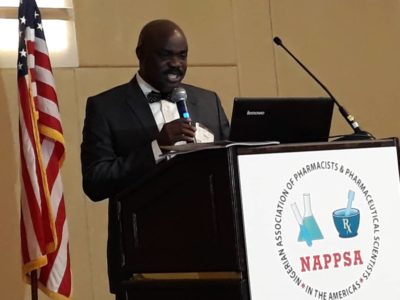
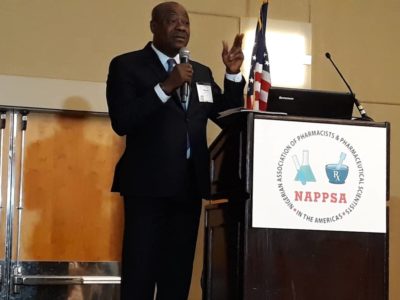
It was a moment filled with mixed feelings as the outgoing President of the Nigerian Association of Pharmacists & Pharmaceutical Scientists in the Americas (NAPPSA) Dr Leo Egbujiobi gave the stewardship of his two years tenure at the 13th Annual Scientific Conference & Exposition of NAPPSA, held at the Westin Buckhead, Alanta, Georgia, United States.
Egbujiobi, who appreciated all executives of his cabinet and board of trustees that assisted in formulating concepts and overseeing those concepts said it has been a great two year of service.
The outgoing President, Dr Leo Egbujiobi, handing over to the new President, Dr Anthony Ikeme.NAPPSA: Egbujiobi Hands Over, Ikeme Seeks Cooperation of Members
”We believe that NAPPSA was founded on the tripod of community pharmacists, clinical and academic pharmacists, physical, chemical and regulatory scientists, while allied health practitioners are similarly an important part of NAPPSA. We have been guided by these principles in trying to add value to the tremendous amount of work done by my predecessors”, he stated.
While he highlighted progress made by his administration in advancing the course of the association, he said the work is not finished, as they have tried to lay the foundation for the next generation of NAPPSA.
He urged the incoming president to continue from where he stopped, in collaborating with the Nigerian Medical Association (NMA); Pharmaceutical Society of Nigeria (PSN); Association of Nigerian Physicians in the Americas (ANPA) and Nigerian Association of Nurses in North America (NANNA) in ensuring stability among the three principal players in the Nigerian healthcare delivery system.
Egbujiobi also stressed the need to generate more revenue for the association, saying the newly reconstituted Foundation Board should be empowered with a director, whose responsibility will be to increase NAPPSA’s revenue.
For the incoming president of NAPPSA, Dr Anthony Ikeme, he expressed delight in service the association, noting that he remains indebted to the founding members for their intuition and vision in brining pharmaceutical and healthcare professionals from all walks of life under one umbrella organisation, NAPPSA.
Ikeme, who sought for the cooperation of all members, stated that there are more frontiers to overcome in spite of the previous accomplishments of the association. “The good works that NAPPSA does in the United States and Nigeria must be viewed alongside the obstacles we had to overcome to accomplish these great deeds”, he emphasised.
Thus, he charged all members to rise to lift the association to the next level of progress, by forging greater partnership with likeminded groups in homeland, knowing that great nations are built when the diaspora and homeland intersect to form a seamless bond for progress. “The straight-line that exists today between the Silicon Valley in California and Bangalore in India is a lesson we must learn”, he said.
A new research has recently revealed that eating Mediterranean diet could help older women with high blood pressure and Type 2 diabetes reduce the risk of cardiovascular attacks, strokes and related conditions.
According to the recent statistics released from the Federal Ministry of Health, 40 percent of Nigerians suffer from different illnesses like diabetes, stroke, heart attack and mental illnesses. An estimated 30 percent of these patients are likely to die of heart disease, and 16 percent will die of stroke.
The new study, conducted by researchers from the University of California, including a professor of epidemiology, focused on data from the Women’s Health Initiative, a massive long-term project exploring disease prevention in postmenopausal women. It included more than 5,800 women who developed diabetes as adults but reported no cardiovascular disease at the project’s outset. The researchers scored detailed food questionnaires from the women according to how closely their responses fit each of four dietary patterns.
Prevention, they say is better than cure
Three patterns , an “alternate” Mediterranean diet, adapted for Western tastes; the Dietary Approach to Stop Hypertension (DASH); and American Diabetes Association recommendations – all advocate eating more fruits, vegetables, nuts and seeds, legumes, whole grains and some dairy, less added sugars and red and processed meat. The fourth pattern, a Paleolithic-style diet, emphasizes meat, fruit, nuts, greens and other vegetables, and discourages consumption of grains, dairy, added sugars and alcohol.
The researchers tracked new cardiovascular disease in the women over an average of 12.4 years. About 11 percent developed heart disease, and more than 6 percent had a stroke.
Women whose scores were among the highest for the DASH diet were 31 percent less likely to develop cardiovascular problems than those with the lowest scores, the study found. Those with the highest scores for the ADA guidance and the Mediterranean-style diet had 29 percent and 23 percent lower risk, respectively.
The study, published in the Journal of the American Heart Association, found no link between a high paleo score and a risk that was either lower or higher.
Research is scarce about diet and heart health in people with Type 2 diabetes, said senior study author Andrew Odegaard, because food recommendations for these patients are based largely on information from populations without diabetes.
“These findings support current dietary-related clinical practice recommendations for populations with Type 2 diabetes as being one approach to improve cardiovascular risk,” said Odegaard, assistant professor of epidemiology at the University of California, Irvine.
For people in general, diets should include more vegetables, fruits, legumes, nuts, whole grains, lean protein and fish, with less saturated fat, cholesterol and sodium, according to guidelines from the American College of Cardiology and American Heart Association. The guidelines also advise people to minimize trans fats, processed meat, refined carbohydrates and sweetened drinks.
Nurse practitioner Cindy Lamendola, who was not part of the research team, believes the study is a helpful addition to the body of evidence about diet in Type 2 diabetes.
“With all the dietary fads the public is exposed to, findings like those in this study should be reassuring to the public and also an important message to share with postmenopausal women with Type 2 diabetes,” said Lamendola, clinical research nurse coordinator at Stanford University in California.
Although the 13th Annual Scientific Conference & Exposition of the Nigerian Association of Pharmacists and Pharmaceutical Scientists in the Americas (NAPPSA) held at the Westin Buckhead, Alanta, Georgia, United States, has been concluded, but there are more sights and stories of events that happened at the conference.
Pictures below reveal some memorable events at the conference.
Group photograph at the end of the conference.
Sir Ifeanyi Atueyi and Lady J. Atueyi (middle) flanked by participants at the conference, during the 80th birthday celebration of Atueyi at the conference.
Minister of Health, Dr Osagie E. Ehanire (right) with other participants at the conference.
Dr Leo Egbujiobi, Senator Donzella James, (Chairman, Interstate Cooperation )and Dr Anthony Ikeme.
Dr Funmi Ajayi, former NAPPSA president, receiving an appreciation award plaque from
Cross section of participants in a group photograph felicitating with Pharm.(Sir) Ifeanyi Atueyi at 80
L-R: Dr Shelly Ikeme; Dr Anthony Ikeme; and Mazi Sam Ohuabunwa.
Andrew Young, former United States Ambassador to the United Nations(middle) with Dr Leo Egbujiobi, outgoing NAPPSA president, and Dr Anthony Ikeme at the conference.
Dr Leo Egbujiobi, outgoing NAPPSA chairman, with other discussants in a plenary session at the conference.
Minister of Health, Dr Osagie E. Ehanire (middle)Pharm.(Mazi) Sam Ohuabunwa, PSN president (2nd from left); Pharm. Samuel Adekola, ACPN national chairman, and other participants in a photograph.
There seems to be an end in sight to the hitherto unstructured drug and medical products distribution system in Nigeria, as the National Agency for Food and Drug, Administration and Control (NAFDAC) is set to introduce a new technology to track fake and substandard drugs, as well as strengthen the drug supply chain in the country.
The introduction of the new system of tracing and tracking technology is crucial to the reduction in the circulation of fake and substandard medicines in the country, which is presently put at 17 per cent, said the NAFDAC Director General, Prof. Mojisola Adeyeye.
Adeyeye made this disclosure at the 2nd African GS1 Healthcare Conference, an international conference with over 300 participants from about 44 countries, held at Eko Hotel and Suites from 17 to 19 September, 2019.
L-R: Tom Woods, chairman, Global Steering Committee for Quality Assurance, World Bank; Prof. Mojisola Adeyeye, DG NAFDAC; Prof. Babatunde Salako, DG NIMR,representing Health Minister; and Phillippe Francois. held of Sourcing and Supply Chain at the Gloabl Fund, at the GS1 Conference.
Speaking further on the agency’s new initiative, she said the demand for a more effective and robust means of securing the medicines supply chain, which will be able to identify, capture, and share information about medical products and their movement in the supply chain, from manufacturer to dispenser/patient, led NAFDAC into a partnership with GS1 Nigeria for the achievement of this objective.
According to her, the new technology the agency is bringing on board is called GS1 barcoding system for verification and tracing of pharmaceutical products, while it is has been observed that about ten companies are already using GS1 bar coding system for verification only.
While explaining the five strategic objectives the agency strives to achieve through the GS1 barcode introduction, which includes establishing of governance structure for advocacy; strengthening regulatory systems; creating efficiencies; build and sustain technology; and enabling use of standards, Adeyeye stated that it is a five-year target for the agency. The NAFDAC boss asserted that the implementation of pharmaceutical traceability policies, processes, and systems will create an environment that provides visibility of product status from plant to patient.
“Positive outcomes requires strong regulatory governance, collaborative execution, and accountability through effective monitoring and evaluation. This is why NAFDAC will collaborate across government agencies and the private sector to meet the following strategic objectives”, she stated.
And the end of several plenaries at the 3-day international healthcare conference, the following decisions where unanimously taken by delegates and signed by Adeyeye and Mrs Margareth Ndomondo-Sigonda, head, Health Systems, AUDA NEPAD.
“To Increase patient safety through mitigating the risk of entry of SF medicines into the legitimate supply chain; Provide data-driven visibility of health commodities in national supply chains and stronger interoperability with global supply chains; Improve reliable access to essential health commodities through supply chain efficiencies and stock availability;Promote trust in the public and private pharmaceutical sectors and healthcare systems through supply chain security.
“As national and RECs, we will work with one another, development partners, and the private sector to: Create sustainable governance structures that are country-driven, broadly collaborative, and coordinated across our government agencies; Strengthen regulatory policies and procedures – including standardized health commodity labeling guidelines – that reinforce pharmaceutical traceability goals.
“Implement automatic identification and data capture technologies and supporting process improvements to advance supply chain efficiencies; Invest in the underlying health systems infrastructure that enables verification and track and trace of pharmaceuticals through the supply chain.
“We commit to pursuing this agenda through existing regional institutions, such as the AMRH and future African Medicines Agency, to establish robust, clear and coherent health commodity procurement guidelines that mutually reinforce broader traceability. As we embark on this long-term process, we will uphold the value of existing global supply chain standards as an essential tool in the pursuit of global interoperability”, they declared.
India has banned e-cigarettes because they endanger the health of youths in the country, the Federal Finance Minister, Nirmala Sitharaman, said on Wednesday.
“The federal cabinet has approved an ordinance to ban production, manufacture, import, export, transport, distribution, sales, storage and advertisement of e-cigarettes,’’ Mr Sitharaman said.
The ban includes the manufacture and production of similar products.
Currently, e-cigarettes are not manufactured in India and are imported or assembled in the country.
First-time offenders could face a year’s imprisonment and a fine of 100,000 rupees ($1,404), Federal Health Secretary, Preeti Sudan, said.
Image of an electronic cigarette
A second offence would fetch three years’ imprisonment or a fine of 500,000 rupees.
“So far, there are no studies in India on the health impact of the use of e-cigarettes but studies in the U.S. indicate that young people were at grave risk,’’ Mr Sudan said.
The Indian Council of Medical Research and similar organisations had recommended a ban.
E-cigarettes were becoming a style statement for the youth, Mr Sitharaman said.
Various farmers’ associations in India have also been demanding a ban on e-cigarettes, saying they were negatively impacting tobacco farmers.
The government’s ordinance has to be approved by parliament within six months.
Scientists have found that whenever we attempt to learn or read, a part of the brain called the “visual word form area” (VFWA) becomes reactive to the letters and characters we see on the page.
This was discovered in a recent study by researchers from the Radboud University Netherland and the University of Zurich, Switzerland, as they examined the impact of reading on the visual system of the brain, through their investigation of whether or not reading competes with other processes.
They noted that there is no brain centre devoted to reading, and written language is too recent an invention in human history for specific neural networks responsible for processing reading to have evolved.
The experts postulated that as we learn to read, the brain makes sense of the scribbles and shapes by recycling the same networks responsible for processing visual information like faces and homes.
Image of a black young woman reading
It the question has been asked over and over again, if learning to read takes up valuable space in the visual regions of the brain.
“When we learn to read, we exploit the brain’s capacity to form category-selective patches in visual brain areas,” said Alexis Hervais-Adelman, a leader of the research. “These arise in the same cortical territory as specialisations for other categories that are important to people, such as faces and houses. A long-standing question has been whether learning to read is detrimental to those other categories, given that there is limited space in the brain.”
According to the findings, over ninety adults living in a remote area of Northern India participated in the study and literacy among the participants was varied with some unable to read at all and others skilled in the task.
The researchers used functional Magnetic Resonance Imaging to scan the brains of the participants while they were shown different visual images, words, letters, and sentences.
By using brain scans, the researchers hoped to show that reading enhances the visual regions of the brain and increases the brain’s responses to visual stimuli.
The study published in the journal Science Advances showed that if learning to read takes up space and competes with other visual processes, the scans would show different patterns of brain activity between reading and non-reading individuals.
Recycling visual processes in the brain for reading did not detract from the brain’s ability to recognize faces or houses the researchers found.
“Far from cannibalising the territory of its neighbours, the visual word form area (VWFA) is rather overlaid upon these, remaining responsive to other visual categories,” said Falk Huettig, a leader of the study and author of the study. “Thus learning to read is good for you. It sharpens visual brain responses beyond reading and has a general positive impact on your visual system.”
For Sir Ifeanyi Atueyi, managing director/publisher, Pharmanews, the memories of the just concluded 13th Annual Scientific Conference & Exposition, of the Nigerian Association of Pharmacists and Pharmaceutical Scientists in the Americas (NAPPSA), held in Atlanta, Georgia, from 12 to 15 September, will linger long, as he was surprisingly celebrated for his 80th birthday at the conference.
Pharm. (Sir) Ifeanyi Atueyi and Mrs J. Atueyi celebrated with the cutting of 80th birthday cake, at the NAPPSA Conference.
The NAPPSA executives thought it necessary to use the conference to felicitate with the Pharmanews boss, who will be clocking 80 on 1 October 2019, ahead of the main celebration in Nigeria, with the cutting of a birthday cake.
Prof. Adeboye Adejare (second from right) after receiving his Fellowship award certificate.
Also at the conference, five members of NAPPSA were conferred with the Fellowship of the association, with their names as follow: Dr Ekopimo Ibia (posthumous), Pharm. Emma Omehe; Dr Teresa Pounds; Prof. Adeboye Adejare, and Pharm. Kunle Tometi.
Dr Teresa Pounds (second from right) after receiving her Fellowship award certificate.
-As U.S. Embassy, American Business Council, hold Intellectual Property Symposium
For the huge scourge of counterfeiting in the pharmaceutical sector to become a thing of the past, there is need for strategic synergy between public and private sectors, as well as cordial collaboration among government agencies, to put a stop gap to the manufacturing of fake and substandard pharmaceuticals in the country, stakeholders have said.
The pharma industry key players also lamented the colossal loss of lives attributed to the usage of counterfeit drugs, saying significant progress can only be achieved on the challenge if all parties will embrace intellectual property rights (IPR) protection as a key policy in Nigeria and for businesses in Nigeria.
These and others were the submissions made at the Intellectual Property(IP) Symposium organised by the United States Mission in Nigeria and the American Business Council, in collaboration with the Nigerian government, held at the Eko Hotel & Suites, Victoria Island, Lagos, from 16 -17 September 2019.
L-R: Chief Executive Officer, Federal Competition and Consumer Protection Commission (FCCPC), Mr Babatunde Irukera; Director General, National Agricultural Seed Council (NASC), Dr Olusegun Ojo; Director General, National Agency for Food and Drug Administration and Control (NAFDAC), Prof. Mojisola Adeyeye; Representative of Comptroller-General of Nigeria Customs, Col. Hameed Ali (Rtd) and Director General of Nigerian Copyright Commission (NCC), Mr John Asein, at the symposium.
The symposium, which was widely attended by top government functionaries and policy makers in different sector of the economy, had in attendance, Director General, National Agency for Food and Drug Administration and Control (NAFDAC), Prof. Mojisola Adeyeye; Chief Executive, Federal Competition and Consumer Protection Commission (FCCPC), Mr Babatunde Irukera; Director General of Nigerian Copyright Commission (NCC), Mr John Asein; Director General, National Agricultural Seed Council (NASC), Dr Olusegun Ojo; Senior officials of the Nigeria Police, Nigerian Army, Nigeria Customs Service, representative of the Standard Organisation of Nigeria (SON) among others.
Addressing participants at the symposium, Tanya Y. Hill, International Computer Hacking (ICHIP) attorney adviser, Sub-Saharan African, United States Department of Justice, expressed the delight of the Embassy and its partner in bringing together leading minds across Nigeria to examine the benefits of strong intellectual property protections and enforcement to the Nigerian creative, pharmaceutical, and industrial sectors, and their impact on the diversification of the Nigerian economy.
She noted that the two-day symposium will launch the Regional Pharmaceutical Crime Working Group, with the responsibility of building on the capacity programming that the U.S DEPARTMENT OF Justice (USDOJ) office of Overseas Prosecutorial Development and Training (OPDAT) has undertaken in the region to address the illicit trade in counterfeit pharmaceuticals.
U.S. Embassy Chargé d’affaires, Kathleen FitzGibbon, in her remarks, noted that the whole essence of intellectual property rights protection is to enhance innovation and creativity needed to bolster economic growth.
While highlighting some merits of intellectual property rights protection to include jobs creations and opening of new markets for goods and services, she said the challenge is not limited to a nation, rather it is a global issue. “This is not just an American issue, this is a global issue and as Nigeria moves ahead with goals of diversifying and shifting to a knowledge-based economy, a strong intellectual property rights regime will help attract investment and protect Nigerian ideas and Nigerian businesses,” Chargé FitzGibbon said.
L-R: Isioma Idigbe, Associate, Punuka Attorney & Solicitors of Universal Music; Gabriel Ogunyemi, country manager, Janssen Pharmaceuticals Nigeria; Margaret Olele, chief executive officer & secretary, American Business Council and David Lossignol, president, International Trademark Association, during the First Intellectual Property Symposium on copyright piracy and counterfeit pharmaceutical, held in Lagos.
In his keynote address, Professor Adebambo Adewopo (SAN), a former DG of the NCC, stressed that the opportunities and challenges of the global economy can only leave an unconnected country behind.
“While the IP debate has not been entirely new, one of the missing elements has been effective collaboration and cooperation that is needed to drive the debate and build momentum not only for achieving reform but also to combat both the domestic and worldwide industry of counterfeiting, piracy and cybercrime.
“Building strategic alliances within and outside the country is therefore critical considering the global nature of digital technologies that are readily available to this formidable industry. In these alliances, we are also seeking to strengthen key institutions responsible for protecting IPR and combating counterfeiting and piracy” Adewopo stated.
Describing the situation in the pharmaceutical sector, where more of research and development is conducted into medicines and new drugs to address various human conditions, he asserted that without a strong IP system to protect their investments, it is impossible to sustain their properties, and that is why counterfeiting is killing the industry.
“There is need for collaboration between the private and the public sector. The private in the sense that they are the owners of the medicines, then the public sector can help in the enforcement of laws against counterfeiting of the products. A synergy is highly needed, for instance, among NAFDAC, Customs and SON, as they are all responsible in different ways to ensuring that counterfeiting is subdued in the country”.
Responding to the discussion on inter-agencies collaboration, the NAFDAC DG, Prof. Adeyeye, concurred with the submission of Adewopo, but alleged that the management of SON has not been helping in terms of proper cooperation, noting that SON is supposed to monitor and regulate each component of a product, but that has not been in operation in Nigeria.
Adeyeye, who expressed her worries over the situation of things in the country, said the laws that created the agencies are creating more issues for the agencies, as the question of ‘who controls what’? among sister agencies has always been an issue.
She said: “A situation where a primary agency has become a secondary agency is what we have at hand. And this is not so with the United States SON or FDA, but we have problems here, thus, we need to see how to make things work, because if it is working in the U.S., it should work here in Nigeria”.
For Margaret Olele, chief executive officer, American Business Council, she saw the symposium as a result-driven advocacy against counterfeiting and piracy, saying that when several voices come together to reverberate and cheer the challenges around counterfeit or piracy, definitely, there are bound to be sure solutions to the challenge.
“Talking about is always the first step, pulling together people who will talk about it, like the law makers, policy makers, and looking at how we’ll slowly but surely kick against the issue of counterfeiting and piracy is critical”, she emphasised.
The American Business Council is the affiliate of the US Chamber of Commerce and the voice of US businesses in Nigeria. The Council works with critical stakeholders – US Embassy and other critical stakeholders to improve the business environment. “Intellectual Property rights creates an incentive for innovation and investment in research and development. Both are critical to the future of any business, and the economic growth of a country. IP protection is of key interest to US companies as issues of innovation and respect for knowledge assets constitute our intrinsic culture”, said the President of American Business Council, Dipo Faulkner.
The exhibitions at the symposium provided a platform to stress the importance of strengthened intellectual property laws and showcasing products and services of interest to public and private stakeholders. It was an opportunity to meet an array of prospective Nigerian buyers and partners. A movie screening of a Nigerian-produced documentary film, ‘Fishbone’, which capturing the issues on counterfeit pharmaceuticals was displayed.
The 2019 edition of the Nigerian Association of Pharmacists and Pharmaceutical Scientists in the Americas (NAPPSA) Conference, held at the Westin Buckhead, Alanta, Georgia, United States, has come and gone with memorable impacts on participants.
Photographs below captured some important moments at the conference.
Pharm. Kunle Tometi and Pharm. Ahmed Yakasai, displaying their certificates of membership, presented by the PSN president and NAPPSA president, respectively.
The Minister of Health, Dr Osagie Ehanire, addressing participants during the Gala Banquest on Saturday, 14 September, with the outgoing NAPPSA President, Dr Leo Egbujiobi, standing beside him.
The new NAPPSA President, Dr Anthony Ikeme, swearing-in the newly constituted board members
The outgoing NAPPSA President, handing over to the new President, Dr Anthony Ikeme.
Dr Omobolanle Olowu, receiving the appreciation award from Dr Nneka Egbujiobi, daughter of Dr Leo Egbujiobi.
Dr Echeazu Ogu, receiving the appreciation award from Dr Nneka Egbujiobi, daughter of Dr Leo Egbujiobi.
Dr Henrietta Ukwu, receiving the appreciation award from Dr Nneka Egbujiobi, daughter of Dr Leo Egbujiobi.
Dr Teresa Pounds, receiving the appreciation award from Dr Nneka Egbujiobi, daughter of Dr Leo Egbujiobi.
Prof. Sunny Ohia, receiving the appreciation award from Dr Nneka Egbujiobi, daughter of Dr Leo Egbujiobi.
Pharm. Emma Ezirim, receiving the appreciation award from Dr Nneka Egbujiobi, daughter of Dr Leo Egbujiobi.
Dr Nkere Ebube, receiving the appreciation award from Dr Nneka Egbujiobi, daughter of Dr Leo Egbujiobi.
Dr Patrick Nwakama, receiving the appreciation award from Dr Nneka Egbujiobi, daughter of Dr Leo Egbujiobi.
President, Pharmaceutical Society of Nigeria, Pharm. (Mazi) Sam Ohuabunwa, presenting an award plaque to Pharm. Kunle Tometi for participating in the ACPN conference in Kano, while the National Chairman of ACPN Pharm. Samuel Adekola, looks in admiration
Pharm. Samuel Adekola, presenting a paper on Dividends of Partnership: The ACPN and NAPPSA Experience
L-R: Pharm. Vern Ohaya; Pharm. Ahmed Yakasai, immediate past president, PSN; Sir Ifeanyi Atueyi; managing director, Pharmanews; Pharm. Olumide Akintayo, former PSN president; and Pharm. Samuel Adekola, ACPN national chairman
Mazi Sam Ohuabunwa, PSN president, presenting an award plaque on behalf of NAPPSA to Pharm. Kunle Tometi, after his paper on NAPPSA Business to Business Group, while Dr Leo Egbujiobi looks on
Pharm. Kunlke Tometi, president, Total Pharmacy, Dallas, TX, presenting his paper on Business to Business Group
Scientists at Bristol University UK, have recently found a link between intake of paracetamol during pregnancy and potential adverse behavioural and cognitive outcomes during childhood.
Paracetamol is commonly used to relieve pain during pregnancy and is recommended as the treatment of choice by many medical experts.
According to the lead author, Jean Golding, the findings reinforce the advice that women should be cautious when taking medication during pregnancy.
She added that most epidemiological studies assessing the potential adverse effects of taking paracetamol during pregnancy have focused on childhood asthma and results from several of them have confirmed a robust association.
Image of a pretty black woman carrying a baby in her woman
Using questionnaire and school information from Bristol’s “Children of the 90s” study, researchers examined 14,000 children. 43 per cent of the mothers of the children said that when they were seven months pregnant, they had taken paracetamol ‘sometimes’ or more often during the previous three months. Researchers examined results of the children’s memory, IQ and pre-school development tests, temperament and behaviour measures.
They found an association between paracetamol intake and hyperactivity and attention problems as well as with other difficult behaviours with young children that were not accounted for by the reasons why the medication was taken or social factors. However, this was no longer the case by the time the children reached the end of primary school. Also, boys appeared to be more susceptible than girls to the possible behavioural effects of the drug.
“It is important that our findings are tested in other studies, we were not in a position to show a causal link, rather an association between two outcomes. It would also be useful now to assess whether older children and adults are free of difficult behavioural problems if their mother had taken paracetamol.” Golding noted
A worldwide study conducted by scientists from Imperial College London, United Kingdom and the University of Loannina in Greece has recently linked too much iron to high risk of bacterial skin diseases.
Experts define skin infection as an infection of the skin that can be caused by bacteria, fungus, viruses or parasites.
According to the Nigerian journal of medicine, the annual prevalence of all types of skin infections increased from 6.9 percent in 2009 to 7.4 percent in 2015. The average annual prevalence was 7.1percent.
Iron on the other hand is a mineral, and its main purpose is to carry oxygen in the hemoglobin of red blood cells throughout the body so cells can produce energy.
Image of a woman having issues with her skin
Iron helps eliminate fatigue, supports the immune system, improves muscle strength, and prevents anemia.
Anemia is a condition that develops when your blood lacks enough healthy red blood cells or hemoglobin. Hemoglobin is a main part of red blood cells and binds oxygen.
According to the World Health Organization (WHO), anemia affects around 1.62 billion people worldwide.
According to the findings reported on PLOS JOURNAL, researchers conducted a study to uncover the impact of both low and high iron levels. They analyzed the role of iron in a variety of health conditions, using genetic and clinical data from about 500,000 people in the UK Biobank.
UK Biobank is a large long-term biobank study in the United Kingdom which is investigating the respective contributions of genetic predisposition and environmental exposure to the development of disease.
Dr Beben Benyamin, co-lead study author, a geneticist at the University of South Australia (UniSA) in Adelaide, explained that he and his colleagues used a statistical method called Mendelian randomisation that employs genetic data to better estimate the causal effect of iron status on 900 diseases and conditions.
He added that through this method, they found a link between excess iron and a reduced risk of high cholesterol.”
The positive effects of iron are well documented. Another recent study led by UniSA found that high iron levels protect against anemia and prevent high cholesterol.
“This could be significant given that raised cholesterol is a major factor in cardiovascular disease and stroke, causing around 2.6 million deaths each year according to the [WHO],” says Dr. Benyamin.
In contrast, not many studies have investigated the negative effects of excess iron, which can cause liver disease, heart problems, and sometimes diabetes. High iron levels may also lead to a higher risk of bacterial skin infections, such as cellulitis (a bacterial infection that affects the inner layers of the skin) and abscesses.
Previous research has shown that iron is an important nutrient for the survival and growth of bacteria, but this global study is the first to use large-scale population data to further investigate the link between high iron levels and bacterial skin infections.
Co-lead author Dipender Gill, from Imperial College London, added that this global study was able to “rapidly and efficiently determine the effect of genetically raised iron status on hundreds of clinically relevant outcomes using data that has already been captured.”
The study confirmed iron’s ability to protect against anemia, and it showed that this mineral may also reduce the risk of high cholesterol.
However, it also revealed that high iron levels can cause skin infections. Previous trials manipulated iron status in people with anemia, but to date, none of these studies focused on iron levels to manage skin infections or regulate cholesterol.
The Researchers believe that they needed trial data before attempting iron manipulation for these conditions.
The 44th Annual National Conference of the Pharmaceutical Association of Nigerian Students (PANS), tagged “Harmony 2019” with the theme, “Pharmaceutical care: An evolutionary trend in global pharmacy practice”, commenced Monday 16 September 2019, at the Usmanu Danfodiyo University, Sokoto, Nigeria.
Image of the Sponsors of the Nations Pans Cponvention
The conference was made quite glamorous with the presence of notable personalities that graced the opening ceremony including Sokoto State Governor Aminu Waziri Tambuwal ably represented by the Dr Muhammad Ali Inname, (Mutawallen Binji) commissioner, Sokoto State Ministry of Health; the host, Vice- Chancellor Usmanu Danfodiyo University Sokoto, Lawal Suleman Bilbis, also the President, Pharmaceutical Society of Nigeria, Pharm. Mazi Sam Ohuabunwa, and Dean, Faculty of Pharmaceutical Sciences, Usmanu Danfodiyo University Sokoto, Dr M. I. Abdullahi.
Also in attendance was the chairman of the opening ceremony, Professor Magaji Garba; and the Dean Student Affairs, Prof. Aminu Mode, equally made the event remarkable. The Pharmacy students equally turned out for the conference en masse, which gave the event the needed ovation. .
Researchers from University of British Columbia (UBC) in partnership with the Provincial Health Services Authority’s (PHSA) have recently found an increased risk of heart diseases among patients who were on antibiotics.
In a study published in the Journal of the American College of Cardiology, the researchers found that current users of ciprofloxacin and other fluoroquinolone antibiotic drugs, face a greater risk of developing aortic and mitral regurgitation, where the blood backflows into the heart, compared to patients who take amoxicillin, a different type of antibiotic.
The study revealed that some physicians favour fluoroquinolones over other antibiotics for their broad spectrum of antibacterial activity and high oral absorption, which is as effective as intravenous, or IV, treatment.
“You can send patients home with a once-a-day pill,” said Mahyar Etminan, lead author and associate professor of Ophthalmology and Visual Sciences in the faculty of medicine at UBC. “This class of antibiotics is very convenient, but for the majority of cases, especially community-related infections, they’re not really needed. The inappropriate prescribing may cause both antibiotic resistance as well as serious heart problems.”
Study Links Antibiotics Usage to Increased Heart Risk
The researchers hope their study helps inform the public and physicians that if patients present with cardiac issues, where no other cause has been discovered, fluoroquinolone antibiotics could potentially be a cause.
“One of the key objectives of the Therapeutic Evaluation Unit is to evaluate different drugs and health technologies to determine whether they enhance the quality of care delivered by our programs or improve patient outcomes,” said Dr Bruce Carleton, director of the unit and research investigator at BC Children’s Hospital, a program of PHSA. “This study highlights the need to be thoughtful when prescribing antibiotics, which can sometimes cause harm.
He added that as a result of this work, they will continue working with the BC Antimicrobial Stewardship Committee to ensure the appropriate prescribing of this class of antibiotics to patients across British Columbia, and reduce inappropriate prescribing.”
For the study, scientists analyzed data from the U.S. Food and Drug Administration’s adverse reporting system. They also analyzed a massive private insurance health claims database in the U.S. that captures demographics, drug identification, dose prescribed and treatment duration. Researchers identified 12,505 cases of valvular regurgitation with 125,020 case-control subjects in a random sample of more than nine million patients.
They defined current fluoroquinolone exposure as an active prescription or 30 days prior to the adverse event, recent exposure as within days 31 to 60, and past exposure as within 61 to 365 days prior to an incident. Scientists compared fluoroquinolone use with amoxicillin and azithromycin.
The results showed that the risk of aortic and mitral regurgitation, blood backflow into the heart, is highest with current use, followed by recent use. They saw no increased risk aortic and mitral regurgitation with past use.
Etminan hopes that if other studies confirm these findings, regulatory agencies would add the risk of aortic and mitral regurgitation to their alerts as potential side effects and that the results would prompt physicians to use other classes of antibiotics as the first line of defense for uncomplicated infections.
This study was funded and conducted by the department of ophthalmology and the Therapeutic Evaluation Unit at the Provincial Health Services Authority.
Do you struggle to get to sleep, no matter how tired you are? Or do you wake up in the middle of the night and lie awake for hours, anxiously watching the clock? Experts have identified Insomnia as the culprit. Insomnia is a common problem that takes a toll on your energy, mood, health, and ability to function during the day.
Chronic insomnia can even contribute to serious health problems, as it has been rightly pointed out by medical practitioners.However, simple changes to your lifestyle and daily habits can put a stop to sleepless nights.
A lady finding it difficult to sleep
A medical practitioner, Dr Harrison Nelson, with May Hospital, Ilasa, Lagos, has recommended some relaxation techniques to treat insomnia, otherwise known as sleeplessness.
According to him, avoiding large meals, especially late in the day, may help you sleep. “A light snack of warm tea before bed time will be of help. He disclosed that indulging in strenuous exercise, especially before bed time, may stimulate you and make it hard for you to fall asleep. Excessive fluid intake before bed time should also be avoided, to beat insomnia,” he added.
In an exclusive chat with Pharmanews, he disclosed that insomnia is often caused by psychological problems, moral disorder and neurological problem. It results in poor concentration, poor memory, impaired social interaction and irritability.
He listed symptoms of insomnia to include:
Difficulty falling asleep, despite being very tired
Waking up frequently during the night
Trouble getting back to sleep, when awakened
Relying on sleeping pills or alcohol to fall asleep
Waking up too early in the morning
Daytime drowsiness, fatigue or irritability
Difficulty concentrating during the day
Difficulty falling asleep despite being tired
Exhausting sleep
Nelson advised people suffering from sleeplessness to see a physician and not rely on the sleeping pills alone. This will help to ensure that the treatment will be evaluated and the cause will be determined.
He explained that Psychological problems can cause insomnia such as depression, anxiety, chronic stress and bipolar disorder.
Some medical problems too, he pointed out, can cause insomnia: such as asthma, allergies, Parkinson’s disease, hyperthyroidism, acid reflux, kidney disease, and cancers, chronic pain.
However he emphasized that anxiety and depression are two of the most common causes of chronic insomnia.
“Most people suffering from an anxiety disorder or depression have trouble sleeping. What’s more, the sleep deprivation can make the symptoms of anxiety or depression worse. If your insomnia is caused by anxiety or depression, treating the underlying psychological issue is the key to the cure.”
He outlined the following means as cure for the problem:
Treatment options for sleeplessness:
“While treating underlying physical and mental issues is a good first step, it may not be enough to cure your insomnia. You also need to look at your daily habits. Some of the things you’re doing to cope with insomnia may actually be making the problem worse.
“For example, if you’re using sleeping pills or alcohol to fall asleep, this will disrupt your sleep even more over the long-term. Or if you drink excessive amounts of coffee during the day, it will be more difficult to fall asleep later. Oftentimes, changing the habits that are reinforcing sleeplessness is enough to overcome insomnia altogether. It may take a few days for your body to get used to the change, but once you do, you will sleep better.”
Adopting new habits to help you sleep
Make sure your bedroom is quiet, dark, and cool. Noise, light, and heat can interfere with sleep. Try using a sound machine or earplugs to hide outside noise, an open window or fan to keep the room cool, and blackout curtains or a sleep mask to block out light.
Stick to a regular sleep schedule. Support your biological clock by going to bed and getting up at the same time every day, including weekends. Get up at your usual time in the morning, even if you are tired. This will help you get back in a regular sleep rhythm.
Avoid naps. Napping during the day can make it more difficult to sleep at night. If you feel like you have to take a nap, limit it to 30 minutes before 3 pm.
Avoid stimulating activity and stressful situations before bedtime. This includes vigorous exercise; big discussions or arguments and TV, computer, or video game use.
Limit caffeine, alcohol, and nicotine. Stop drinking caffeinated beverages at least eight hours before bed. Avoid drinking alcohol in the evening; while alcohol can make you feel sleepy, it interferes with the quality of your sleep.
As Pharmanews Ltd., celebrates its 40th anniversary, it is our pleasure to give away some freebies to our readers, through the introduction of Pharmanews Treasure Hunt, a weekly activity that promises to give as much as N2000 airtime to the fastest fingers.
The Treasure Hunt, which will commence on Monday 16 September will run till 30 October 2019, will allow our readers online to read through our stories of July 1 to 15, and while reading, they will find airtime to be loaded on their phones.
As a rule of the game, anyone who first finds any of the recharge cards is expected to drop a “thank you” comment on the story.
TIPS AND CLUES ON THE TREASURE HUNT
Follow and like us on our social media handles @PharmanewsLtd on Facebook, Twitter and Instagram.
The stories to be read for the hunt are published within July 1 to 15, 2019 on the website.
The categories of stories to be searched are: Top Stories, Pharmacy Practice, Food & Nutrition and Public Health.
Once an airtime is found, drop a “thank you” comment on the story.
Obafemi Awolowo University (OAU) has pipped two-time winner, University of Ibadan (UI), to emerge champion of the 5th Annual Sir Ifeanyi Atueyi Debate Competition while University of Nigeria (UNN) won the essay category.
Proudly sponsored by Emzor, Alpha and Sun (Ranbaxy) Pharmaceuticals, the annual contest took place at the Faculty of Pharmacy’s new auditorium of UI on 11 September, 2019.
L-R: Victor Osundele, the lead speaker of OAU team receiving his ‘Best Orator’ award from Moses Dike representative of Sir Ifeanyi Atueyi.
With 21 entries from various schools across the country, Oreoulwa Alabi, president, Pharmaceutical Association of Nigerian Students (PANS – UI Chapter) explained that five faculties of Pharmacy namely Olabisi Onabanjo University (OOU), University of Nigeria (UNN), Delta State University (DELSU), University of Benin (UNIBEN) and the host varsity (UI) were shortlisted for the essay competition.
When the judges reeled out names of the winners, Nancy Amadi from UNN emerged top. She beat the likes of Soyebo Abdul-Ahmed (UI), Saheed Sanyaolu (OOU), Olukoya Omotosho (UI) and Folagbade Praise to the second, third, fourth and fifth place respectively.
While explaining the criteria deplored to decide winners, the judges explained that the panelists considered a number of factors ranging from number of points garnered, manner of presentation, dress code and composure to decide who the eventual winner would be.
In the debate category, the host team (UI) put up a strong resistance for losing out in the essay contest.
A cross section of Pharmanews team, organisers and winners of the competition displaying their various award plaques and certificates.
The debate bothered on three sensitive national issues – “Solutions to Nigeria’s internal security challenges”; “Proliferation of cybercrime in Nigeria: Did youths fail Nigeria or Nigeria failed them?” and “Should there be child birth restriction policy in Nigeria?”
Despite fighting tooth and nail to retain the 2019 edition of the annual debate contest, the UI team lost to a gallant OAU gladiators who, apparently, were better prepared for the tourney.
At the end of the heated debate, Adeolu Oyeniran (a final student of OAU) clinched the ‘Best Debater’ award while Victor Osuntokun won the “Best Orator’ award.
R-L: Moses Dike, business development manager and Solomon Ojigbo, IT manager, Pharmanews Limited receiving the award of excellence on behalf of Sir Ifeanyi Atueyi from Oreoulwa Alabi, president, PANS (UI Chapter) and Habeeb Habeeb, (L & D) coordinator, Sir Ifeanyi Atueyi Essay & Debate Competition.
In the same vein, University of Ibadan and Delta State University (DELSU) were annouced as first and second runners up respectively.
Shortly after certificates of participation were issued to all students from each participating school, the organisers took out time to appreciate the patron of the contest.
“We are honouring Sir Ifeanyi Atueyi today with a special Award of Excellence for birthing the initiative of this essay & debate competition.
“To our esteemed sponsors – Emzor, Alpha and Sun (Ranbaxy) Pharmaceuticals, we appreciate you. We also want to congratulate OAU for winning the 5th edition of the contest thereby becoming the next host”, he noted.
It would be recalled that the Sir Ifeanyi Atueyi Debate & Essay Competition initiative was launched in 2014 with a mandate to allow each year’s winner host the next edition.
Arguments for a return to the use of local and indigenous cosmetics of our land received a big boost on Tuesday, when medical scientists converged at the main hall of the Nigerian Institute of Medical Research (NIMR) Yaba, to x-ray the negative impacts of chemical exposures from cosmetics and personal care products on the health of Nigerians.
Asserting that no one is free from the dangerous chemical exposures from these beauty products and other personal care effects like body creams, soaps, powders, perfumes, toothpastes and others, which are being used by old and young, the researchers listed the health implications of such unsafe exposures to include: cancer, hypertension, diabetes, organ system toxicity, endocrine disruption, skin absorption, respiratory tract irritation, eye and lung irritation, irreversible stretch marks, kidney and liver damage, speech and hair impairment, severe dermatitis, among others.
Director General, Nigerian Institute of Medical Research(NIMR) Prof. Babatunde Salako (middle,front row); Dr Chidinma Gab-Okafor, public health practitioner, Department of Biochemistry and Nutrition, NIMR (second from left, front row); with other dignitaries at the public lecture in a group photograph.
Delivering a special public lecture titled: “The overview of the impact of chemical exposures from cosmetics and personal care products”, Dr Chidinma Gab-Okafor, a public health practitioner, from the department of Biochemistry and Nutrition, NIMR, called the attention of the audience to the inherent dangers in the usage of cosmetics without the knowledge of the ingredients they are made of.
The public health practitioner, who expressed her major concerns for infants and unborn babies, who are victims of their mothers’ ignorance act, in exposing them through the use of unverified products, urged mothers and all women to always read the labels on their infants products before purchasing them.
Cross section of participants at the public lecture.
Having said that, she however revealed her worries in the current legislation provided by regulatory bodies in the country, stating that they do not require manufacturers to disclose for instance, public safety of fragrance ingredients, which is contrary to what obtains in developed countries like the United States.
She therefore listed some chemicals Nigerians should avoid in their cosmetics to include: benzoyl peroxide, DEA MEA TEA, dioxin, DMDM hydatoin & urea,FD&C colour & pigment, paraben, peo, phlhalates, propylene glycol &butylene glycol, sodium lauryl sulfate & sodium laureth sulfate, sunscreen chemical and tridosan.
Fielding questions from journalists after the lecture, the Director General, NIMR, Prof. Babatunde Salako noted that the essence of the lecture was to create awareness among the populace that most of the things that they use, cream, soap, toothpaste, perfume, powder, may be containing unsafe substances, either as contaminants or as part of chemicals used in their preparations; some of the which can be dangerous to the body, sometimes as bad as cancers, kidney diseases and others.
“These are things that may not occur in the early stage of using them. Over the years, there are cumulative effects. I believe the essence of the lecture is to reawaken the interest of regulatory agencies who are in charge of ensuring standards in the production of these items to ensure that these contaminants or chemicals that they use are either on the minimally acceptable level and where they should not be there at all, they are to ensure they are not there.
”The other issue is to create awareness among researchers that there are public health issues they need to pay more attention to rather than running after highfalutin issues. More importantly, to see if they can come together to bring out a safe material they are already use to as natural product”, he stressed.
It is fast becoming a norm in our society today that people hardly take a meal without a bottle of soft drink, and it is more shocking to know that this practice is repeated on the number of times they eat in a day, as scientists have established a correlation between daily soft drink consumption and early death.
According to experts, soft drinks contain a high percentage of sugar, and regular consumption of sugary drinks is linked to numerous health problems including diabetes, heart disease, asthma, chronic obstructive pulmonary disease (COPD) and obesity.
A recent study from JAMA Internal Medicine has shown that people who regularly consume soft drinks have a higher risk of dying earlier than those than consumed glasses of water.
The study, one of the largest of its kind, analyzed data from more than 450,000 men and women from 10 European Countries.
On enrolment, the participants gave information about their food and drink consumption, either by filling in questionnaires or in interviews. Their average age was 51 years old, and 71 percent were female. None had heart disease, cancer, diabetes, or stroke at the outset.
Study Links Daily Intake of 120cl Soft Drink to Premature Death
Of the participants taking part in the analysis, 41,693 died during a follow-up that averaged 16.4 years and ranged from 11.1 years in Greece to 19.2 years in France.
The researchers compared deaths during the follow-up in those who said that they drank soft drinks every day with those who said that they consumed hardly any that is fewer than one glass per month.
Soft drink consumption include drinking of fizzy soft drinks such as cola and lemonade; isotonic or energy drinks; diet and low-calorie soft fizzy drinks; and diluted syrups, such as fruit cordial or squash. Soft drinks consumption did not include fruit juice.
Their analysis revealed that consumption of two or more bottles of artificially-sweetened soft drinks a day was positively associated with deaths from circulatory disease. One or more glasses a day of sugar-sweetened drinks was associated with deaths from digestive diseases.
At the study outset, the participants also answered questions about their health and lifestyle.
From this information, the researchers were able to rule out any influence from factors such as physical activity, body mass index (BMI), education, smoking, and diet.
A further analysis also revealed that in comparison to consuming hardly any, drinking two or more glasses per day of artificially sweetened soft drinks was tied to a higher risk of circulatory diseases.
In the cases of sugar sweetened soft drinks, the link was to a higher risk of death from digestive diseases.
“No association,” write the authors, “was observed between soft drink consumption and overall cancer death.”
Additionally, the researchers noted they could not establish a direct correlation between elevated soft-drink consumption and a higher risk of death, given the observational design of the study. They pointed out, however, that soft drink consumption may be an indicator of an overall unhealthy lifestyle.
The researchers also said additional studies are needed to investigate the possible health effects of artificial sweeteners on mortality.
“We found that higher soft drink intake was associated with a greater risk of death from any cause regardless of whether sugar-sweetened or artificially sweetened drinks were consumed,” said Dr Neil Murphy, the study’s lead author and a scientist at the International Agency for Research on Cancer, part of the World Health Organization.
He added, “Our results for sugar-sweetened soft drinks provide further support to limit consumption and to replace them with other healthier beverages, preferably water.”
Despite the study’s findings, researchers noted it contains several limitations. Participants were required to report their levels of consumption, except in Greece, Italy and Spain, where data was collected using personal interviews.
a) Facilitation glutamic acid decarboxylase, the enzyme responsible for GABA synthesis and inhibition of GABAaminotransferase, the enzyme responsible for the breakdown of GABA (enhance GABA accumulation)
b) Inhibition of voltage sensitive Na+ channels
c) Inhibition of low threshold (T-type) Ca2+ channels
Researchers from American Institute of Physics have recently found that children who were exposed to alcohol while in the womb showed altered brain connections that were consistent with intellectual disability.
Their findings were reached by measuring the responses from a brain imaging technique called magneto encephalography (MEG) and then analysing them with tools developed using chaos theory.
With this study, the researchers have taken one of the first major steps in finding the biological changes in the brain that drive fatal alcohol spectrum disorder (FASD).
FASD is one of the leading causes of intellectual disability worldwide and is linked to a wide array of neurological issues, including Attention Deficit Hyperactivity Disorder (ADHD).
Previous attempts to study the brain circuitry in affected individuals had been hampered by the difficulty of drawing conclusions from complicated MEG data.
To get to the heart of the problem, members of the team developed a sophisticated computer technique called Cortical Start Spatio-Temporal multidipole analysis that could identify which areas of the brain were active when research subjects were in the MEG machine.
After data from 19 FASD patients and 21 subjects without FASD was collected, the computational approach revealed several areas of the brain that showed impaired connectivity among the FASD group.
Taking alcohol during pregnancy could cause a lot of harm to the unborn child – Scientist
The findings show that teenagers who were exposed to alcohol in the womb were more likely to have issues with connections through their corpus callosum, the band of brain tissue that connects the left and right halves of the brain. Deficits in this area have been reported in people with schizophrenia, multiple sclerosis, autism, depression and abnormalities in sensation.
Findings of this study are consistent with warnings from Centres for Disease Control and Prevention (CDCP) that there is no known safe amount of alcohol use during pregnancy or while trying to get pregnant. The CDCP also emphasises that there is no safe time during pregnancy to drink and that all types of alcohol are harmful, including all wines and beer.
More importantly, medical researchers have disclosed that when a pregnant woman drinks alcohol, so does her baby. They therefore advise pregnant women to completely abstain from drinking alcohol.
The curiosity of scientists from Oregon State University (OSU), USA, on how best to conclude on dietary guidelines for vitamin E has shown a surprising new findings that though vitamin E is fat soluble, one does not have to consume fat along with it for the body to absorb it.
Vitamin E in human diets is most often provided by oils, such as olive oil. Many of the highest levels are in foods not routinely considered dietary staples, such as almonds, sunflower seeds and avocados.
The study corresponding author, Traber Maret, a leading authority on vitamin E who’s been researching the micronutrient for three decades explained that before now she and team think they can eat fat and Vitamin E at the same time but now their study have shown that one can wait 12 hours without eating anything, then eat a fat-containing meal.
According to the study published in The American Journal of Clinical Nutrition, vitamin E, known scientifically as alpha-tocopherol, has many biologic roles, one of which is to serve as an antioxidant, said Traber, a professor in the OSU College of Public Health and Human Sciences, and Ava Helen Pauling Professor at Oregon State’s Linus Pauling Institute.
Image of Fatty foods that allows the absorption of Vitamin E
According to the new research, federal dietary guidelines call for 15 milligrams of vitamin E daily (by comparison, 65-90 milligrams of vitamin C are recommended).
“There’s increasingly clear evidence that vitamin E is associated with brain protection, and now we’re starting to better understand some of the underlying mechanisms,” Traber said.
In this latest study, Traber and collaborators used a novel technique involving deuterium-labeled vitamin E, administered both orally and intravenously, to study fractional vitamin E absorption in a group of non-obese, non-diabetic women ages 18-40 with normal blood pressure.
Fractional absorption means just what you would think the fraction of the dose absorbed by the body rather than metabolized and excreted. Fractional absorption dictates how much of something, in this case vitamin E, a person needs to take to maintain the correct level in his or her body.
Deuterium, the vitamin E marker in this study, is an isotope of hydrogen with double the atomic mass of the regular version; deuterium has both a proton and a neutron, compared to just a proton for normal hydrogen, and is a common tracer in investigations of biochemical reactions.
Study subjects at the National Institutes of Health Clinical Center were given both oral and IV vitamin E and drank a liquid meal containing either 40 percent fat or no fat. Researchers then used a combination of tightly controlled dietary intakes to determine the roles fat and fasting played in vitamin E absorption.
“What this study says is, vitamin E gets taken up into the intestinal cell and sits there and waits for the next meal to come along. It’s in a fat droplet, sitting there, waiting to be picked up, like a cargo container, and loaded onto a chylomicron truck”, she noted.
Chylomicrons are lipoprotein particles that transport dietary lipids—fats—around the body through the blood plasma.
The IV portion of the study, used in conjunction with the oral dosing to calculate fractional absorption, also yielded remarkable findings, Traber said.
She continued: “We injected the vitamin E in a lipid emulsion and expected it would take some time to disappear from the plasma and them come slowly back into circulation, but it was gone within 10 minutes.High-density lipoproteins quickly acquired the vitamin E, and the chylomicrons quickly disappeared from circulation into the liver.
“The IV vitamin E we put into the body over three days, almost none of it came out again, like 2% of the dose,” she added. “No one had ever seen that before normally you absorb about half of what you consume. That vitamin E that’s staying in the body, we don’t know where it goes, and finding that out is important for studying how much vitamin E you need to eat every day”.
The Federal Ministry of Health says it has disbursed over N1.8 billion for the prevention and treatment of malnutrition in 18 states in the last two years.
Chris Isokpunwu, Head Nutrition Division, who made this disclosure in an interview told News Agency of Nigeria (NAN) on Sunday in Abuja, noted that the fund was disbursed between 2017 and 2018.
Mr Isokpunwu said in 2017, the ministry signed a memorandum of understanding (MoU) with UNICEF for the counterpart contribution for the procurement of Ready to use Therapeutic Food (RU1TF).
Hungry children queuing for food in northern Nigeria.
“Between that 2017 and now, the ministry has contributed and disbursed about N1.8 billion as counterpart contribution for the procurement of the commodity.
“The first payment was N600 million from the 2017 appropriation, the money was used to set up treatment centres, training of health workers and distribution of the RUTF in Anambra, Bayelsa, Edo, Osun, Bauchi and the Federal Capital Territory.
“12,000 cartons of the commodity were also distributed in the five states and the FCT,’’ he said.
Isokpunwu said that in the 2018 appropriation, the Federal Government disbursed N1.2 billion to UNICEF based on the MoU to procure RUTF.
He added that the ministry was now in the process of distributing the commodity to 12 additional states.
He said the commodity procured under the 2018 appropriation would support the earlier five states and the FCT.
He explained that the ministry identified 18 states with a high burden of Severe Acute Malnutrition and wrote letters to the states for expression of interest to address the challenge.
Mr Isokpunwu, however, said that of the 18 states with a high burden of the challenge, only 12 states responded and the ministry was already working on modalities for the distribution of the commodity to the states.
He said the ministry was working with UNICEF and other key players in the prevention of malnutrition in the country.
He, however, expressed concern that not many states were committed to working on preventing malnutrition and procurement of RUTF in Nigeria. (NAN)
As parts of preparations for its forthcoming IMEDSA Week, executives of the UNILAG Igbo Medical Students Association (IMEDSA) made a courtesy visit to the Pharmanews corporate head office, Mende, Maryland, to intimate the Pharmanews Managing Director, Sir Ifeanyi Atueyi, on the programme.
Briefing Atueyi on the activities of the group, IMEDSA President, Olisa Paul Olisa, accompanied by the Financial Secretary, Tobechukwu Ibeh, said the association was established last year, and became certified by the Dean Students Affairs, as one of the official associations on campus.
L-R: IMEDSA President, Olisa Paul Olisa; Sir Ifeanyi Atueyi, managing director, Pharmanews Ltd; and Tobechukwu Ibeh, financial secretary, IMEDSA, during the visit.
The IMEDSA president further explained the objectives of the association, which is to promote Igbo culture as well as support members in critical conditions, such as fire outbreaks, illnesses, and provision of free lunch during examinations.
“We thought it necessary to establish the association because we discovered that Igbo students, being in the minority on the campus, had no cultural associations like their Yoruba counterparts. Thus, instead of forming students associations state by state, we decided to make it a coalition of Igbo students from different states among the medical sciences- Medicine, Pharmacy, Nursing, Laboratory Science, and others”, he stated.
On their upcoming IMEDSA Week, holding from 23 to 27 September, at UNILAG, Olisa craved the pleasure of Atueyi to be a guest at the programme, which will feature several events ranging from awareness creation day, to football matches, election &manifesto day, then the grand finale will be the cultural dinner, to be held at the New Great Hall.
L-R: IMEDSA President, Olisa Paul Olisa; Moses Dikes, business development manager, Pharmanews Ltd; Sir Ifeanyi Atueyi, managing director, Pharmanews Ltd; and Tobechukwu Ibeh, financial secretary, IMEDSA; and Mrs Temitope Obayendo, online editor, Pharmanews Ltd., during the visit.
Aside, being present at the programme, he also requested the Pharmanews boss to become their grand patron.
In his response, Sir Atueyi expressed his delight with their initiative, in bringing together students from different healthcare disciplines, noting that the name of the association should have reflected healthcare as an umbrella body for all medically related disciplines.
Atueyi explained that this idea of interprofessional collaboration has been the focus of the Nigeria Academy of Pharmacy (NAPharm) for a while now, and there is relationship because they have one goal, which is the maximum healthcare of patients.
His words: “As the Vice- President of NAPharm., I’m very happy you are promoting interprofessional collaboration at your own level, although it is restricted to the Igbo students, but the fact is that you are working together”.
He also assured them of Pharmanews support of the programme.
Rising from the Ladipo Mobolaji Abisogun-Afodu 3rd Annual Lecture on misuse and abuse of drugs in Nigeria, organised by Faculty of Pharmacy,University of Lagos (UNILAG); the President, Pharmaceutical Society of Nigeria Pharm. (Mazi) Sam Ohuabunwa, has recently cautioned Nigerian pharmacists to desist from unethical practices in their profession.
The PSN president, who was the keynote speaker at the lecture, implored the pharmacists to support the federal government, healthcare practitioners and other stakeholders in tackling the threat on misuse and abuse of drugs in Nigeria, by performing their roles in the society professionally.
L-R Professor (Mrs) B.A. Aina , dean, Faculty of Pharmacy, President, Pharmaceutical Society of Nigeria Pharm. (Mazi) Sam Ohuabunwa, and the provost of University of Lagos, Prof. Afolabi Lesi
He added that pharmacists are the only professional group that are licensed by the government to manufacture, mix, produce, warehouse, import, export, distribute and dispense poisons and drugs in Nigeria.
Ohuabunwa further expressed his expectation for Pharmacy practice, that he is looking forward to the day when every medicine in form of tablet, syrup or injection taken or given to any patient or consumer can be traceable to a pharmacist (directly or indirectly), noting that, that day will be the day when the incidence of drug misuse and abuse will be brought under check.
Cross Section of some of the pharmacists present at the Lecture
Highlight the factors driving drug and substance abuse in the country, which are socio-economic challenges and the presence of open drug markets; he explained that majority of people who use drugs indiscriminately do it to escape from economic and social realities, while open drug markets enhance the circulation of drugs without control.
He also made an appeal to the President of Nigeria, Muhammadu Buhari, to sign the Pharmacy Bill into law, saying if this is done, it will aid the control of illegal drug circulation in the country.
L-R Professor of Pharmacognosy, Fola Tayo, and Pharm Ebenezer Adeleke
Also speaking at the lecture, Prof. Fola Tayo, who was the chairman of the occasion, spoke on the different ways the society patronize and use regulated drugs, saying that “when you ban a drug, all you have done, unknown to you is to make it more popular”. Using the codeine as an example, he added that in some part of the north today, 200mls of codeine sells for as much as N5, 000, whereas the actual price is N120.
Speaking on the reason behind the outrageous price of the drug, Prof. Fola Tayo said that it is because there is a ban on it, and more people want to know why the ban on the medicine, hence there is excessive demand for it, as “The forbidden fruit is the sweetest”, he remarked.
Advising young pharmacists at the lecture, the professor of Pharmacognosy said that there is a need for mass education, and awareness creation, adding that “they should not allow drug misuse to misuse them and also not allow drug abuse to abuse them”.
Dignitaries at the symposium include: Prof. Oluwole Familoni, FAS, chairman and vice – chancellor’s nominee; Oladejo Azeez, registrar, UNILAG; Professor (Mrs) B.A. Aina , dean, Faculty of Pharmacy; Professor (Mrs) Glory O. Ajayi, dean, Faculty of Pharmacy; Prof. Olueole Familoni, chairman, board of trustees; Prof. Cecilia Igwilo, professor of pharmacy UNILAG; Pharm. Ebenezer Adeleke the former chairman, board of fellows of the Pharmaceutical Society of Nigeria.
For a greater collaboration among healthcare workers that would culminate in best patient-oriented care, Dr Olorunnimbe Mamora, minister of state for health has called on major players and stakeholders in the healthcare industry to work together in unity.
While describing doctors, pharmacists, nurses, lab scientists and medical students as ‘labourers in the vineyard of health sector’ Mamora, a former speaker in the House of Assembly, declared that the bane of the health sector is due to the inter and intra-professional rivalry.
L-R: Prof. Stanley Okolo, director general, West African Health Organization (WAHO); Dr Olorunnimbe Mamora, minister of state for health; Prof. Mojisola Adeyeye, director general, National Agency for Food and Drug Administration and Control (NAFDAC) and Dr Okey Akpa, immediate past president, Pharmaceutical Manufacturers Group of Manufacturers Association of Nigeria.
“This unnecessary rivalry weighs us down and can do the patients no good. I think we need to downplay that.
“This is why I said that all health professionals regardless of your status – whether you are doctors, pharmacists, nurses, lab scientists or medical students, we must have to work together in unity of purpose,” he charged.
The minister of state for health noted that there are five key enablers to note if health professionals are genuinely serious about building relationship.
“I call them five Cs. They are what I have been advocating all my years in legislature. They are Cooperation, Collaboration, Coordination, Consultation and Cordiality.
“These are what we need to turn around our health sector and it will, in turn, lead to respect and mutual understanding. Therefore if you are not taking anything home from me today, please take that one!” he pleaded.
A cross section of participants at the Nigerian Pharma Expo
Among dignitaries who graced the expo were Dr Okey Akpa, immediate past president, Pharmaceutical Manufacturers Group of Manufacturers Association of Nigeria; Prof. Stanley Okolo, director general, West African Health Organization (WAHO); Mr Shameem Ahsan, high commissioner of Bangladesh to Nigeria; Prof. Mojisola Adeyeye, director general, National Agency for Food and Drug Administration and Control (NAFDAC); Pharm. Ejiro Foyibo, representative of PSN president; Pharm. Kunle Oyelana, managing director, GSK Nigeria Plc. And Pharm. Ahmed Yakasai, immediate past president, PSN.
Others were Paresh Jhurmarvala, chief executive officer, GPE Expo PVT Limited; Dr Obi Adigwe, director general, National Institute for Pharmaceutical Research and Development (NIPRD); Pharm. Olakunle Ekundayo, managing director, Drugfield Pharmaceuticals; Pharm. (Mrs) Ariz Madukwe, managing director, Boucia Limited; Dr Monica Eimunjeze, director, registration & regulatory affairs, NAFDAC; Varkey Verghese, managing director, Jawa Pharmaceuticals and Sir Ifeanyi Atueyi, managing director, Pharmanews Limited.