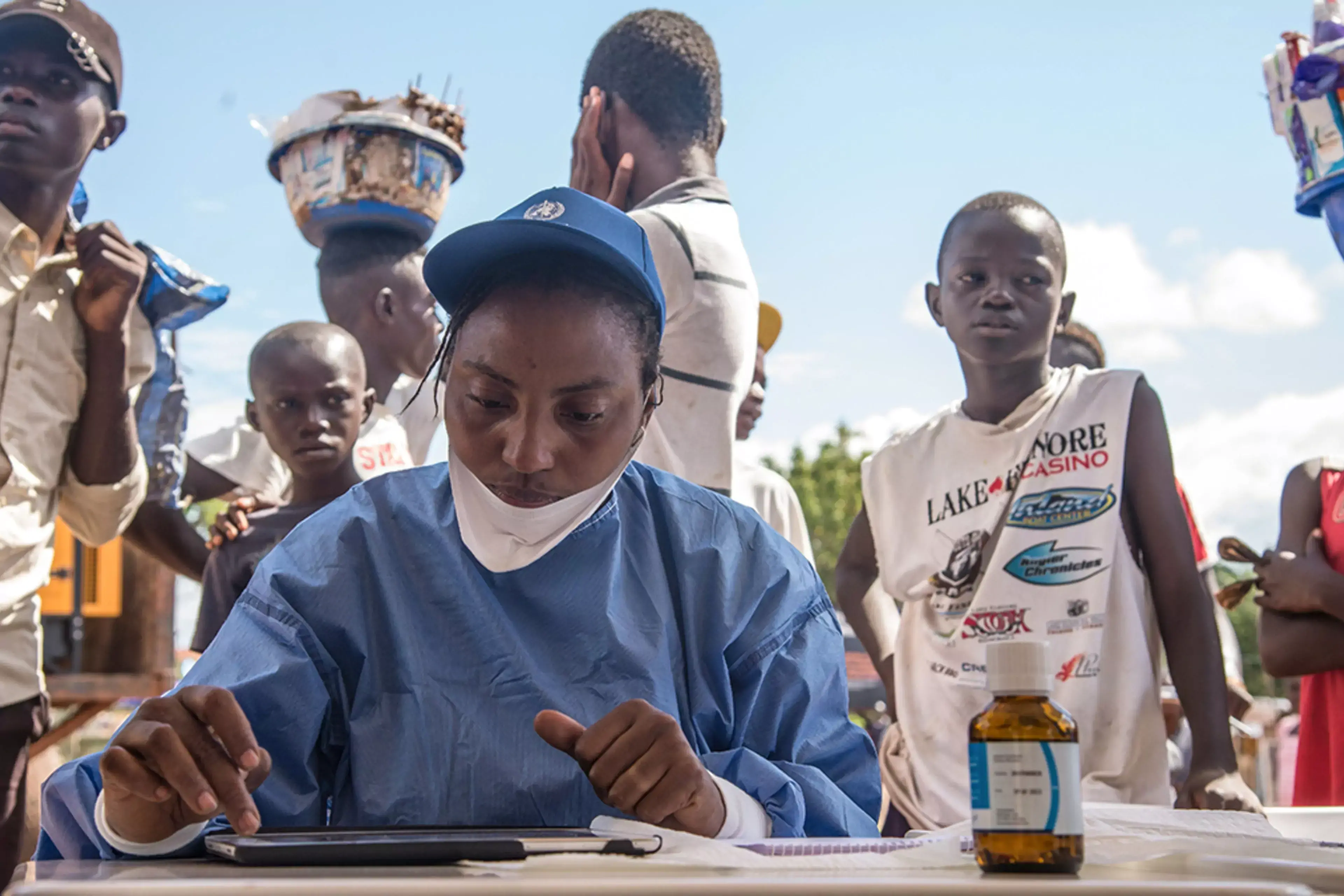
The Diaspora Medical Association of Nigeria(DMA) has petitioned the Speaker of the House of Representatives, Femi Gbejabiamila, to reject the bill that seeks to prevent newly qualified medical doctors or others from leaving Nigeria.
Ahmed Lawan, senate president; Dr Ibrahim Oloriegbe, chairman of the Senate Committee on Health. and Dr Tanko Sununu, chairman of the House Committee on Health, were all sent a copy of the letter dated 11 April, 2023.
A group of associational leaders, including Dr Emeka Ugwu , president of Nigerian Doctors’ Forum-South Africa; Dr Chinyere Anyaogu, president of Association of Nigerian Physicians in the Americas; Dr Chris Agbo, president of Medical Association of Nigerians Across Great Britain; Dr Nnamdi Ndubuka, president of Canadian Association of Nigerian Physicians and Dentists and Dr Alamin Dahiru, president of Nigerian Medical Association-Germany; jointly signed the statement and expressed their concern that the proposed bill to mitigate the negative impacts of brain drain might not be the most effective solution and could even be counterproductive.
“We recognise the problems posed by exodus of Nigerian medical professionals, including but not limited to decreased access to healthcare services, lack of quality care delivery, inability to adequately enact healthcare and public health policy due to lack of manpower and leadership resource,” they wrote.
It was recognised by those of Nigerian descent living abroad that a medical or dental professional is the element that holds the team together and is the driving force for an effective healthcare delivery system.
The doctors asserted that medical and dental personnel are not responsible for systemic issues creating an unfavorable atmosphere which causes stress, an extra strain, physical and mental distress, and dissatisfaction with their job, poor working environment and far more.
Medical professionals have identified inadequate investment in healthcare as the primary factor in brain drain. They noted that this lack of investment leads to a suboptimal care delivery framework, eliminating any potential for professional growth, job satisfaction, and a culture of high reliability.
They believe that there are other significant contributing factors, such as inadequate welfare benefits, high insecurity, and lack of job opportunities, specialised training, political and economic uncertainties.
The doctors noted that the majority of problems faced in the healthcare system are due to factors outside of an individual’s control. They added that better governance and investment in healthcare, as outlined in the Abuja Declaration, could lead to better security, education, and pay-rate in Nigeria. Furthermore, they pointed out that the emigration of professionals doesn’t only affect medical and dental practitioners.
“So, the question is why is the medical and dental profession being targeted? Focusing on one aspect of a problem without taking a holistic approach for a sustainable solution will be ineffective. Young professionals leave the country in search of better opportunities. Many are frustrated by consequences of governance failures that have progressively worsened over the past 30 years. The unfortunate reality is that the healthcare system is in a state of serious neglect, training and career development opportunities are limited, thus impairing earning potential. Insecurity is rampant. Equity and justice are lacking for the average Nigerian”, the petitioners stated.
Dr Wale Alabi is a well-known name in the Nigerian healthcare industry, being one of the thought leaders that birthed the Nigerian Healthcare Excellence Awards (NHEA). He was also part of the team that organised the first indigenous healthcare exhibition in West Africa (The West Africa Health Expo). Passionate about corporate healthcare, technology in medicine and hospital management, he is currently CEO of Hospital Assist Nigeria, a leading healthcare management with reputable international affiliations. In this exclusive interview with PATRICK IWELUNMOR, he shares his thoughts on sundry issues pertaining to the Nigerian healthcare sector. EXCERPTS:
Sir, may we know about you and your educational background?
I was born in Lagos but I am an indigene of Osun State. My parents were Chief Aderah Alabi and Chief Mrs. Iyabo Alabi.
My secondary education was at Federal Government College, Ogbomosho and my tertiary education was at the University College Hospital Ibadan, where I earned an MBBS degree. I also obtained an MPhil degree from the Christian Medical College, Vellore, India.
In addition, I got a postgraduate diploma in Medical Information from the University of Texas and a postgraduate diploma in Hospital Accreditation from the Academy of Hospitals Administration in India.
Why are you not practising as a medical doctor?
After my graduation, I worked as a medical officer for a few years and realised that there was a great need to be met in the areas of corporate healthcare, technology in medicine, and hospital management. As a result, I decided to focus on developing capacity in those three areas.
In line with my resolve, I visited a lot of countries to enable me understudy their healthcare systems. This required huge investment, in terms of my personal resources. The countries I visited were The Netherlands, Spain, Ghana, Turkey, and India, among others.
While on my trips, I was opportune to meet with stakeholders in both public and private sectors, which availed me the opportunity to discuss intricate aspects of their healthcare systems and understand vital issues bordering on the technicalities of creating and maintaining a standard healthcare system, in line with international best practices.
Presently, I am the CEO of Hospital Assist Nigeria, one of Nigeria’s leading healthcare consulting companies.
You are most popular for your activities with the Nigerian Healthcare Excellence Awards. What is the secret behind this passion?
Thank you for this question. Before NHEA, I was involved in organising the first indigenous healthcare exhibition in West Africa (The West Africa Health Expo) which was launched in the year 2006. We organised more than 10 exhibitions in Lagos, Abuja and Accra, Ghana.
The idea of NHEA was birthed and nurtured in 2013, in collaboration with some of my colleagues who believed there was a need to create a platform whereby individuals and organisations (healthcare champions) can be appreciated for their tremendous contributions to healthcare. This is in addition to encouraging a healthy competition in various aspects of healthcare, so as to promote quality service delivery to citizens. My passion for this award stems from my mantra of continuous improvement in all areas of life.
Do you think the Nigerian healthcare space is doing enough in terms of the delivery of quality medical care to the people, especially the common man?
I believe that we have recorded great improvement in the last 10 years. There has been an increase in the availability of healthcare insurance for citizens; development of better healthcare infrastructures, both in the public and the private sectors; and the treatment of chronic diseases, such as cancer and kidney disease, are adequately carried out in country.
Nigeria presently has a centre of excellence in oncology, care of orthopaedics and kidney disease. I believe the new National Health Act will give the common man more access to healthcare and health insurance will become mandatory for all citizens of Nigeria.
Can you enlighten Nigerians on the vision and mission of the Nigerian Healthcare Excellence Awards?
The Nigerian Healthcare Excellence Awards vision is to promote excellence and innovation in healthcare delivery in Nigeria by recognising and celebrating the achievements of healthcare professionals and organisations. The vision of the award is to be Nigeria’s most prestigious and most credible healthcare award, while the mission is to encourage professionalism, international best practices in quality healthcare delivery, as well as create awareness about the importance of healthcare in Nigeria.
Would you say the award has impacted the healthcare industry, in terms of growth and quality assurance?
Yes. The award has had a significant impact on Nigeria’s healthcare industry. The recognition and reward of outstanding healthcare professionals and organisations has encouraged excellence and improvement in healthcare delivery. This has led to growth and development in the sector, as well as increased quality assurance.
NHEA has created a friendly rivalry among various stakeholders in the industry, in terms of medical expertise and this necessitates continuous improvement of our selection criteria.
How do you think government can address the brain drain syndrome that has become one of the biggest threats to the development of the healthcare industry in Nigeria?
The government needs to address fundamental causes of the brain drain, such as substandard/obsolete healthcare infrastructure, poor remuneration, unfavourable working conditions, incessant power outage, poor maintenance and frequent breakdown of medical equipment, poor patient management, and insecurity in the country.
To address the brain drain syndrome, the government can implement policies and incentives that attract and retain healthcare professionals in the country. This can include improving the working conditions and remuneration for healthcare professionals, providing opportunities for career development and advancement, investing in training and education programmes, and creating a supportive and enabling environment for healthcare professionals to practice.
Nigeria can also emulate the concept used by India to bring back their medical professionals who have migrated to other countries. India was able to conquer brain drain because they offered an interest-free loan to all their medical professionals abroad and provided land at almost no cost.
What are your sincere projections for the Nigerian healthcare sector in 2023?
My sincere projections for the Nigerian healthcare sector in 2023 are positive. I believe that, with continued investment and improvement in infrastructure, healthcare delivery will improve significantly. However, there are challenges that need to be addressed, such as funding and shortage of healthcare workers. It will require a concerted effort from all stakeholders in the healthcare sector to achieve these goals.
Any advice for Nigerian doctors?
Nigerian doctors should focus on providing quality medical care to their patients, as well as seeking opportunities for professional development and advancement. They should also advocate for their patients and use their expertise to contribute to the development of the healthcare sector in Nigeria. In addition, collaboration with colleagues and other stakeholders in the healthcare sector is crucial for achieving improvement and growth in the sector.
The Young Ambassador Against Drug Abuse Initiative, an Abuja-based Non-governmental Organisation has taken a step to enrol one million out-of-school children in school
Chief Executive Officer of the organization, Mr. Saifullahi Usman, represented by Ms. Esther Nwankwo, made this known during an event to mark the 2023 International Day for Street Children.
The event, which was jointly organised by YAADA, Ministry of Humanitarian Affairs, Disaster Management and Social Development and the Street Children’s Parliament, was meant to be an awareness campaign to commemorate the day.
International Day for Street Children is set aside annually by the United Nations to amplify the voices of millions of children abandoned on the streets in their vulnerabilities, and whose rights have been violated.
Usman said it had always been the desire of the group to give positive direction to children and youths in Nigeria, having witnessed high level of juvenile-based issues capable of destroying their future and the image of the country.
He said, “It is in view of the above that we wish to embark on a campaign to take one million children and youths off the streets by empowering them to go back to school, acquire skills, get engaged in sports, and psychosocial support for survivors of drug abuse.
“We intend to achieve this by partnering with the ministry to ensure vulnerable children identified to benefit from the alternative school programme.”
According to Usman, one million children are just five per cent of the 20 million out-of-school children in Nigeria.
“YAADA and other partners are committed to social change and sustainable development in education, economic empowerment, sports, medical rehabilitation, advocacy and other relevant community social services for abandoned children on the streets.
“This laudable initiative is achievable with the support of the government, private organisations, relevant stakeholders, well-meaning Nigerians and donor agencies through their positive contributions to the realisation of this noble objective.
“The likely impact of their contributions would be made manifest when our streets are emptied of helpless children begging to be fed, clothed, educated and constantly used as agents of destruction and not as agents of change,” he said.
Head of Special Duties, Humanitarian Ministry, Mrs. Nadia Muhammed, said it was sad to see millions of children in the world and Nigeria in particular living on streets, public spaces, abandoned buildings, and sleeping in parks, among others.
She said street children, just like all children, have the rights to protection as enshrined in ‘The Child Rights Convention’, as acknowledged and documented by the UN, hence the need for Nigeria to protect them.
“In light of the above and for social inclusivity of leaving no one behind, the ministry, under the leadership of Hajia Sadiya Umar Farouk has started a programme called the Alternate School Programme, to cater for street children and out-of-school children,” she added.
Muhammed said the Home-Grown School Feeding Programme is domiciled in the ministry as part of the National Social Investment Programme, adding that it had improved pupils’ enrolment in schools by lifting street children and increasing literacy level in Nigeria.
China has notified the World Health Organisation (WHO), that a woman infected with the H3N8 bird flu died in March.
The case, which is only the third known human case ever and the first to result in death from the strain, the two previous cases were reported in China last April and May, the WHO said.
In the latest incident, a 56-year-old woman from south-eastern Guangdong province died on March 16 after falling ill in February and being hospitalised for severe pneumonia.
“The patient had multiple underlying conditions. She had a history of exposure to live poultry before the onset of the disease, and a history of wild bird presence around her home,’’ the UN health body said, citing information from China’s National Health Commission.
None of her close contacts have developed an infection or symptoms of illness.
The WHO said a poultry market near her residence could have been the source of her infection.
Samples collected from the market were positive for influenza A(H3) subtype.
In the two previous cases, one patient developed a critical illness and the older had mild symptoms. The WHO said direct or indirect exposure to infected poultry was the likely origin.
The WHO said the risk to humans remained low.
“The available epidemiological and virological information suggests that avian influenza A(H3N8) viruses does not have the capacity for sustained transmission among humans.
Therefore, the current assessment is that the likelihood of human-to-human spread is low. (dpa/NAN)(www.nannews.ng)
Cereal is a staple food product that many people enjoy for breakfast. While it is a convenient, and for many, a comforting way to start the day, it is important to be aware that not all cereals are created equally and understanding what to look for and what to avoid would go a long way.
Cereal is typically high in carbohydrates and low in protein, which does not make for a balanced meal according to Sherry Roberts, a registered dietitian-nutritionist and certified diabetes care and education specialist with CRM Counseling, a coaching and wellness company in Centerville, Minnesota. Many cereals also contain added sugars, which can increase the risk of heart disease, dementia, diabetes, and obesity according to the American Heart Association (AHA).
However, the news isn’t all bad either. Research published in the March 2022 JAMA Network Open found that cereal fiber specifically was associated with lower inflammation and lower risk of heart disease in older adults. This can be encouraging news for those who still enjoy eating cereal for breakfast, as it is a reminder that not all cereal should be dismissed, but rather that some can be part of a nutritious, well-rounded breakfast.
For those who still enjoy having cereal for breakfast, here are the rules:
In the American Journal of Medicine scientific journal, Lynn Grieger, a registered dietitian-nutritionist and certified diabetes care and education specialist, provided five tips to help you begin your day in a healthier manner.
The first rule proposed by Grieger is to check the label before purchase. When shopping for cereal, it is essential to read through the list of ingredients and the nutrition facts. Choose options that are lower in sugar and saturated fat. Additionally, the label should list at least 3 grams of fiber and 5 grams of protein per serving.
The second rule recommended by Grieger is to avoid sugar-coated and artificially sweetened cereals. Cereals that are loaded with sugar and artificial sweeteners can be detrimental to one’s health. Eating these types of cereals can result in a rapid spike in blood glucose levels and increase hunger.
Next, Grieger suggests eating a cereal that is high in whole grains. Whole grain cereals have more vitamins, minerals, and fiber than white flour or sugary cereals. Whole grain cereals can also help keep a person feeling full for longer and help stabilize blood sugar levels.
The fourth rule recommended by Grieger is to combine cereal with other nutritious foods. An ideal cereal breakfast can include a bowl of whole grain cereal with a serving of low-fat dairy and a handful of fresh or frozen fruit. Eating different types of food together can help provide a more balanced and fulfilling meal.
The final rule proposed by Grieger is to be mindful of portion size. It is important to measure out the serving size according to the label and not to over-consume. Eating a reasonable portion size can help maintain a healthy weight and prevent accidental over consumption.
Following these 5 rules proposed by nutritionist Lynn Grieger can help ensure healthier consumption of cereal. It is essential to be mindful of portion size, choose options that are lower in sugar and saturated fat, avoid sugar-coated and artificially sweetened cereals, choose cereals high in whole grains, and combine cereal with other nutritious foods. Eating a nutritious breakfast that includes cereal can have a significant positive impact on one’s overall health.
Governor Godwin Obaseki of Edo State has instructed that Miss Precious Umoru, who was asked to withdraw due to her physical condition, be re-evaluated to commence her training at the Edo State College of Nursing Sciences in Benin.
The College’s Provost, Prof. Patricia Ukaigwe, said in a statement on Tuesday that the governor intervened after learning about the situation and asked that a new evaluation be done and that Miss Umoru be given all the support she needs for the re-assessment.
After being admitted to the college, Miss Umoru was suggested to leave after an initial evaluation of her undisclosed health status.
She said, “The Edo State Governor, Godwin Obaseki, has ordered the re-assessment of Miss Umoru to begin her training at the Edo State College of Nursing Sciences, Benin.
“The Admission Committee had deemed her eligible for admission based on her cognitive function and score on the CBT exam, but upon her arrival at the school premises, the hostel manager observed that she had unstable gait and tremors.
“A meeting was called between the Counselling Department of the College and Miss Umoru’s parents, where the nature and history of her condition were reviewed to reach a fair decision on her physical fitness for the College’s rigorous training.
“As part of this process, a preliminary assessment was conducted which had suggested that she might not be able to withstand the physical rigours of midwifery training.
“The rescheduled assessment will take place on Thursday 13 April 2023 and the public will be provided with the necessary updates on the exercise.
“We want to assure (everyone) that the college will not intentionally deny anyone an opportunity to get the best training and capacity enhancement in healthcare services,” she added.
Edo State College of Nursing Sciences has a robust and all-encompassing curriculum, which is congruent with the provisions of the Nursing and Midwifery Council of Nigeria and other accrediting bodies. EDOCNS empowers its faculty, staff, and students by providing the knowledge, skills, as well as core values to enable them to be first among equals, while making contributions to the Nursing profession and the society.
Nigerian doctors have asked for an assessment of the Consolidated Medical Salary Scheme (CONMESS) and the payment of the updated 2023 medical residency training fund by the Federal Government before the 29 May hand-over date, as physicians employed in England’s public health system have commenced what has been described as the most disruptive strike in the history of the UK over their wages and working conditions.
In a communiqué issued by the President of the Nigerian Association of Resident Doctors (NARD), Dr Emeka Innocent Orji, the medical doctors warned the House of Representatives about a bill sponsored by Ganiyu Johnson which they deemed to be a form of modern-day slavery and should be discarded.
NARD, which makes up 70 per cent of doctors in teaching hospitals and federal medical centres across Nigeria, holds a substantial amount of power and sway.
The resident doctors declared their agreement with the House of Representatives on the obvious risks posed by the current issue of brain drain in the health sector, and promised to cooperate with governments on all levels to reverse the trend and create true solutions.
The association declared that they would not tolerate any effort by the government or its organisations to subjugate Nigerian medical doctors.
In the UK, Nigeria has the third-highest amount of foreign doctors, following India and Pakistan.
After a three-day strike last month and various strikes by nurses, the junior doctors’ action could be the most severe walkout thus far, resulting in the postponement of numerous appointments.
They are demanding a pay rise of 35 per cent, which they said is needed to help make up for more than a decade of salary cuts in real terms. They also argued pandemic backlogs, coupled with staff shortages, are massively increasing workloads, endangering patients.
At a NARD emergency meeting, President Orji raised the alarm concerning similar issues in Nigeria. The meeting was held to address various welfare matters that were affecting the association’s members as well as other pressing matters in the nation. Additionally, the meeting was convened to determine solutions that would improve the lives and practices of resident doctors in Nigeria.
The communiqué reads: “The extended NOC calls for immediate action by the federal government with regards to the upward review of the CONMESS salary structure which has not been done for over ten years now, and to ensure implementation of same before the 29 May hand-over date.
“The extended NOC appreciates the Federal Government of Nigeria for the near completion of the payment of 2020 MRTF and the reviewed hazard allowance arrears. They encouraged the government to ensure that the few persons yet to be paid are settled forthwith.
“The extended NOC calls on government to expedite action on the processing and payment of the reviewed MRTF for the year 2023 as these funds are meant to offset debts associated with update courses as well as examinations of both the national and west African postgraduate colleges, events that have since kicked off for the year.
“The extended NOC urges the Federal Government to keep to agreements reached by the stakeholders constituted by the Ministry of Health on the implementation of the 2023 MRTF and to expedite action on its payment immediately, as any attempts to do otherwise would only throw the health sector into another series of undesired crises.
“The extended NOC admonishes the House of Representatives that the obnoxious bill as sponsored by Ganiyu Johnson is a clear definition of modern day slavery and not in keeping with anything civil and so should be thrown away at this point. The house, however, agreed with him on the palpable dangers of the current menace of brain drain in the health sector and promises to work with government to reverse the trend when the government is ready to come up with genuine solutions to the problem.
“The extended NOC reiterates that any attempt by government or any of her agencies to enslave Nigerian medical doctors under any guise would be strongly and vehemently resisted by the association.”
The resident doctors called on the Federal Ministry of Health and the Medical and Dental Council of Nigeria to reassess the present standing of the postgraduate colleges’ membership certificate in order to elevate it back to its prior status as it is in other nations of West Africa.
As the World Health Organisation celebrates 75 years of coming into existence, the Kaduna State Government has commended its input in the country’s health sector.
Speaking on Tuesday at a press briefing meant to shed light on activities lined up to mark WHO’s anniversary, the Commissioner for Health, Dr. Amina Mohammed-Baloni, said the global health body’s commitment to “Health for All’ was based on its founding constitution of 1948.
She noted that the constitution enshrined the belief that all humans are equal and that promoting wellbeing at all ages was essential.
The commissioner revealed that the programme to be held in the state to celebrate WHO’s feat was tagged, “Celebrating Achievements in Health Care Delivery and Partnership for a Healthier Future in Kaduna State.”
She said the 75th anniversary was an opportunity to look back at public health successes that improved quality of life during the past decades.
She said “It is also an opportunity to motivate action to tackle the health challenges of today and the future. The goal to achieve health for all remained important today, as it was 75 years ago.
“For the WHO, this remains a pathway to achieving SDG 3, reinforced by 16 other SDGs to be attained by 2030.
“Nigeria is a Member State of the United Nations and the World Health Organisation Charter, and the WHO has been at the forefront of championing public health transformative agenda for achieving Universal Health Coverage for all in Nigeria.’’
Dr. Mohammed-Baloni listed some of WHO’s notable strides in keeping the people safe and serving the vulnerable population.
“On April 7, 1948, 55 member countries came together and founded the WHO with the mandate to promote health, keep the world safe and to serve the vulnerable so that everyone everywhere can attain the highest level of health and wellbeing.
“Nigeria was certified Guinea worm free by WHO in December 2013. Nigeria and the WHO AFRO region were certified wild polio-free in August 2020.
“In addition, the 33rd World Health Assembly adopted a resolution accepting the report of the global commission for certification of smallpox eradication, with Nigeria being a key part of the strategy,” she said
The commissioner said in recent times, WHO and its partners supported Nigeria in the fight against the COVID-19 pandemic, and to ensure that the country does not become poor while seeking medical services.
She further noted that the WHO had also been supporting government across all levels to build the capacity of health workers to improve health resources and services in the country.
“In Kaduna State, we have benefitted from the achievements of WHO and partners through improved routine immunisation and accelerated COVID-19 vaccination.
“We have successfully reduced the incidence of vaccine-preventable diseases in the state,” she added.
Dr. Mohammed-Baloni also said that the WHO had been instrumental in providing technical support for disease surveillance and outbreak response activities.
“WHO supported the state in strengthening the health systems to better serve the needs of our people,” she added.
The commissioner expressed appreciation to WHO for the numerous contributions it made to the health sector and the wellbeing of Nigerians at large.
She said, “I want to congratulate the WHO on this 75th anniversary of active service to humanity and for supporting the entire health sector in Nigeria technically and financially.
“I look forward to our continued partnership in building a healthier and more prosperous Kaduna State.”
The Kano State Coordinator of WHO, Dr. Sunday Audu, said the 75th anniversary was meant to be an opportunity to look back at the transformation in healthcare over the years.
The coordinator, who was represented by Dr. Ummey Gregory, a consultant with the WHO, said it was also an opportunity to motivate action to tackle the health challenges of today and tomorrow.
“The WHO looks forward to building a stronger global health body that delivers results and is enabled and empowered to play its leading role in global health.
“Let me assure you that the WHO will continue to support Nigeria to promote health, provide health, protect the health, power health and perform for health.”
The Kebbi State Government says it is fully committed to fulfilling its part of the agreement made with the newly established Contributory Healthcare Management Agency to ease the cost of health services faced by indigent citizens in the state.
The Governor, Atiku Bagudu, made this known during the inauguration and flag-off of the formal sector enrolment exercise into the scheme on Tuesday.
He assured the agency, staff and stakeholders that the government would not fail in implementing all the commitments made towards the success of the scheme.
“I want to commend the management and staff of this agency for working hard and tirelessly to ensure the success of the scheme in the state and its general acceptability.
“The high cost of health service led to the inaccessibility of the service by low-income earners. Only the contributory health scheme can help to make health services equitable.
“Assisting each other is one of the fundamentals of our religion. Therefore, the high and top officers should try to subsidise the health insurance scheme so that lower-income earners can benefit from it.”
He noted that involving the formal sector in the scheme would bridge the gap between the poor and the rich as all citizens would be able to access health services at affordable rates and levels.
The governor, who was represented by the Secretary to the State Government, Alhaji Babale Umar-Yauri, gave an assurance that the government would ensure that a large number of people benefit from the scheme.
Earlier, the Commissioner for Health, Alhaji Jafar Muhammad, commended the state government for implementing the scheme in the state.
He stressed that the action of the present administration had started yielding good results as low-income earners can now access health services easily across the state.
The Executive Secretary and Chief Executive Officer of KECHEMA, Dr. Jafar Augie-Muhammad, said that the agency targeted over 534,000 people after inauguration of the informal and formal sectors with about 89,000 principals.
“About 89,000 principals so far; before, it was 87,000 before the enrollment of principals. Under the state government, we have 21,337 civil servants from Universal Basic Education, and 21 Local Government Areas, we have 22,000 above and 23,000 above civil servants.
“If you add them up, we have 89,000 civil servants that are principals. When you multiply the figure by six, you will see that KECHEMA will be having over 534,000,” he said.
The Acting Head of Service, Alhaji Safiyanu Garba-Bena, said the benefits of the scheme to civil servants are enormous ranging from quality health services delivery to accessible healthcare across the state.
He stressed that the scheme would put an end to high blood pressure, which is common among civil servants by ensuring that they go for regular medical checkup.
Speaking on behalf of traditional rulers, Alhaji Ibrahim Bashar, commended the state government and KECHEMA for introducing the scheme to the state.
Director General, National Agency for Food and Drug Administration and Control (NAFDAC) Prof. Mojisola Adeyeye, has announced that Nigeria will soon receive donation of Monkeypox (Mpox) vaccine from the US Government.
She revealed this while in Washington DC after a series of conferences with different international health organisations to enhance ties and develop more technical proficiency for the organisation as it works to fulfill its mission to improve Nigeria’s healthcare.
At the meeting, they discussed GS1-driven traceability, which USAID knew NAFDAC had developed. They were informed of how the technology was used to track millions of doses of vaccines during the COVID-19 pandemic, and how it will still be applied to non-vaccine products.
Prof. Adeyeye, through a press statement said, “The USAID colleagues were very positive about continued collaboration and support. In addition, having a partnership with GHAP will further strengthen NAFDAC regulatory framework as we work toward WHO Maturity Level 4”.
Discussions with both the United States Agency for International Development (USAID) and the Global Health Assurance Partnership (GHAP) were conducted and considerable advancement was achieved in multiple areas.
The follow-up of the discussions took place at USAID office in Washington D.C on 3 April, 2023, with talks leaning towards Bavarian Nordic, the Dutch vaccine manufacturer, sending the dossier directly to NAFDAC.
The reliance pathway, which is used for the review of vaccines that have been approved for Emergency Use Authorisation (EUA) by regulatory bodies such as US FDA, Health Canada and the European Medicine Agency (EMA), allowed for the option of receiving the vaccine directly from the manufacturer upon US FDA approval. This pathway enables an expedited review of the dossier and report from said agencies.
Against the backdrop of NAFDAC’s membership of the Traceability & Verification System (TRVST), the idea of data repositories was also discussed, with stakeholders hoping for regional and intercontinental repositories to be established in the future.
The DG highlighted the strategic and beneficial relationship between USAID and NAFDAC which more recently has included support of traceability through donation of 2D android-enabled scanners, personnel training, and personnel support for in-country serialisation.
Regional manufacturing was also discussed and why it is central to medicine access, affordability, and mitigation of substandard falsified medicines. This discourse on local vaccine manufacturing will continue as USAID is interested in supporting this.
Prof. Adeyeye also met with Global Health Assurance Partnership (GHAP) which is interested in a NAFDAC’s partnership due to what is now a stronger regulatory presence, process, and frameworks, including good distribution practices, stricter substandard and falsified medicines (SFs) protocols.
The DG emphasised different means of mitigating SFS that include pre-shipment Clean Report of Inspection and Analysis (CRIA) in India and China, stricter sanctions of companies that are not compliant with expected standards, and more controlled post-marketing surveillance and control of informal market through the Coordinated Wholesale Centers (CWC).
She cited the example of the newly built CWC in Kano as the first of many such centres to be built in the country. The partnership with GHAP will consist of personnel training geared towards handling products post-market, at no cost to NAFDAC.
The Nigerian Medical Students Association (NiMSA) vehemently disagrees with the unkindly suggested bill that would require Nigerian-educated medical and dental professionals to work in Nigeria for a minimum of five years before they can be given a full permit to practice abroad.
Ejim Egba, president of NiMSA declared in a statement that the bill sponsored by Ganiyu Abiodun Johnson, a member of the House of Representatives as unpatriotic, poorly timed, and a violation of the fundamental human rights of doctors, as stated in the 1999 Constitution of Nigeria as amended.
He believes this bill is a method of suppressing the medical profession and disregarding its autonomy.
According to Egba: “Johnson’s stated reason for sponsoring this bill will ultimately have the opposite effect of what was intended, as it seeks to restrict the ability of Nigerian-trained doctors to practice and would ultimately harm the healthcare system.
“By making our land more fertile and equipping our hospitals properly, we can reduce the need to search for greener pastures abroad. Additionally, providing better treatment for doctors and controlling brain drain will be more manageable.
“At present, Johnson should be focusing on medical tourism rather than doctors’ slavery. We emphatically disagree that this bill will solve the issue of brain drain and therefore, we firmly oppose it”.
“The bill’s sponsor failed to consider the complex factors that lead to brain drain in Nigeria. A more comprehensive solution is necessary to address this issue, instead of trying to coercively retain doctors.
“Lawmakers should prioritise creating a conducive atmosphere that will motivate doctors to remain and work in Nigeria. These matters must be dealt with if we are to draw and keep our medical personnel; make our country prosperous.
“We also believe that the bill is a violation of the fundamental human rights of medical professionals and should not see the light of the day. The government has no right to force doctors to work in a particular location against their will- it is an affront to their autonomy and choice. We also unequivocally state that this bill will discourage students from pursuing medical education in Nigeria, which will further exacerbate the problem of the shortage of healthcare professionals.
“A better way to bring up the awe of being trained with ‘tax payer subsidies’ would be to have it optional, the option of paying for medical education at the real cost value, the option of obtaining student loans and also the option of going for the subsidised medical education with the caveat of staying behind for a certain number of years to ‘pay back’.
“Additionally, we strongly believe that the bill is arbitrary in nature and totally unconstitutional, as it disproves the Nigerian – trained medical and dental practitioners of their fundamental right to freedom of movement by arbitrarily imposing restrictions on their movements against the provision of Section 41 of the Constitution of the Federal Republic of Nigeria, ” the statement read.
NiMSA strongly opposes this bill both in part and as a whole, as they are urging the sponsor of the bill to withdraw it without delay and seek more effective ways to tackle the issue of brain drain. This could be done through consulting with stakeholders in the health sector and the government taking steps to address the underlying issues that cause healthcare professionals to leave Nigeria.
The Association of Nigerian Private Medical Practitioners has kicked against the compulsory five-year service licencing for doctors proposed by the House of Representatives.
The association, however, said that a national emergency should be declared in the health sector as against the proposed compulsory five-year service.
The ANPMP National President, Dr. Kayode Adesola, made the stand of the association on the issue known on Monday in Lagos.
Dr. Adesola said the proposed bill would have an adverse effect on the health sector as it was premised on the wrong notion that such a measure would solve brain drain in the country.
He said the proponents of the bill did not conduct in-depth research on the factors driving the brain drain crisis nor engaged health stakeholders on the implications before moving the motion.
Dr. Adesola noted that the bill would worsen brain drain in the country, adding that medical doctors do not need Nigerian licence to practice in other countries.
He said, “We keep saying that the health sector needs urgent attention. Our health system is not working and many Nigerians are dying because of the underfunding of the sector.
“We have teaching hospitals, general hospitals and primary healthcare centres that are dilapidated with outdated equipment.
“Political leaders are seeking medical treatment abroad while the citizens are left to suffer in a country that has one of the best doctors in the world.
“Before it was the young doctors leaving but now, the consultants are leaving. Many health workers left because of insecurity, not just poor remuneration or poor working conditions.
“Insecurity is impacting negatively on the health of Nigerians and the ability of healthcare workers to deliver services to Nigerians
“Aside from the medical doctor that was killed at his clinic on Dec.31, 2022, two other doctors have also been killed and nothing has been done to rectify the situation.”
He noted that the issue of brain drain was multifaceted and requires a more comprehensive approach to tackle it.
Dr. Adesola stressed that declaring an emergency in the health sector would assist to proffer sustainable solutions to attrition of health workers, improve healthcare facilities and reduce disease burden, among others.
Recall that the House of Representatives on April 6, passed for second reading a bill seeking to mandate Nigerian-trained medical and dental practitioners to practice for a minimum of five years in the country, before being granted a full license.
The bill sponsored by Ganiyu Johnson, an All Progressives Congress lawmaker from Lagos, said the bill seeks to amend the Medical and Dental Practitioners Act 2004, to address brain drain in the Nigerian health sector.
The wife of Governor Charles Soludo of Anambra State, Mrs. Nonye Soludo, has sought the active participation of pregnant and nursing mothers in the ongoing free Rotavirus vaccination in the state.
She made the call in the state capital, Awka, on Monday, during a meeting with mothers and social healthcare workers.
Soludo’s wife said the ongoing free Rotavirus vaccination was an opportunity for pregnant and nursing mothers to protect their infants against the deadly disease.
According to her, the essence of the free exercise is to eliminate the heavy financial burden it will put on poor and low-income families to get their kids vaccinated.
She said, “We desire to ensure that the child-killer virus does not hold sway in Anambra. Recently, the government in partnership with the United Nations Children’s Fund worked out a deal to administer the Rotavirus vaccine across public health facilities in the state.
“The free vaccine given to infants between the ages of zero to 12 months is to prevent diarrhoea-related sicknesses that comes with dangerous symptoms like severe diarrhoea, fever and vomiting.
“The quality health of our people is one of our cardinal goals, which is to provide sound health to our children. Take action now to secure healthy living.”
The state First Lady, further appealed to mothers, to take the programme seriously, adding that it is only when every child has been captured in the process that the disease would be defeated.
”Keeping good hygiene is key in the fight against the disease. Parents should monitor what their children consume, the environment, as well as maintain good handwashing hygiene,” she advised.
Soludo’s wife further urged stakeholders to create more awareness about the vaccination, stressing that the state government intended to cover every child in the state.
She gave an assurance that the present administration was committed to enacting health policies aimed at protecting women and children in the state.
The International Centre for Islamic Culture and Education (ICICE), a custodian of Al-Noor Mosque, Wuse II, Abuja, on Sunday provided free medical treatment to 400 Persons With Disabilities (PWDs) in Deidei and Gwagwalada Area Councils of the FCT.
The centre’s Director-General, Dr Kabir Kabo-Usman, while addressing newsmen at the venue of the medical treatment in Zuba, Abuja, said the exercise was aimed at mitigating the health challenges of the PWDs in the nation’s capital.
“When I first visited the community and saw the situation of the persons with disabilities I broke in tears.”
He said part of the mandate of the centre, as a charitable organization, was to help with poverty alleviation, support community development and social welfare.
” And being part of our mandate, that is why we are here today at Deidei and Gwagwalada Area Council very close to Zuba, to try and give relevant medical attention to the persons with disabilities to challenge some of the medical issues that they are having.
” And I am sure you can see what you can see around, these are all people with special needs, persons with disabilities who are very vulnerable in the society.
” They are ignored, they are not well targeted and we need to make sure that we support them so that they can be healthy and do something for themselves.”
The D-G revealed that the free medical treatment was being conducted by four volunteer doctors, three nurses, three pharmacists and 20 volunteers, supporting to make the outreach successful.
” Our target is about 400 but we are here to actually support everyone that needs support in terms of medical predicament.
” We are also going to extend this medical outreach to other parts of the FCT and we will encourage the Area Councils authority to take this initiative further by equipping their primary healthcare centres”
He called on other charity organisations and wealthy individuals to support the vulnerable groups in the society, especially in addressing their health needs.
” When you see what is really happening in this community, believe me sincerely, you will run into tears.
“When I came into this place I ran into tears, and I asked myself a question – was my father in this situation? The answer was no.
” Was my mother in this situation? The answer was no. Was my wife in this situation? The answer was no. Was I in this situation? The answer is actually no.
” So it is good for the people to come around to support the local community so that going forward we can have peace and tranquility in our communities.”
Also, the centre’s Director, Community Development and Social Welfare, Amina Abdullahi, said the organisation had a database of persons with disabilities in all communities across the six area councils of the FCT.
Represented by Alhaji Garba Sani, Director, External Relations, Fundraising and Investment of the centre, Mrs Abdullahi, assured that the centre would continue to extend medical assistance to the vulnerable communities in the FCT.
She said the disabilities communities needed lots of support not only medically but in all facets of human endeavour.
” And unfortunately not all people and philanthropists recognise that and so our purpose and target is actually to identify the different communities of persons with disabilities and reach them at their settlements and provide services to them.”
The Head of Medical Team of the ICICE, Dr Amina Kumaliya, disclosed that most of the ailments observed in most patients were hypertension, peptic ulcer, malaria, diarrhea and rinitis in children.
” And then a little bit of diabetes. These are the ailments we diagnosed; we have ordered for their investigation and drugs are being dispensed for the patients.
Responding, the Chairman, People With Disabilities, Gwagwalada Area Council, Hassan Abdullahi, thanked the centre for the free medical treatment which would go a long way to enhance the living conditions of the beneficiaries.
Also, Malam Aminu Yelwa, Financial Secretary, Nasara Physically Challenged Centre, Deidei, appealed to the Federal Capital Territory Administration (FCTA) to support their members who learned mechanic and shoe making with working tools. (NAN)
The World Health Organisation says global life expectancy for both sexes has increased from 46 to 73 years, with the biggest gains being in the poorest countries.
WHO’s Director-General, Dr. Tedros Ghebreyesus, said this during an online media conference.
He noted that after years of war, the organisation realised that it was better to work with than to fight one another.
He said that the global health body also realised that a healthier world was a safer place.
“Their vision was clear, but bold: the highest possible standard of health, for all people. To achieve that vision, they agreed to set up a new organisation.
“They debated and agreed what this organisation would be and do in a document called the Constitution of the World Health Organisation,” Ghebreyesus said.
According to him, the organisation marked the 75th anniversary of the day its constitution came into force.
He said that the organisation’s constitution was the first document in history to formally recognise health as a human right.
The WHO boss said that since then, the world has made significant progress towards realising that vision.
He noted that smallpox had been eradicated and polio was on the brink of being combated.
“These are actually two of the important highlights during the 75 years of existence of the organisation. 42 countries have eliminated malaria, the epidemics of HIV and TB have been pushed back. 47 countries have eliminated at least one neglected tropical disease,” he added.
Ghebreyesus said in the past 20 years alone, smoking has fallen by a third, maternal mortality by a third, while child mortality has been halved.
According to him, just in the past five years, new vaccines for Ebola and malaria have been developed and licensed.
He said, “And for the past three years, WHO has coordinated the global response to the COVID-19 pandemic – the most severe health crisis in a century.
“We can’t claim sole credit for these achievements, but we have played a leading role in all of them. Partnering with many partners, especially our Member States.
“And although we have many achievements of which to be proud, we still face many challenges – some old, some new.
“Around the world, people still face vast disparities in access to health services, between and within countries and communities.”
According to Ghebreyesus, since 2000, access to essential health services has increased significantly, but at least half the world’s population still lacks access to one or more services like family planning, basic sanitation, or access to a health worker.
He said that often times, it was because of where people live, their gender, age, and who they are – people living in poverty, refugees and migrants, people with disabilities, ethnic minorities and other marginalised groups.
“Meanwhile, since 2000, the number of people who experience financial hardship from out-of-pocket health spending has increased by a third, to almost two billion.
“Noncommunicable diseases now account for more than 70 per cent of all deaths globally. Rates of diabetes and obesity have increased dramatically, driven by unhealthy diets and physical inactivity.
“Progress against malaria and TB has stalled, antimicrobial resistance threatens to unwind a century of medical progress.
“Air pollution and climate change are jeopardising the very habitability of our planet;
“And as COVID-19 has been exposed so brutally, there remain serious gaps in the world’s defences against epidemics and pandemics. For all these reasons and more, the world needs WHO now more than ever,’’ he said.
The World Health Organization says Nigeria is still far from meeting the 2001, 15 per cent Abuja Declaration on health sector improvement.
WHO’s Country Representative to Nigeria, Dr. Walter Mulombo, said this in Abuja, during a with journalists.
He noted that in April 2001, heads of state of African Union countries met and pledged to set a target of allocating at least 15 per cent of their annual budget to improve the health sector
“In Nigeria, a proposed target was set that 15 per cent of the total government budget should go to health. Until today, we are still far from achieving the target,’’ he said.
Dr. Mulombo advocated for more funding of the health sector to meet the said target, noting that the sector was not adequately funded, when compared to others such as defence, army, among others.
According to him, health is a human right and not a luxury or consumable, adding that the more politically wise decisions taken by the country will be of benefit.
“We need to start talking about human rights violations because it is not acceptable for any child to miss a vaccine,’’ he said.
Dr. Mulombo noted that the main challenge lies in the way health is featured as a political choice, adding that unfortunately, many governments did not live by the standard.
“Many countries continue to consider health as a luxury or something that is costing the government money, whereas it should have been taken as an enabling factor for economic and socio-economic development,’’ he added.
He said it was worrisome the way countries are dealing with social determinants of health, like socioeconomic status, education, neighborhood and physical environment, employment, social support networks, and access to health care.
According to him, addressing social determinants of health is important for improving health and reducing longstanding disparities in health and healthcare.
Dr. Mulombo advocated for more facilities with dialysis machines and more expensive equipment to combat noncommunicable diseases, noting that such was part of the organisation’s challenges.
He said that the WHO, also had the challenges of demographic transition because facilities that were used during the colonial period are still the same in Africa, noting it might be possible that Nigeria is facing the same situation.
“The country is not expending in the space of demographic transition and the way the population is increasing. Nigeria is projected to have more than 400 million population by 2040, 2050,’’ he added.
Dr. Mulombo said that there was also the problem of how the county prepares for response to outbreaks of pandemics.
He said the COVID-19 pandemic was not expected and as such, caused havoc in many counties.
“The health body is still expecting flu pandemic and has been preparing for it.
“When the COVID-19 pandemic hit the world, no country was ready, not even the United States and UK, yet we have International Health Regulations and Global Health Security Agenda,’’ he said.
Tuberculosis (TB) is an infectious airborne disease caused by a bacterium known as Mycobacterium tuberculosis. It is a serious global health issue that can lead to death without treatment.
According to the World Health Organization (WHO), TB is a leading cause of death and a major public health concern in many countries.
Although TB is treatable, the lack of access to healthcare and effective treatments means that millions of people still suffer and die from the disease each year.
In order to effectively combat TB, it is important to understand the facts about this potentially deadly disease and to take the necessary steps to reduce the risk of infection.
Causes of Tuberculosis
In recent years, a growing body of research has shed light on the causes of the disease, and in particular, the work of Daniel Murrell, a Harvard and Stanford trained infectious disease specialist, which was published in the Healthline Journal is instrumental in this field.
Murrell believes that there are several causes of TB. He divides these causes into two main categories: environmental factors and individual risk factors.
The environmental factors that can contribute to the development of TB are those substances, conditions and people a person may be exposed to on a regular basis. For example, living in a household where there is either active or latent TB can increase the chances of a person contracting the disease. Additionally, living in a congested and overcrowded environment can also increase the risk. Finally, living in a place where poor ventilation is abundant can facilitate the spread of TB between people.
When it comes to individual risk factors, Murrell opines that certain physiological characteristics, such as being immunocompromised, can increase the chances of becoming infected with TB. Having certain medical conditions, such as HIV or diabetes, can also increase the risk. Additionally, certain lifestyles and behavioral choices, such as smoking or poor nutrition, can also make an individual more susceptible to TB.
According to Murrell, these environmental and individual risk factors are the main causes of TB. He asserts that they can increase an individual’s risk of contracting the disease and should be taken into consideration when assessing the likelihood of an individual developing the disease. As such, these risk factors should be taken into consideration both in TB prevention efforts and in the treatment of those already infected with the disease.
Preventive Strategies for Tuberculosis
The spread of this disease is a global problem, with one-third of the world’s population infected with the TB bacteria. In order to reduce the prevalence of TB, prevention strategies need to be implemented to control its spread.
We shall be discussing the various prevention strategies for controlling the spread of TB, as suggested by the United States National Foundation for Infectious Diseases (NFID).
First and foremost, it is important to promote early detection of TB. The NFID recommends the use of screening tests, such as chest X-rays, sputum tests, and the tuberculin skin test, to ensure that infected individuals receive a diagnosis and proper treatment as soon as possible. Early diagnosis is essential for effective treatment and containment of the disease, and to minimise transmission to others. In addition, the NFID suggests that individuals at high risk of infection should be screened regularly.
The NFID also recommends vaccination against TB as an effective prevention strategy. The Bacillus Calmette-Guérin (BCG) vaccine is currently the only approved vaccine to protect against TB. The vaccine is typically provided to children in countries where TB is endemic, in order to reduce the risk of developing the disease. It is important to note, however, that the effectiveness of the BCG vaccine is limited and there is no guarantee that it will completely protect against TB infection.
In addition to early detection and vaccination, the NFID promotes improved hygiene as a key prevention measure. This includes regular hand washing with soap and water, using a tissue when coughing or sneezing, and avoiding close contact with individuals who are infected with TB. It is also important to ensure proper ventilation in enclosed spaces, and to avoid sharing dishes, bedding, and other materials, in order to reduce the likelihood of infection.
The NFID also encourages the use of medication to prevent TB in high-risk individuals. Patients who are HIV-positive, those with close contacts to those infected with the disease, and those who have recently been tested or treated for TB, may be recommended for preventative treatment to protect them from becoming infected.2
Finally, the NFID suggests the use of public health interventions as a prevention strategy. This includes the implementation of government-funded public health campaigns, to educate people on the symptoms, risk factors, and modes of transmission of TB. It also involves contact tracing and isolating of infected individuals, in order to limit the spread of the disease.
In conclusion, it is clear that prevention strategies are essential for controlling the spread of tuberculosis. Early detection through screening tests, vaccination, improved hygiene, the use of medication, and public health interventions are all effective methods of preventing this infectious disease.
An Abuja-based Non-Governmental Organisation, Save Our Heritage Initiative, has called for increased medical care for the elderly in Nigeria.
The Chief Executive Officer of the organisation, Ms. May Ikokwu, said this during the commemoration of the ‘World Health Day’ while speaking in Abuja on Friday.
Commenting on the theme for the WHD, ‘Health for All’, she stressed the need to guarantee health equity and equality for older persons, irrespective of their social or work classes.
She said that it was time for practical implementation of Universal Health Coverage by including older persons.
Ikokwu said, “Ageing population will have an impact on the ambition of universal health coverage.
“Because without considering the health and social care needs of the ever- increasing numbers of older people, UHC will be impossible to achieve.”
“Equally, SDG 3, ensuring healthy lives and promoting well-being for all at all ages, cannot be met without transforming health and social systems”.
She called for a paradigm shift from a focus only on disease, towards the provision of integrated and person-centred care that should be known to have the greatest impact on functional ability in older age.
According to her, the transformation requires organising services to respond to older people’s diverse levels of physical and mental capacities, as well as their needs and preferences.
“Others include extending coverage of services to all older people, particularly those who have been in the informal workforce or who have filled caregiving roles, or have very limited access to even basic services,” she added.
Ikokwu reiterated the need for development of sustainable financing mechanisms, adding that it was imperative to protect older people and their families from undue financial burdens.
She said it would go a long way in providing system incentives for the provision of services needed by older people.
Experts have called on governments at all tiers to fully commit to the healthcare sector in order to achieve Universal Health Coverage for all Nigerians.
The appeal was made on Friday in Ilorin during the 2023 World Health Day celebration, organised by the University of Ilorin Teaching Hospital.
The National Health Insurance Authority, Zonal Coordinator, North Central A Zonal office, Mr. Adelaja Abereoran, noted that UHC advocates a holistic approach to health and takes into consideration other determinants of health beyond healthcare.
According to him, there are social determinants of health which include water, sanitation, education, agriculture, culture and religion.
He noted that the issue of qualitative health should focus on access to facilities and to financial risk protection, through health insurance and the promotion of healthy living.
Abereoran noted that to achieve health for all, there was need for equity in access to health services and that everyone who needs services should get them, not only those who can afford for them.
He said, “The quality of health services should be good enough to improve the health of those receiving services; and people should be protected against financial risk, ensuring financial harm.”
He described health insurance as a system of advanced financing of medical expenses through contributions, or premiums paid into a common fund or pool, to pay for all or part of specified health services (usually referred to as benefit package).
The NHIA boss said it is important for national, regional governments as well as partners and healthcare institutions to take proactive measures in prioritising health.
“Universal Health Coverage is achievable by 2030 given appropriate legislations, implementation of policies, programmes and collaborative partnerships among stakeholders.
“The NHIA will continue to promote health insurance and put in place programmes that will facilitate the goal of health for all now and always until Nigeria fully achieves Universal Health Coverage,” he said.
A Consultant Paediatrician, Prof. Omotayo Olukemi, UITH, pointed out the need for equity for all in accessing healthcare, especially for maternal and newborn care.
According to her, people should not be exposed to financial risks while accessing healthcare.
She lamented that it had become a common occurrence for people to resort to selling their personal properties to access healthcare in Nigeria, due to lack of financial security.
She, however, tasked everyone to contribute towards achieving UHC, adding that this can be through taxation, insurance and Medical Savings Account, among others.
On her part, a Consultant Public Health Physician of the Department of Epidemiology, UITH, Dr. Mariam Jimoh, recalled the history of healthcare services during the pre-colonial period, where traditional medicine was the system of healthcare delivery in communities.
She observed that during pre-colonial era, at the time of the slave trade, the introduction of limited facilities for medical care for staff was compelled.
Dr. Jimoh said, “Throughout this period, medical care facilities were available only on board the slave ships. The slave traders never ventured inland beyond the coastal areas.
“A significant adverse consequence of the slave trade was the two-way trans-continental spread of infectious diseases with dire consequences in most cases.”
She noted that in contemporary times, the National Health Service was established to provide easy access to healthcare for all Nigerians at an affordable cost through various prepayment mechanisms.
Dr. Jimoh said the ultimate objective is to ensure the achievement of UHC for all Nigerians.
The expert, however, observed that the scheme covers only about 10 per cent of Nigerians, adding that this left the most vulnerable population at the mercy of healthcare services that are not affordable.
“Though Nigeria has made progress in the development of the health sector, however, a lot still needs to be done,” she added.
The expert called for political will on the part of the government to implement policies and strategies already developed, and to also increase funding through an increase in budgetary allocation for health.
Earlier, the Chief Resident of the Department of Epidemiology and Community Health, Dr. Rhoda Aibinuomo, explained that the theme for this year’s WHD, was apt as it emphasised health for all.
She noted that the programme afforded the opportunity to look back at the success that had been achieved in the public health field in the last 70 years.
“This has led to improvement in the quality of life, but a lot still has to be done if the goal of health for all must be attained,” Dr. Aibinuomo said.
Discussants during panel discussion at the NAIP 2023 Economic Outlook and CEOs Forum in Lagos recently.
The Association of Industrial Pharmacists of Nigeria (NAIP) on Wednesday brought together the Chief Executive Officers of pharmaceutical companies in the industrial sector to examine the economic outlook of the year 2023, so as to prepare them ahead of imminent challenges.
The theme of the gathering, which is the annual NAIP 2023 Economic Outlook and CEO Forum was “Economic outlook for 2023: Trends, challenges and opportunity for the pharma sector”. The association, through its resource persons at the forum examined and identified the economic trends, challenges and opportunities in the pharmaceutical sector for year 2023.
The President, Pharmaceutical Society of Nigeria (PSN), Prof. Cyril Usifoh described the event as a fantastic one. “It is the coming together of people of like minds and people spoke well and a lot of lessons have been learnt. I personally learnt a lot of things and I am happy because if we are able to implement the discussion, it will help us to plan towards the future.
The Chairman of the association, Pharm. Ken Onuegbu, said the association is conscious of certain challenges that may come up in the year 2023, hence it decided to take a proactive measure to sensitise and equip the members ahead of the challenges.
L-R: Chairman, BoT of NAIP, Prof. Lere Baale; Chairman, Fidson Healthcare Plc, Dr Fidelis Ayebaye; Lead discussant, Pharm. Ade Popoola; NAIP Chairman, Pharm. Ken Onuegbu; ED Emzor Pharmaceutical Industry Ltd, Pharm. Uzoma Ezeoke; and PSN President, Prof. Cyril Usifoh, at the NAIP 2023 Economic Outlook and CEOs Forum in Lagos recently.
“2023 is likely to be though, especially with the expected removal of fuel subsidy which is going to come with its attendant consequences, this is why we are preparing our members to rise up, tighten their belt and prepare for the turbulent ahead”, Pharm. Onuegbu said.
While speaking at the event held at Providence Hotel, Lagos; the keynote speaker, who is the Group Managing Director and CEO, Meristem Group, a financial services provider, Mr Oluwole Abegunde, said there will be some key economic challenges in the year 2023, noting that some of the challenges will have huge adverse effects on pharma businesses. He therefore advised the industrial pharmacists to prepare ahead for the imminent challenges.
According to him, there is inflation in many countries across the world and since Nigeria import virtually everything, ranging from finished goods to raw materials for manufacturing, especially in the pharmaceutical manufacturing, importers are importing inflation. This according to him will have effect on businesses in Nigeria.
“There is inflation in every country of the world where we buy raw materials and products, so we are importing their inflation, this will have impact on pharma products, the cost price of products will go up, unfortunately, all the cost will be too much to be passed across to consumers, so it will affect profit margin, that means the company owners should prepare to compromise part of their profit margin”, Abegunde said.
Also speaking on the trend, challenges and opportunities for the pharma sector in 2023, Mr Damilare Ojo, also an expert from Meristerm explained that there is inflation in Nigeria already and it is already affecting the pharma sector, pointing that there is no sign that inflation will abate in 2023. He also pointed out that the low government budget for the health sector is also not helping matter.
According to Ojo, there will be many challenges in 2023. He said the imminent removal of fuel subsidy will trigger unusual inflation which will not just affect pharmaceutical companies but also affect their products. Other index that will likely pose challenges, according to Ojo, include lack of foreign exchange, low government spending in the industry, as well as lack of access to funding. He also noted that the rate of forex will likely increase but with likely less volatility. He added that government borrowing may also increase. All these he said will pose unusual challenges before pharmaceutical companies’ operation in 2023.
He however said there are lots of opportunities that company owners and the industry as a whole can explore and one of the opportunities, according to him, is the African Continental Free Trade Area (AfCFTA) agreement.
“AfCFTA will provide large market for pharmaceutical products, and that is not all, the market will also provide large population”, Ojo said.
He added that there are a lot of opportunities in the coming new Lagos City in the Lekki axis, where there will be new airport, refinery as well as tree trade zone. He charge pharma companies to take advantage of the opportunity and one of the ways to take advantage of the new city is by collaborating, to share cost.
Ojo added that the coming new regime in electricity regulation, which allows states, companies and individuals to generate electricity, is also an opportunity that pharma company owners should explore. He said “Pharma companies and the sector as a whole can push and make moves to generate electricity to power their factory. This will reduce the cost diesel which is a big burden to manufacturing plants”.
Meanwhile, stakeholders have said one of the ways through which pharma companies in the industrial sector can navigate the imminent challenges in the year 2023 and beyond is by embracing contract manufacturing.
While speaking on the sub-theme of the NAIP 2023 economic outlook and CEOs forum, “contract manufacturing in Nigeria: Collaboration for increased capacity utilization and drug security”, the Chairman of Fidson Healthcare PLC, Dr Fidelis Ayebae, noted that contract manufacturing is the way for pharmaceutical company to get to the top.
Although the lead discussants, during the panel discussion, Pharm. Ade Popoola, highlighted some of the challenges associated with contract manufacturing in the country, Ayebae urged everyone going into contract manufacturing to find out the pedigree of the factory owner before signing any contract.
The Chairman, board of trustee of NAIP, Prof. Lere Baale, Nstressed that the most important thing that the NigeriaN=n pharmaceutical industry needs now is collaboration. He charged those manufacturing abroad to start patronising local manufacturers, saying that is the way the sector can grow.
In her presentation, titled ‘collaboration and engagement of labouratory, investigative and complimentary services as a model for growth’, the Managing Director/CEO, Katchey Labouratory, Mrs Kate Isa, urged stakeholders in the industry to stop waiting for government before they start taking action. She also charged all stakeholders to start going into collaboration, saying such move will take the industry to a greater height.
On her part, the Executive Director, Emzor Pharmaceutical Industry Limited, Pharm Uzoma Ezeoke emphasised the importance of contract manufacturing but advised that those going into it should choose their partners wisely.
Turmeric is an ancient spice that has been used for centuries in Nigeria and other parts of the world. It is a main ingredient in Nigerian cuisine, as well as in medicines and remedies.
The plant typically grows to 1–2 m in height and has large, tuberous, rhizomatous roots, which are used medicinally and as a spice.
It has long, lance-shaped leaves, and tiny, yellow-green flowers, each with four petals. The flowers grow in clusters, and the root is harvested annually.
In the Nigerian context, the importance of turmeric cannot be overstated. This spice has enormous potential for promoting health.
In recent scientific studies, turmeric extracts have been shown to have powerful antioxidant, anti-inflammatory, and anticarcinogenic properties. As such, it has been used in traditional medicine for centuries, and is now being studied more closely to determine its effects on the human body.
Nutritional benefits of Turmeric
It is no secret that living a balanced and healthy lifestyle is essential for overall wellbeing.
In her research, Mary-Eve Brown, an oncology clinical dietitian/nutritionist at Johns Hopkins Medicine, has found that tumeric has the potential to provide numerous health benefits. One of such is its ability to provide protection from harmful cell damage due to its powerful anti-inflammatory and antioxidant properties.
The antioxidants in tumeric can help reduce inflammation in the body and help combat the damaging effects of free radicals, which are molecules that can damage cells and lead to diseases.
She also added that tumeric can help strengthen the immune system, improve digestion and help reduce the risk of certain chronic diseases.
Brown further explained that tumeric has also been found to have anti-cancer properties that can inhibit the growth of certain types of cancer cells, while also potentially reducing the risk of other types of cancer.
In addition, she said tumeric may also help reduce the risk of heart disease by helping regulate cholesterol levels and decreasing inflammation of the cardiovascular system.
According to her, tumeric can be highly beneficial for skin and joint health. The antioxidants in tumeric can help reduce wrinkles and signs of aging on the skin, while its anti-inflammatory properties can help alleviate joint pain and stiffness.
Tips for Incorporating Turmeric Into your Diet
With so many benefits tumeric gives, it should be a staple in any healthy diet.
But, how can one effectively incorporate this fragrant spice into their diet?
Emily Han, a Los Angeles-based nutritionist and wellness blogger on her website, offers her top tips for adding more turmeric to your meal plans and increasing the nutritional value of your meals.
First, Emily Han recommends using turmeric in various dishes. This is because the spice has a unique and distinct flavour that can be used in many imaginative ways. For example, while it’s common to find it in curries, stews, and stir-fries, it can also be added to smoothies, salad dressings, baked goods, and so much more. This means that you’re never restricted to just one type of food when utilizing this spice, which makes it easier to increase your intake.
Secondly, Han suggests always having a fresh, organic version of turmeric on hand. This is because the fresh version contains more of the active ingredient curcumin than the dried, powdered form. Having a fresh, organic version ensures that you’ll be receiving more of the health benefits associated with turmeric.
Again, Emily Han recommends pairing turmeric with other spices to further increase its potency. While turmeric is a powerful spice on its own, it is even more potent when combined with other ingredients like cinnamon and ginger. Both of these spices also provide many health benefits, making the combination a powerful duo in terms of both flavor and nutrition. Plus, they’re easy to add to many different dishes.
Finally, she advised supplementing with turmeric if you’re not able to easily add the spice to your diet. Supplements are a great option for those who are unable to eat the fresh version or cook with the powdered form of turmeric. There are various supplements that provide different doses of turmeric, making it easy to modify the amount of turmeric you take. Additionally, they’re easy to take without having to sacrifice taste or convenience.
Incorporating more turmeric into your diet can be an effective way to boost your overall health and nutrition. Following these tips from Emily Han, you can start to reap the rewards of this popular spice and enjoy the aromatic and flavourful dishes it can add to your table.
The Lagos State Domestic and Sexual Violence Agency has advised sexual assualt victims to speak out to enable actions to be taken against perpetrators of the dastardly act.
In a statement issued in Lagos on Thursday, the agency also urged survivors to break the culture of silence.
“Survivors are not alone; help is available. By speaking out and taking action, we can work together to end sexual assault and create a safer community for all,’’ it stated.
According to the agency, sexual assault is a traumatic experience that can leave survivors feeling lonely and unsure of what to do next.
It advised victims to take certain steps after being abused.
“Do not bathe or change your clothes as preserving evidence is crucial for a successful investigation. If your alleged perpetrator used a condom and you have it, do not destroy it as it can be important evidence in a suit.
“Immediately seek medical attention at a designated health facility to address any injury and preserve evidence. Report the assault to the police as soon as possible,’’ it advised.
Sexual assault is an act of violence that is by definition against the victim’s will. The victim is forced to submit to genital, oral and/or anal sexual acts and often due to aggression, abuse and degradation.
Based on reports, it is an emotionally charged issue with medical, social, political and legal undertones.
The Federal Government says measures have been put in place to make Primary Health Care Centres in rural areas attractive for health workers.
The Minister of Health, Dr Osagie Ehanire, said this in Abuja on Thursday during the World Health Day, as the World Health Organisation (WHO) turns 75.
The News Agency of Nigeria (NAN) reports that the theme of the 2023 World Health Day is ”Health for All –Strengthening PHC to Build Resilient Systems”, while the theme of the World Health Workers Week is “Investing in the Health Work Force”.
Ehanire said that health workers preferred to practice in cities, thereby depleting manpower in healthcare facilities in rural areas.
He added that ”government is trying to make rural PHCs more attractive, as plans have been put in place to build staff quarters to address accommodation problems.
”The lack of staff quarters has been a problem because health workers don’t have a place to stay when sent to rural areas.
”We will ensure provision of water, electricity or solar energy to have light in the centres for better performance to encourage health worker to stay in the rural areas.
“We are also making provision for ambulances that will make transportation easy for patients and health workers.”
According to him, another incentive from government is to focus on particular caregivers of health workers that are specialised in a particular area.
Ehanire added that the Federal Government had urged state and local governments to establish schools of health technology where rural health workers would be trained.
He explained that the workers could be trained in local languages to enable them to easily communicate with the rural citizens.
According to him, government also encourages the state and local governments to nominate health workers from their communities to be trained for better understanding and improved communication.
The minister said government was planning to make use of digital technology to make communication easier for medical personnel and patients to enhance better outcome.
“We hope that all our measures will encourage the state and local governments to prioritise employment and payment of rural health workers, especially the PHC workers.
“This is because PHCs are under the payroll of state and local governments.”
He said that the Federal Government, in a bid to reverse poor health indices and provide Universal Health Coverage, initiated the revitalisation of about 10,000 PHCs nationwide, adding that more than 4,000 PHCs have so far been worked to ensure quality services.
Steps taken have improved PHC services in the country and reduced challenges women face in childbirth and addressed home emergencies.
According to him, immunisation has recorded significant improvement from 33 per cent in 2016 to 57 per cent in 2021 in spite of COVID-19 pandemic distractions.
He said that the 2022/23 Supplemental Immunisation Activities (SIAs) were integrated into other PHC services under the motto: “One Country, One Team, One Plan, One Budget.”
Dr Walter Mulombo, WHO Country Representative to Nigeria, said that WHO Nigeria in collaboration with the government had been achieving notable strides in keeping the people safe and serving vulnerable population.
Mulombo listed areas of achievement to include combatting infectious disease, HIV treatment, reducing maternal mortality, increase in life expectancy, and supporting disease eradication.
He said that “in 1948, countries around the world came together and founded WHO to promote health, keep the world safe and serve the vulnerable so everyone, everywhere can attain the highest level of health and well-being.”
He said that currently, the organisation was supporting Nigeria to interrupt circulating vaccine derived polio virus type 2) cVDPV2 outbreak.
He added that in 2022, there was 84 per cent reduction in cVDPV2 registered compared with 2021.
“In recent times, WHO supported Nigeria in the fight against the global COVID-19 pandemic. As at April 3, 2023, 71.1 per cent of eligible population have been vaccinated with at least one dose.
Mulombo said that the organisation had been supporting government across all levels to build the capacity of health workers to improve health resources and services provided in the country.
He said WHO had continued to support the protracted humanitarian crisis in the northeast region of Nigeria since 2016.
“As we look forward to building a stronger WHO that delivers results and is enabled and empowered to play its leading role in global health, let me assure that WHO will continue to support Nigeria to promote health, provide health, protect health, power health and perform for health,’’ Mulombo said.
A cross-section of dignitaries at the programme, unveiling the CAMP project plaque at the event.
Towards finding a lasting solution to the local and global epidemic of Monkeypox (Mpox), researchers from the Nigerian Institute of Medical Research (NIMR) have received a sum of $3 million from the Canadian Institute of Health Research (CIHR) and International Development Research Centre (IDRC) to embark on an international project that will help inform the clinical and public health response to the viral infection.
This comes as the World Health Organisation (WHO) has recorded a cumulative total of 86,724 laboratory-confirmed cases of Mpox, from 1 January 2022 through 27 March 2023, with 112 deaths, from 110 countries across the globe. In Nigeria, since the re-emergence of Mpox in September 2017, 2,635 suspected cases have been reported from 36 states and the FCT, with 988 confirmed cases from 34 states.
Addressing participants at the inception meeting of the international project named “Canada-Africa Mpox Partnership (CAMP), held at the NIMR’s Conference Hall on Wednesday, Director General, NIMR, Professor Babatunde Salako, said the aim of the gathering was to introduce the project to critical stakeholders and to give them the opportunity to share their interest and concerns that can be addressed through the project’s objectives.
He expatiated on the essence of the briefing from previous experience, saying after completing a research, more often than none, people find it difficult to accept the results or interventions from the project. NIMR therefore resolved to bring stakeholders on board from the onset of the research, so that they can easily accept and use the intervention of the project at the end of the investigation.
Salako hinted that the investigation brings together 68 researchers with multidisciplinary expertise from Canada, Nigeria, the U.S and U.K. It is co-led by Prof. Rosemary Audu, director of research and head of Microbiology Department at NIMR and Dr Darrell Tan, an associate professor in Temerty Faculty of Medicine and Infectious Disease Physician at St. Michael’s Hospital, Ontario, Canada.
Speaking on the dynamics of the study, the Co-Principal Investigator, Prof. Audu, said the CAMP project focuses on three main topics across diverse epidemiological, geo-social, and health system contexts, which are : Mpox transmission, treatment, and vaccines.
“The paradigm shift in the epidemiological pattern of Mpox from the initial sporadic reports from endemic countries, including Nigeria, to the sudden surge in non-endemic regions such as Canada, calls for more scientific studies on the absence, grey areas and misconstrued aspects of Mpox.
“This grant will provide the necessary support for enhanced diagnosis and surveillance, using a collaborative approach for collection and cascading of responses in both countries to help mitigate the impact of this emerging and re-emerging disease globally” she asserted.
Prof. Audu further stated that the CAMP project brings a team of multidisciplinary researchers in a consortium of five institutions-the Nigerian Institute of Medical Research (NIMR), Institute of Human Virology Nigeria (IHVN). University of Ilorin (UNILORIN), Slum and Rural Health Initiative Network (SRHIN) and Maryland Global Initiatives Corporation (MGIC), in collaboration with other national partners.
The international research, according to her will have three sub-projects, as it will utilise mentor-mentee model, which will give room for capacity building of Nigerian researchers from Canadian team.
“In the first sub-project, the Mpox Prospective Observational Cohort Study, CAMP researchers are working to understand transmission from multiple angles. This will include looking at how the virus is spread between humans, including those who are asymptomatic or pre-symptomatic, between humans and animals, and from contaminated surfaces.
“For the second sub-project, the team is conducting a randomised controlled trial to assess the safety and effectiveness of the smallpox drug tecovirimat as a treatment for Mpox
“The last sub-project focuses on evaluating the role of the Imvamune vaccine to prevent Mpox infection in humans. The team is using observational data to determine the vaccine’s safety and effectiveness, including how the effectiveness changes based on the number and timing of doses, amount of time since vaccination and patient subgroup”, she stated.
While there is no drug that have been directly tested and shown to be effective against Mpox in humans, Audu said by using the same design and measuring the same outcomes as similar trials in both Canada and Nigeria, this trial will contribute to global data on the efficacy of tecovirimat.
Similar to the lack of human efficacy data on Mpox treatments, she asserted that there is also a need for high quality data on the safety and effectiveness of the smallpox vaccine Imvamune that is currently being offered to individuals at high-risk to protect against Mpox.
Underscoring the importance of the project, Prof. Richard A. Adegbola, consultant and researcher, Department of Microbiology, NIMR, said the investigation will no doubt provide insights into resolving the epidemic of Mpox in Africa and across the globe, because if you want to solve any problem, you must study it to get in-depth knowledge about it and arrive at solutions.
According to him: “If you want to solve a problem, you study it, because if you don’t know what the problem is all about, how can you solve it? So what is there for Nigerians is that we want to understand this problem, so that we can devise means on how to trace the virus movement and how to break the transmission chain. If we don’t know that, we can’t address the problem”.
Importantly for the community, Adegbola who serves as the advisory to the research team, said they need to know why are people stigmatised with Mpox, and how common is the infection? How many people does it affect?
“If I know is not my problem, that it is the other people in the room that have the problem, then I won’t be stigmatised at all” he explained. But because people are not fully aware of the condition, he said they stigmatised others with the infection. Thus with proper enlightenment, stigmatisation will reduced.
People who drink moderately less than 25g of alcohol or less than two drinks per day don’t have a lower risk of death compared to those who don’t drink at all, according to a study by researchers at Victoria University.
The scientists reviewed 107 studies involving over 4.8m people and found that moderate drinkers were no more likely to die than those who didn’t drink at all.
According to Tim Stockwell, one of the co-authors of the study and a researcher at Victoria University, the health benefits of small amounts of alcohol have become less and less clear.
“We just need to be very skeptical of scientific evidence or scientific studies suggesting there are health benefits,” Stockwell added.
The new analysis did, however, show an increased risk of mortality among individuals who consumed 45 grams or more of alcohol per day (roughly three or more drinks). The results also showed that the risk of drinking depends on a person’s gender.
Women who consumed two or more alcoholic beverages per day had an increased mortality risk relative to those who had never consumed alcoholic beverages, while men who consumed three or more alcoholic beverages had an increased risk relative to male lifetime non-drinkers.
“The most likely, obvious explanation is that women’s bodies’ process alcohol differently. Their livers are smaller, on average.
“Another factor, though, is that men, on average, drink more than women and because they have more tolerance to it and are metabolising it more efficiently, that can also give the appearance of relatively less harm per unit of alcohol,” Stockwell said.
One of the reasons for the difference between the new study and the previous one is that Stockwell’s team didn’t include people who had stopped drinking. Since its common for people to stop drinking because of health issues or certain medications, including these people in the study could affect the results and create the perception that abstaining from drinking makes people less healthy.
“They make the people who continue to drink look healthy by comparison,” Stockwell noted.
The World Health Organisation declared last year that no amount of alcohol is safe for one’s health. However, the Centre for Disease Control and Prevention recommends that, if people choose to drink, men consume two drinks or less per day and women have one daily drink or less. The CDC defines a drink as a 12-ounce beer, 5-ounce glass of wine or 1.5 ounces of a distilled spirit like gin or vodka.
The Lagos State Water Corporation (LWC) has revealed its intention to improve access to portable water in the state by strengthening its relationship with USAID on safe Water, Sanitation and Hygiene (WASH).
This was disclosed during the visit of USAID team to the Managing Director/CEO, LWC Engr. Muminu Adekunle Badmus, at the agency headquarters, Ijora, Lagos.
Speaking during the visit, Dr Joechim Ezeji, a water and climate change expert, said Chemonics is the main contractor for the improvement of water supply in the state.
Ezeji, who is also the leader of the visiting team, said the purpose of the visit will also include support in the improvement of the governance and regulatory framework in Lagos
Engr. Badmus in his response said: “The LWC is looking forward to continuing working with the USAID team on the safe Water, Sanitation and Hygiene (WASH) services towards the successful revitalisation of the project in Lagos State.”
The WASH project objectives, according to Ezeji, are to improve Lagos water service, modernise Lagos water Infrastructure, and transform Lagos Waterways Commission (LWC), governance regulation, and service provision.
“Lagos has all the requirements to ensure the success of the project due to the availability of manpower, resourceful administration and high political will, amongst others,” he added.
The team leader, however, solicited the cooperation of all stakeholders to ensure a successful outcome, saying “USAID is ready to give direction through a capable and committed team”.
Recall that on 22 June 2022, USAID visited LWC for partnership in respect of a holistic revitalisation of the WASH programme to improve access to water supply in Lagos State.
Also, prior to this development USAID and the Lagos State Government had signed a Memorandum of Understanding (MOU) to improve access to safe WASH services in Lagos.
The World Health Organization warned Wednesday that dengue and other diseases caused by mosquito-borne arboviruses were spreading far faster and further amid climate change, warning global outbreaks could be looming.
Experts with the United Nations health agency sounded the alarm over swelling numbers of cases of dengue and chikungunya, and warned new epidemics of zika could also be expected.
All three are caused by arboviruses carried by Aedes aegypti mosquitos, which have been spreading into new territory as the planet warms.
“Climate change has played a key role in facilitating the spread of the vector mosquitoes,” said Raman Velayudhan, who coordinates WHO’s dengue and arbovirus initiative.
He and colleague Diana Rojas Alvarez, WHO’s technical lead on chikungunya and zika, stressed the need for urgent action to rein in the spread of the mosquitos, amid fears of larger outbreaks in new areas.
A full 129 countries are already at risk from dengue, including 100 countries where the disease is endemic.
And case numbers have grown exponentially in recent years, jumping from around half a million in 2000 to some 5.2 million in 2019, the worst year on record, Velayudhan told reporters.
Cases were not properly recorded during the Covid pandemic, but he warned that numbers remained high.
In parallel, chikungunya, which to date has been reported in 115 countries since it was discovered in the 1950, is experiencing a dramatic surge in the Americas, Rojas Alvarez told reporters.
So far this year, around 135,000 cases have been reported there, compared to 50,000 cases reported during the first half of 2022, she said.
‘Alarming’
Most concerning perhaps is the expanding geographic spread of both diseases, which are being reported further south in the Americas and are also moving into the northern hemisphere, including a number of European countries.
“The mosquitos and these diseases have with climate change been increasing … by altitude and by latitude,” Rojas Alvarez said, describing the situation as “alarming”.
“This high transmission (in the Americas) could be an anticipation of what the next summer season in the northern hemisphere might look like,” she warned.
The two diseases often cause just mild symptoms like fever, body ache and a rash.
But while most people who catch chikungunya experience symptoms for about a week, a full 40 percent will feel the effects for months and even years.
“It can cause lifelong disability,” Rojas Alvarez warned.
With dengue, which comes in four closely related serotypes, people who are reinfected with another serotype often develop severe disease.
This “can lead to organ failure and death”, Velayudhan warned, adding that “this is a big threat to the world, because most of the countries now have all four serotypes in circulation.”
He called for countries to boost mosquito control and “be on the alert” to detect when the diseases are spreading.
Stakeholders have demanded an open license for the generic production of HIV and Hepatitis C drugs to allow low and middle-income countries access to lifesaving medications.
The call was made on Tuesday during a news briefing organised by AIDS HealthCare Foundation in Abuja.
The Country Programme Director, AHF Nigeria, Dr. Echey Ijezie, called on Gilead, a pharmaceutical company based in the United States to stop evergreening patent on HIV and AIDS access to drugs like Truvada.
According to Ijezie, the company had priced several of its HIV and hepatitis C drugs out of the reach of many people, by refusing to register some drugs in developing countries.
He noted that Gilead had consistently blocked attempts to introduce cheaper generic versions of its medicines, which would benefit humanity.
Ijezie said Gilead, which was listed among the 15 largest biopharmaceutical firms in the world, puts profit before people’s lives, adding that in 2021, they generated over 27 billion dollars in revenue.
The Country Programme Director said the advocacy was a call by AHF on Gilead to put life first.
“First, stop evergreening patent right on existing HIV and AIDS drugs like Truvada. Secondly, they should open the license for the generic production of the hepatitis C drug, Harvoni, to allow middle and low-income countries access without exception.
“Thirdly, they should license the technology for the production of treatment for cryptococcal meningitis to generic manufacturers among others,’’ Ijezie said.
AHF Director for Advocacy and Marketing for Africa Bureau, Ms. Oluwkemi Gbadamosi, said Gilead should be held accountable for placing a price on the most effective, modern and lifesaving medicines
She decried the astronomical profit made by big pharmaceutical companies at the expense of people’s lives.
According to her, Gilead is notorious for exploiting patent monopolies on blockbuster drugs to enrich itself and its shareholders.
“The research and development are often funded by U.S. taxpayers, but for their generosity, the public is rewarded with astronomical drug prices.
She said, “For example, a highly effective hepatitis C drug cost 1,000 dollars per pill and a 12-week course of treatment has a retail price of over 90,000 dollars in the U.S.
“A generic version of the same drug cost only 4 dollars per pill in India, but according to Medecins Sans Frontieres, Gilead has excluded 50 middle-income countries from access to the generic discounted price.
“These exclude countries like Jamaica, Tunisia, the Philippines, Ukraine and Venezuela among others.”
Gbadamosi said over the years, Gilead had been criticised for blocking access to affordable treatment of cryptococcal meningitis, a deadly fungi disease that often affects people living with HIV.
She said, “Gilead holds a patent on the technology needed to produce the drug, therefore generic manufacturers cannot produce it at a lower cost.
“The company has promised but failed to deliver on a commitment to provide the drug to 116 countries at 16 dollars per vial, and has not even registered the drugs in these countries, but rely on local suppliers.”
The Advocacy Director said that for decades, Gilead had exacted a heavy toll on people living with HIV around the world by securing successive patent rights on tenofovir-based formulations for over two decades.
According to her, the company generated billions of dollars in profit by maintaining a monopoly on some of the most effective and well-tolerated antiretroviral drugs.
“In 2016 when the estimated cost of Atripla in the developing world was around $100 per patient per year, the U.S. government paid 30,000 dollars per patient, per year for the same drug,’’ she added.
Executive Secretary of Nigeria Network of Religious Leaders Living with HIV/AIDS, Ms. Amber Erinunwinhe, said the group was standing strong on the advocacy to ensure that millions of people have access to affordable lifesaving drugs.
She said the lives of people must matter first before profiteering, hence the call on Gilead to end its monopolistic behaviour and ensure the license for generic production was made available.
“It is important for us to look at the lives of people. The people you are producing these drugs for should come first before profit.
“This is because if these lives are not there tomorrow, I don’t think they would make such a profit. I am happy the advocacy is not just in Nigeria, but a global one,’’ she said.
The Advocacy Specialist, Network of People Living with HIV and AIDS in Nigeria, Mr. Micheal Edoh called on the Nigeria Institute of Medical Research to wake up and carry out more research that would focus on local vaccine production for the citizens.
He further lauded AHF for taking the lead in the advocacy by ensuring millions of people especially the community of persons living with HIV and AIDS have access to lifesaving medication.
Secretary of the Alliance for the Survival of COVID-19 and Beyond, Mr. Ade Atambi, said health was a fundamental right of citizens and a social service that must be provided by the government.
He said, “Government in all countries, especially in Nigeria, must be serious with the business of making resources available to fund public health institutions.
“They must stop the narrative of partnering and privatizing with the private sector. They must support the public sector funding.”
The Lagos State Domestic and Sexual Violence Agency (DSVA), has equipped parents with the relevant skill-set and information to boost their knowledge of preventing sexual and domestic violence cases.
Titilola Vivour-Adeniyi, the agency’s secretary, disclosed this at a one-day interactive conference on safeguarding and child protection, adding that the rise in cases of domestic and sexual violence was the reason behind the sensitisation programme.
She was represented by the Head of Clinical Psychology Department, Olive Oluwagbemileke, stating that the growing trend of rape culture in primary and secondary schools in the state resulted in the need for the agency to call on parents, teachers and caregivers from Education District V to ensure they keep a safe watch over their children.
She said the state government is determined to get rid of this threat and make sure those who do it face the full force of the law.
“The agency has left no stone unturned and had taken its sensitisation drive to communities, schools, religious leaders and traditional rulers, and also trained law enforcement agents and other relevant stakeholders.
“The agency had also made headway by collaborating with the Office of Education Quality Assurance and the Ministry of Youth and Social Development, urging parents, caregivers, teachers and school owners to key into government policies and programmes in providing a better society for their wards,” she said.
Also speaking at the conference, the Director, Monitoring and Investigation, Office of Education Quality Assurance, Akodu Kamardeen said: “The programme came at the right time to sensitise parents on the need to protect their children from abusers and shared instances of intervention in the course of duty, just has he called for more parental care and awareness on the part of parents.”
One of the facilitators and State Coordinator, Child Protection Network, Ronke Oyelakin, said the conference was designed to equip parents to safeguard their children and address the grappling issues of violence that children are faced with.
Oyelakin further stressed that all stakeholders have collective roles and responsibility to instill good values in children towards a great future to promote a wholesome society devoid of all forms of abuse.
Two supermarkets- Green Basket and TobbyEd, located at 35 and 40, Fola Agoro Street in Shomolu of Lagos State, have been sealed by the Lagos State Consumer Protection Agency (LASCOPA), due to the violation of consumer rights, through the sales of expired, unwholesome and substandard products.
Afolabi Solebo, LASCOPA’s general manager, said the supermarkets were shut down because they were selling expired items like Tomi Apple drinks, Nutriben Cereals, SMA Gold and Quick Oats.
He said the agency’s Monitoring and Enforcement team found that some of the items had been out of stock since January 2023 but were still being sold to people who didn’t know they had expired, which was against the law in Lagos.
Solebo asked people to get in touch with LASCOPA if they found any supermarket selling expired or dangerous products to people all over the state. He directed them to LASCOPA’s head office at 2b Soji adepegba close, off Allen Avenue, in Ikeja or any of their annex offices in Badagry, Bariga, Ikoyi, Obalende, and Iorodu.
He also implored concerned members of the public to call 08092509777, 08124993895, 09064323154 or send emails to lascopa@lagosstate.gov.ng or lascopa@gmail.com to report any individual or company that infringes on their rights.
The Lagos State Consumer Protection Agency (LASCOPA) was established on the need to engender a mechanism for consumers’ protection and ensure that consumers in the state have value for their money and create a sustainable confidence in them.
A law known as the Lagos State Consumer Protection Committee Law, Cap L15, Laws of Lagos, 2003, was enacted and activated in year 2008 with the inauguration of the Lagos State Consumer protection Committee (LSCPC) on the 27 February, 2008.
The former President, Pharmaceutical Society of Nigeria (PSN) Pharm. Ahmed I. Yakasai, has been announced as the Chairman of Nigeria’s new international trade conference, Pharma West Africa Exhibition, for medicines, which will hold in Lagos from 4 to 6 October, 2023.
Prominent national and international healthcare professionals will be speaking to the theme of the exhibition “New frontiers in pharma, equitable healthcare and business success”, the organisers stated.
The exhibition aims to improve the public’s access to better quality medicines by looking at how to solve the challenges facing the local pharmaceutical industry and highlight opportunities to improve medicines security, supply and affordability.
In a statement made available to Pharmanewsonline, organisers of the Expo, BtoB Events – Africa’s largest trade event planner, said the it will hold at the Landmark Centre on Victoria Island, Lagos.
The Managing Director, BtoB Events, Jamie Hill revealed their delight in Pharm. Yakasai’s acceptance of the invitation to chair the inaugural conference, as he will be sharing his wealth of experience and extensive knowledge of the pharmaceutical industry in Nigeria with participants.
According to him “Pharm.Yakasai will bring his wealth of experience and extensive knowledge of the pharmaceutical industry in Nigeria to the expo, as the conference will explore the need for putting patients’ access to medicines first by driving universal health coverage and considering how the industry can meet this challenge.
“He has a wealth of experience in the field of pharmaceuticals, academia, and business, spanning more than four decades.
“His business activities include founding and chairing a number of organisations, as well as involvement in educational programmes for pharmacists at Capital City University in Kano, as well as at the Kano State University of Science and Technology in Wudill”.
Stakeholders on Tuesday demanded an open license for the generic production of HIV and hepatitis C drugs to allow low and middle income countries access to lifesaving drugs.
They made the call at a news briefing organised by AIDS HealthCare Foundation (AHF) on Tuesday, in Abuja.
Dr. Echey Ijezie, Country Programme Director, AHF Nigeria, called on Gilead, a pharmaceutical company based in the United States to stop evergreening patent on HIV and AIDS drugs like Truvada.
According to Ijezie, the company had priced several of its HIV and hepatitis C drugs out of reach for many people, by refusing to register some drugs in developing countries.
He added that Gilead had consistently blocked attempts to introduce cheaper generic versions of its medicines, which should benefit humanity.
Ijezie said Gilead, which was listed among the 15 largest biopharmaceutical firms in the world, puts profit before people’s lives, adding that in 2021, they generated over 27 billion dollars in revenue.
The Country Programme Director said the advocacy was a call by AHF on Gilead to firstly, “Stop evergreening patent on existing HIV and AIDS drugs like Truvada.
“Secondly, they should open the license for the generic production of the hepatitis C drug Harvoni to allow middle and low income countries have access without exception.
“Thirdly, they should license technology for the production of treatment for cryptococcal meningitis to generic manufacturers among others,’’ he said.
Ms Oluwkemi Gbadamosi, Director for Advocacy and Marketing for Africa Breau AHF, said Gilead should be held accountable for placing a price on the most effective, modern and lifesaving medicines
She decried the astronomical profit made by the big pharmaceutical companies at the expense of people’s lives.
According to her, Gilead is notorious for exploiting patent monopolies on blockbuster drugs to enrich itself and its shareholders.
“The research and development are often funded by U.S. taxpayers, but for their generosity, the public is rewarded with astronomical drug prices.
“For example a highly effective hepatitis C drug cost 1,000 dolars per pill and 12-week course of treatment has a retail price of over 90,000 dollars in the U.S.
“A generic version of the same drug cost only 4 dollars per pill in india, but according to Medecins Sans Frontieres, Gilead has excluded 50 middle income countries from access to the generic discounted price.
“These excluded countries like Jamaica, Tunisia, the Philippines, Ukraine and Venezuela among others,’’ She said.
Gbadamosi said over the years Gilead had been criticised for blocking access to affordable treatment of cryptococcal meningitis, a deadly fungi disease that often affect people living with HIV.
“Gilead holds a patent on the technology needed to produce the drug; therefore generic manufacturers cannot produce it at a lower cost.
“The company has promised but failed to deliver on a commitment to provide the drug to 116 countries at 16 dollars per vial and has not even registered the drugs in these countries, but relying on local suppliers.
The Advocacy Director added that for decades, Gilead had exacted a heavy toll on people living with HIV around the world by securing successive patent on tenofovir-based formulation for over two decades.
According to her, the company generated billions of dollars in profit by maintaining a monopoly on some of the most effective and well-tolerated antiretroviral drugs.
“In 2016 when the estimated cost of Atripla in the developing world was around $100 per patient per year, the U.S. government paid 30,000 dollars per patient, per year for the same drug,’’ she added.
Ms Amber Erinunwinhe, Executive Secretary, Nigeria Network of Religious Leaders Living with HIV/AIDS (NINERELA), said the group was standing strong on the advocacy in ensuring millions of people had access to affordable lifesaving drugs.
She said the lives of people must matter first before profiteering hence calling on Gilead to end its monopolistic behavior and ensure the license for generic production was made available.
“It is important that we look at the lives of people, the people you are producing this drugs for should be the number one before your profit.
“This is because if the lives are not there tomorrow I don’t think they would make such profit, and am happy the advocacy is not just Nigeria but a global one,’’ she said.
Mr Micheal Edoh Advocacy Specialist, Network of people Living with HIV and AIDS in Nigeria (NEPWAN) called on the Nigeria Institute of Medical Research to wake up to more research in producing local vaccines for the citizens.
He further lauded AHF for taking the lead in the advocacy by ensuring millions of people especially the community of persons living with HIV and AIDS have access to lifesaving medication.
Mr Ade Atambi, Secretary, Alliance for the survival of COVID-19 and Beyond (ASCAB), said health was a fundamental right of citizens, and a social service that must be provided by the government.
“The governance system in all countries especially Nigeria must be serious with the business of government in making resources available to fund public health institutions.
“They must stop the narrative of partnering and privatizing with private sector but to advance the public sector in a manner that they are well funded for the citizens.
News Agency of Nigeria (NAN) reports that, Stakeholders present at the event include; Nigeria Network of Religious Leaders Living with HIV/AIDS (NINERELA), Network of people Living with HIV and AIDS in Nigeria (NEPWAN).
Others include; Alliance for the Survival of COVID-19 and Beyond (ASCAB), Civil Society for HIV/AIDS in Nigeria (CiSHAN) and Nigerian Union of Allied Health Professionals (NUAHP). (NAN)(wwww.nannews.ng)
The World Health Organisation has called on countries to address inequalities in healthcare and to protect health workers, many of whom are still experiencing burnout from the COVID-19 pandemic.
WHO’s Director-General Adhanom Ghebreyesus, said this in a statement released ahead of its 75th anniversary slated for Friday.
He noted that the world has witnessed extraordinary health gains since the United Nations health agency was established, especially in the treatment of smallpox, near elimination of polio, and reduction in maternal mortality.
Ghebreyesus also said millions of young lives have been saved through childhood immunisation.
“The history of WHO demonstrates what is possible when nations come together for a common purpose,” he added.
Ghebreyesus said there is so much to be proud of, but pointed out that more work is remaining to achieve WHO’s founding vision of a world where all people can attain the highest standard of healthcare.
He said, “We continue to face vast inequities in access to health services, major gaps in the world’s defences against health emergencies, and threats from health-harming products and the climate crisis.”
To meet these challenges, WHO urged governments to take urgent action to protect, support and expand the health workforce.
Ghebreyesus noted that investments in education, skills and decent jobs must be prioritised to meet the rapidly growing demand for care, as well as avert a projected shortage of 10 million health workers by 2030, mainly in developing countries.
WHO recently announced a global education programme on basic emergency care targeting 25 per cent of nurses and midwives from 25 low and middle-income countries by the end of 2025.
Similarly, Ghebreyesus delivered opening remarks at the 5th Global Forum on Human Resources for Health in Geneva.
The three-day event, which coincides with ‘World Health Worker Week’ and WHO’s 75th anniversary, was attended by over 3,000 delegates from more than 140 countries.
During the event, he again stressed that the vision of attaining the highest possible level of health for all could only be achieved with an adequate and well-supported health workforce.
Ghebreyesus said COVID-19 gave the world a new appreciation for the incredible value of health workers, who “worked day in and day out to protect us. They, and the health systems they work in, are badly over-stretched.
“Millions of health and care workers were infected during the pandemic. Thousands died, and many are simply exhausted from over-work. Furthermore, severe disruptions to health systems during the global crisis have led to excess mortality and avoidable deaths in many countries, reversing previous health gains.
“The single largest cause of disrupted health services during the pandemic was the shortage of health workers. And the single largest barrier to delivering vaccines and other life-saving tools to combat COVID-19 was the shortage of health workers.”
Ghebreyesus noted that since the onset of the pandemic, more than one in three healthcare workers suffered from anxiety and depression, while around half experienced burnout.
“Workers are giving voice to their struggle, strikes and industrial actions are at record levels: dissatisfaction with working conditions is reported in more than 160 countries,” he said.
Ghebreyesus underscored the need to protect health workers, including by upholding their labour rights.
He encouraged countries to invest in decent working conditions for the sector, and for fair pay, training and leadership.
He harped on the need for women’s roles to be addressed, as they accounted for two-thirds of the healthcare workforce.
“Too few women are in senior positions in the health sector, and there is a 24 per cent gender pay gap. The glass ceiling must be smashed,” he added.
The WHO chief further called on all countries to work together, as the job should not be left to the ministries of health alone,” adding, “We all have a role to play.”
Ghebreyesus noted that there was no better way to honour the legacy of health and care workers who lost their lives to COVID-19 or faced unprecedented challenges than to protect and invest in them together.
The National Health Insurance Authority has reiterated its commitment to provide financial protection to Nigerians in the event of ill health.
The NHIA Coordinator in Kaduna State, Malam Aminu Tanimu, gave the assurance in Kaduna on Tuesday.
He said that the authority has different health insurance packages for different categories of people in both the formal and informal sectors and that they are all aimed towards the attainment of Universal Health Coverage.
According to him, there is a package for the formal sector, informal sector, community-based, retirees and undergraduates, among other packages for all categories of persons and individuals.
“This is to ensure that no one is left behind in the federal government’s efforts to provide health insurance cover for all citizens,” he said.
Tanimu urged Nigerians to embrace the programme and access quality healthcare services at affordable cost without exposure to financial risk.
He particularly urged Kaduna residents that are not covered by any of the NHIA packages to subscribe to the ‘Group, Individual and Family Social Health Insurance Programme’.
He explained that GIFSHIP was designed for small-scale enterprises, associations, unions and institutions outside the organised private sector, self-employed individuals, families and groups.
Others, he said, were retiree and retiree associations, diaspora groups, foreigners living in the country, as well as those whose premium would be covered by philanthropists or members of the National Assembly.
The coordinator further explained that under the package, contributions for an individual with two dependents is 45,000 per annum, while a family of four would pay N60, 000, with each member of the family enrolled at N15, 000.
He said, “Group enrollment is pegged at N15, 000 per person per annum, with a minimum number of 10 persons per group, except small-scale enterprises with less than 10 employees. The benefit package is huge and can be accessed in any NHIA facility in any part of the country.”
Tanimu also said that the authority was doing all it could to improve the quality of services across NHIA accredited facilities in the country.
He said the Director General and Chief Executive Officer, NHIA, Prof. Nasiru Sambo, was already strengthening states with the required manpower – doctors, pharmacists, lab scientists, and nurses, among others.
Taminu further said that NHIA officials would be going round facilities to assess the level of service delivery available, adding that any facility found wanting would be sanctioned according to the NHIA guidelines.
He appealed to enrollees who are not satisfied with the quality of services provided or felt shortchanged to report to their Health Maintenance Organisations or the nearest NHIA office, and gave an assurance that necessary actions would be taken.
“An enrollee who has complaints at a healthcare facility on issues relating to service delivery should first contact his or her HMO. If the complaint is not resolved or the case is an emergency, the enrollee should register the complaint with the nearest NHIA office,” he advised.
The World Health Organisation (WHO) has called for a greater policy prioritisation of infertility as it reports that 17.5 per cent of the adult population – roughly one in six worldwide – experience infertility.
The report indicates that there is not much regional variance in the frequency of infertility, as the rates are similar for high- middle and low-income nations. In high-income countries, the lifetime frequency was 17.8 per cent, compared to 16.5 in low- and -middle-income nations.
“We’re calling for greater access to infertility services, and we’re calling for better evidence to be able to address the treatment issues”, the statement reads.
According to the apex health institution, numerous individuals struggle with infertility at some point in their lives, which highlights the urgent need to expand access to high-quality, affordable fertility treatment for those who are in need.
Infertility is a disease of the male or female reproductive system, defined by the failure to achieve a pregnancy after 12 months or more of regular unprotected sexual intercourse. It can cause significant distress, stigma and financial hardship, affecting people’s mental and psychosocial well-being.
Despite the severity of the problem, there is still a lack of funding and widespread access to solutions for the prevention, diagnosis, and therapy of infertility, including assisted reproductive technology like in vitro fertilisation. These barriers include high expenses, societal stigma, and a lack of accessibility.
“At present, in most countries, fertility treatments are largely funded out of pocket – often resulting in devastating financial costs. People in the poorest countries spend a greater proportion of their income on fertility care compared to people in wealthier countries. High costs frequently prevent people from accessing infertility treatments or can catapult them into poverty as a consequence of seeking care,” the WHO said in a press statement.
The research shows an essential truth: “infertility does not discriminate, according to the director general of the international health body, Dr Tedros Ghebreyesus.
“The sheer proportion of people affected shows the need to widen access to fertility care and ensure this issue is no longer sidelined in health research and policy so that safe, effective, and affordable ways to attain parenthood are available for those who seek it,” he said.
“Millions of people face catastrophic healthcare costs after seeking infertility treatment, making this a major equity issue and all too often, a medical poverty trap for those affected,” said the Director of Sexual and Reproductive Health and Research at WHO, Dr Pascale Allotey, including the United Nations Special Programme of Research, Development and Research Training in Human Reproduction. “Better policies and public financing can significantly improve access to treatment and protect poorer households from falling into poverty as a result.”
The new study emphasises a chronic dearth of data in many nations and some areas even though it provides compelling proof of the high worldwide frequency of infertility.
To help measure infertility, as well as to identify who requires fertility treatment and how risks can be decreased, it asks for increased availability of national statistics on infertility that is broken down by age and reason.
The management of the University of Medical Sciences Teaching Hospital (UNIMEDTH) in Ondo State has announced its offering of study loans to medical students, who are in their final year and are having trouble paying their bills.
This information was revealed by Dr Oluwole Ige, the teaching hospital’s CMD, at a luncheon held to honour the institution’s first set of medical students, who had successfully completed their training and exams.
He said “The institution conceived the study loan facility for the final year medical students of UNIMEDTH. It designed and formalised student loan bond scheme for final year graduating medical students having challenges or difficulties with the payment of their tuition fees at the stage of writing their final year medical professional examinations to make their dreams become reality.
“The students’ loan bond scheme was initiated by the teaching hospital management in such a way to eliminate financial barriers, which might exclude any final year medical students with outstanding fees not to graduate as a medical doctor.”
The CMD further explained, “The facility is structured in such a way that any student that benefits from the scheme shall be encouraged to do his or her one year housemanship, a post-graduation supervised clinical training programme with UNIMED Teaching Hospital. While in the course of the house job, the value of the outstanding fee shall be deducted in piece meal from the monthly allowance granted those in training.”
The UNIMEDTH boss stressed that the teaching hospital had trained graduate nurses, physiotherapists, and medical laboratory scientists among others, in keeping with its mandate as a teaching hospital and pledged to prioritise the well-being of the recently licensed physicians.
“The institution has also successfully trained medical consultants in several fields of medicine and surgery. The teaching hospital has also provided platform for training of health personnel for FUTA Medical School, Achievers University, Elizade University and JABU,” Ige stated.
Professor Adesegun Fatusi, the vice-chancellor of UNIMED, emphasised the importance of being excellent representatives of the institution and continuing to learn in his remarks to the students. He urged them to benefit from the chances to pursue specialised training offered by the teaching facility.
In the last edition, we began the journey into the importance and power that doodles carry in revealing the depths of people’s personality, as one of the tools in graphology. Of course, as a regular reader of this column, you are probably aware that when we talk of graphology, we are talking about personality assessment or profiling through the handwriting. It remains one of the fastest profiling tool globally .
Doodles are quite interesting, as profiling tools rooted in graphological principles. Through it, you can gain deep insights into people’s behavioural tendencies. We started in the last edition talking about what it means to doodle a house and we will continue from there in this edition
2. Arrows
According to Andrea McNichol, if you are doodling arrows, it shows that you are feeling ambitious. Whatever that ambition is centered on is a different conversation entirely. It could be related to finance, need for prominence or one form of achievement or the other. All you need to know at this level is that anytime you observe anyone doodling arrows, especially if he or she appeared lost in thought prior to this activity, one point it speaks to is ambition.
Love
This symbol is a no-brainer. Globally, it is a sign everyone identifies with. Whoever doodles this has one thing in mind and it is not hard to know; they want romance or are expressing love or affection.
However, there is more to the use of this symbol in criminal investigations, especially when used by a suspected sociopath or psychopath. One may wonder, could love be the underpinning reason for the use of such symbol to their victims? That’s a conversation for another day. However, generally, this symbol speaks volumes about the depth of affection from the donor to the recipient.
Eye
According to Andrea, if you catch someone doodling the eye, either one or two eyes, it is a red flag of some sort. It tells a lot about someone who feels he or she needs to have eyes on all sides of his or her head to feel calm. They are usually suspicious of others and feel they are being judged by other people. This could affect their relationships, especially in trusting others, Their spouses or intended spouses aren’t spared here and they do not typically have a lot of friends.
Names
The last point I will talk about in this edition is doodling of names, whether it is the first name of last name. As a matter of fact, for educationists, teachers and tutors managing children or who are keen on child development , it is one way of finding out if the pupil or student is having some form of crush on the opposite gender in class. It is not the only way to find out but it is one powerful non-verbal way of knowing what could be going on.
On the flip side, whoever doodles his own name in such a fixated manner, from time to time, has some deep attachment to either his surname or family name or his personal or brand name. There is a strong connection whichever way. So, when next you see a friend doodling your name, you know a few questions that should arise in your mind.
Watch out for the next edition as I bring you another exciting content. Till I come your way next time, always remember, “if you must get it right, you must do it the WRITE way”.
Group of healthcare workers wearing protective face masks
No fewer than 41 million healthcare professionals across the globe have been unduly exposed to hazardous conditions, following the failure of governments to make sufficient provision for their safety, a new report has revealed. It says healthcare workers feared for their personal safety during the pandemic because of a lack of protective equipment, and the absence of any systematic support and security left many feeling undervalued.
The comprehensive report from the World Health Professions Alliance (WHPA) and the World Health Organisation (WHO) disclosed the extent of the physical and psychological damage done to healthcare professionals during the COVID-19 pandemic because the health systems they worked in failed to protect them.
In a statement shared with Pharmanewsonline by the International Pharmaceutical Federation (FIP) – a founding member of the WHPA, it was noted that the report pulls together evidence of the impact of the pandemic from the WHPA’s five members- FDI World Dental Federation; the FIP; the International Council of Nurses (ICN); World Physiotherapy and the World Medical Association (WMA), which in total represent 41 million healthcare professionals.
Titled:” What the COVID-19 pandemic has exposed: the findings of five global health workforce professions” the report emphasises the need for governments to honour the contributions of pharmacists, nurses, doctors and others during the pandemic, as well as elevate them to positions where they can more directly influence healthcare policies, and make sure that they never again have to face a deadly pandemic without the care, support and protection that they deserve.
WHPA Chair Jonathon Kruger said, “By pooling the data from surveys of their memberships conducted during the pandemic, the WHPA organisations have been able to put together a unique picture of what the pandemic looked like for health professionals on the ground. By identifying the challenges we have in common across the professions, we can work together to resolve them.
“The WHPA is also pleased to see the publication of this report as one of the first concrete outcomes of the Memorandum of Understanding signed between its members and the WHO in November 2022, and looks forward to continuing the collaboration.”
ICN Chief Executive Officer Howard Catton, who is a co-author of the report, thanked fellow authors Hoi Shan Fokeladeh and Erin Downey, and said the report should be used by governments to influence their plans for the next global health emergency, and ensure that healthcare staff do not have to carry such a heavy and unfair burden in the future.
“Around the world, prior underinvestment in health systems meant that they failed the health professionals and multidisciplinary teams that are the life blood, the very essence of our health care services.
‘We know what needs to be done: the challenge is making it happen. A vital first step would be to have more health professionals in the most senior leadership positions to counter the current disconnect between decision makers and health care professionals on the front line.
‘We need governments to honour the contribution of nurses and others during the pandemic, elevate them to positions where they can more directly influence health care policies, and make sure that they never again have to face a deadly pandemic without the care, support and protection that they deserve.”
The report states that vaccination information and training needs to be revised to address vaccination hesitancy and rejection. It also highlights the lack of mental health and psychosocial support experienced by professional staff, and the profound disruption that occurred to their education, with the closure of education centres, and postponement or cancellation of clinical placements.
It said concerted efforts are needed to protect healthcare workers from the chronic violence that exists in healthcare settings, and that they should have a greater say in high-level planning, strategy and decision making about the policies that they are responsible for carrying out.
The report concludes that there needs to be a greater involvement of healthcare professionals in efforts to rebuild healthcare systems after the pandemic as part of a whole society response that will contribute to global preparedness and health security.
Dr Olaolu Modupe-Oni, medical director, HealthGate Medical Centre, has highlighted the need for regular physical exercises to improve brain health, manage weight and reduce the risk of diseases
Modupe-Oni gave the advice on Saturday at an inter-house sports competition, organised by Holy Child Educational Home, with the theme, “The champion in Me”, in Abuja.
He said: “We need to get active and exercise our bodies.
“There are diseases that stem from children not being active. Also being active helps them in their educational endeavours.
“Children need these exercises because it is not only adults that are obese, we also have children obesity.
“Competitions help in the release of positive endorphins when you exercise and it is essential to us all,’’ he said.
He noted that children rarely exercise but focus more on the digital devices like the phones, laptops, computer games and television, which gives them little time for exercises, hence, they are prone to obesity and other diseases.
“We live in a digital era, kids are always in front of laptops, ipads, television and they hardly get any physical activity done.
“These kind of engagements also foster healthy competitions, cooperation amongst them and a sense of camaraderie, and provides academic guidance,’’ he said.
He also advised parents to disclose the medical history of their children to school authorities to enable them know the activities that the students can engage in that will not affect their health.
Mrs Ajibike Olufemi, the school director, said the inter-house sports activity was to build the students confidence, discover talents and connect them with relevant stakeholders that would groom them for the future.
“There is a high level of potentials and talents in them that we want them to tap from, build on it and make the best use of it.
“We also want them to shun social and negative vices by instilling in them positive and healthy values in such a way that they can have self-confidence, determination and strive hard for success.
“We have some sports council officials that are here to actually identify talents who they can build up and train,’’ she said.
Miss Esther Joel, a student and one of the participants, said engaging in sporting activities is to prepare her pursue a career in basketball.
Similarly, Mr Okewu Anthony, another student, said: “sport makes me happy, makes my brain function well and I intend to pursue a career in the military, so this activity will help me to be strong, agile and ready for the task ahead.’’
One of the parents, Mrs Oluwakemi Annafi, said “the event was an opportunity for parents to network and also to encourage some of us and our children to be medically and physically fit.
“This sporting event enables the children to improve intellectually, gives them a sense of competition and confidence to participate in competition and win.’’
Similarly, another parent, Mrs Ngozi Uzokwu, urged the school to partner with others towards harnessing the sporting potentials of the students to enable them pursue careers and represent the country in sports. (NAN).
The Nigeria Centre for Disease Control and Prevention, on Monday, said six states account for 447 suspected cholera cases reported in the country.
NCDC made the disclosure on its official website, noting that the cases were reported in weeks 5 to 9 of 2023.
The figures released showed that Cross River had (397), Zamfara (25), Ebonyi (11), Abia (9), Bayelsa (3) and Kano (2).
The agency, however, said 12 states have reported suspected cholera cases since the beginning of 2023, noting that they include Abia, Bayelsa, Benue, Cross River, Ebonyi, Kano, Katsina, Niger, Ondo, Osun, Sokoto and Zamfara.
The NCDC said that as of March 5, a total of 922 suspected cases, including 32 deaths (CFR 3.5%), were reported from the 12 States in 2023, including Cross River (16), Ebonyi (six), Abia (six), Niger (two), Zamfara (one) and Bayelsa (one).
The NCDC’s epidemiological report showed that of all the cases recorded since the beginning of 2023, Cross River state accounted for 70 per cent of the cumulative cases across the country, with 647 cases.
The agency further revealed that Cross River’s 16 deaths, accounted for 50 per cent of all cholera deaths in the country.
“National multi-sectoral Cholera Technical Working Group continues to monitor response across states,” the NCDC added.
It noted that of the suspected cases since the beginning of 2023, the age group above 45 years is the most affected for males and females.
The NCDC said that of all suspected cases, 54 per cent were males and 46 per cent, females.
The World Health Organisation defined cholera as an acute diarrheal illness caused by infection of the intestine with Vibrio cholera bacteria.
The WHO said that people can get sick when they swallow food or water contaminated with cholera bacteria.
The infection is often mild or without symptoms, but can sometimes be severe and life-threatening.
The global health body revealed that about one in 10 people with cholera will experience severe symptoms, which, in the early stages, include, profuse watery diarrhoea, sometimes described as “rice-water stools”, vomiting, thirst, leg cramps and restlessness or irritability.
The Lagos refuse Management Authority (LAWMA) has designated 1 June, 2023 for the enforcement of refuse bins use by landowners throughout the state in an effort to ensure appropriate waste management and environmental hygiene in Lagos State.
Ibrahim Odumboni, managing director and chief executive officer of LAWMA, commented on the development and emphasised the value of waste bins in homes for fostering a clean and healthy environment. He also added that bins provide a designated area for disposing of domestic waste, assisting in the prevention of littering and the indiscriminate dumping of trash on streets.
He said “Proper waste management is a key component of maintaining a clean and healthy environment. Waste bins provide a designated location for waste disposal, and this helps to prevent the spread of diseases and maintain a hygienic environment”.
Meanwhile, the agency had already commenced placement of abatement notices on homes without waste bins across the state as at 1 April 2023.
“We have set up a task force that will be responsible for enforcing the use of waste bins across the state. The task force will be working closely with community leaders, stakeholders and other relevant agencies to ensure compliance with the policy”, he emphasised.
Odumboni, during an orientation programme organised by the agency, called on landowners and property owners to provide waste containers for their properties and make sure they are routinely cleared and kept. He also encouraged residents to accept the use of waste bins and make it a practice to dispose of their refuse in a responsible way.
In a related development, LAWMA has organised an instruction programme for its enforcement and abatement notice teams on standard rules and appropriate behavior while interacting with tenants on the issue of purchasing smart trash receptacles for their residences.
In order to stop waste migration, indiscriminate dumping, and improve waste recycling while assisting in reducing the amount of waste going to landfills, the authority’s Adopt-a-Bin project is crucial, according to Kunle Adebiyi, executive director of finance.
On his own part, LAWMA’s Chief Technical Officer, Dr Olorunwa Tijani, who spoke on the topic, “Bin Placement and Evacuation”, advised residents to place their waste bins at strategic places to make them accessible for seamless evacuation by assigned PSP operators.
Dr Essien Nsuabia, assistant general manager, sustainability and partnership, who moderated the training, spoke on “Overview and Policies on Adopt-a-Bin”, emphasised that the initiative was aimed at ensuring effective waste containerisation in homes, offices and other facilities.
The smart receptacles could be ordered online through the website www.buylawmabin.com, according to Akin Alabi of WasteCare Solutions, who also added that dispatches would take three working days once the payment was verified.
Uthman Rilwan, the head of legal services, Elizabeth Ademola, the head of LAWMA Academy, Jirinsola Okunbanjo, and Olaniyan Aramide, the head of corporate affairs, were among the other facilitators at the orientation event, which also had senior LAWMA officials in attendance.
The Nigerian Association of Resident Doctors has urged the incoming administration of President-Elect, Sen. Bola Tinubu, to increase funding for health.
The association’s National President, Dr. Innocent Orji, made the call in an interview with the News Agency of Nigeria on Sunday in Abuja.
He said that the increase should be to at least 15 per cent of the nation’s yearly budget, in line with the Abuja Declaration of 2001.
He added that ”to be honest, an increase in health funding will help to tackle the myriad of problems bedevilling the sector.
“Secondly, we expect improved infrastructure development from all aspects, be it architectural, technological, or human.”
The national president also said that NARD members are expecting improved remuneration to tackle the increasing economic hardship and dwindling naira value, adding that some doctors were still being owed several months of salaries and allowances, especially in the State Tertiary Health Institutions.
Orji said, ”as an association and as healthcare professionals, we expect improved conditions.”
He also urged the government to give priority attention to training, both within and outside the country, with a special focus on primary healthcare.
On the issue of brain drain of medical professionals, the association’s president said ”it is one of the biggest challenges presently facing the health sector. There is a need for government to take urgent action.
“So, we want the incoming government to identify and solve the root cause of the syndrome and take deliberate measures toward reversing it.”
He, however, said that the challenge of brain drain was fueled by poor health infrastructure due to poor funding and inadequate training, especially in highly specialised areas.
Orji added that poor remuneration, lack of incentives and welfare packages, unsafe work environment, and insecurity were other factors influencing the migration of medical personnel to other countries.
He, however, said that as an association, it is always open and ready to partner with the government in resolving challenges.
He congratulated the incoming administration, wishing it the best as it gets set to pilot the affairs of the nation.
The National Agency for Food and Drug Administration on Friday burst a store at the Bridge Head Market, Onitsha, which specialises in the sale of expired sex enhancement drugs.
NAFDAC Chief Laboratory Technologist, Mr. Usman Amen, who led the Investigation and Enforcement Directorate team from Lagos, told the News Agency of Nigeria in Onitsha that the store was notorious for dealing in unregistered and expired drugs.
According to him, the operation was carried out, following a tip-off on the nefarious activities going on in the market.
NAN reports that the store is situated at the Progressive Science and Allied Dealers Lane in the market.
Amen said the drugs included delay viagra, afrofranil, breast enhancement, ass enhancement, rocket in pocket men gel, and tramadol, among others.
He said: “We came from Lagos on a tip, before we arrived here, the owner of these sex enhancement drugs abandoned his store and ran away.
“In view of this, we had to break into the store and on entering inside, we saw some expired drugs, like tramadol, breast enhancer, and all kinds of sexual drug enhancers.
“We ensured that we evaluated the drugs and sealed up the store.
“The owner will have to come to our office in Lagos for interrogation.
“We also sealed the store in Ogbo-Ogwu Bridge Head Market because a particular drug we were informed about was not found but the invoice indicated when the drug was last sold.
“The second store was sealed because there were some drugs that are not allowed to be sold in the market, we evaluated them and sealed the store,” Amen said.
He called on the public to be vigilant, saying that the drugs being produced and sold in the market were not worth consuming.
The leader of the lane in the market, Mr. George Opara, described the activities of the dealer as “embarrassing and disturbing”.
Opara said that the market was known for dealing in genuine drugs and other goods.
He said that punitive actions would be meted out to the runaway shop owner for engaging in such illegal business and bringing shame to the lane.
The truth of the saying by Dale Carnegie that “the man who goes farthest is generally the one who is willing to do and dare” was recently proven at Olabisi Onabanjo University (OOU), Ogun State. Contrary to the convention of having only medical students occupy the post of the school’s medical director, the current holder of the How I Broke Tradition to Emerge SUG-OOU Medical Director position is Femi Johnson Adebayo, a 500 Level pharmacy student. In this exclusive interview with ADEBAYO OLADEJO, Adebayo, who is the immediate past president of PANS, OOU, reveals his path to the historic feat. He also highlights his achievements as PANS-OOU president, while baring his mind on the general state of pharmacy education in the country. Excerpts:
How did you arrive at the decision to study Pharmacy?
While I was very young, my great-grandma relied majorly on using herbs, leaves, vegetables and other traditional medicines to fix broken bones and help sick people. It happened that I was very sick and all herbal medications and concoctions didn’t improve my condition, let alone cure it. My parents were referred to a pharmacist in Akure, who is also a close relative. The pharmacist spoke with so much confidence and eloquence, talking about the harmful effect of using some herbal drugs. Then he dispensed some medications, and after taking them, I became hale and hearty.
I remember asking my dad what the pharmacist studied in school to arrive at his profession. My dad then took me back to him and he told me more about Pharmacy. The discussion stirred my passion for Pharmacy, coupled with the understanding that I might have died without the intervention of the pharmacist. I also thought of many others who would have died through illiteracy and ignorance.
After I concluded my secondary school education, I attempted JAMB three times because I wasn’t given the course of my choice, which was Pharmacy. So, I applied for the Pre-degree programme. It was during the programme that I got the opportunity to study Pharmacy.
What were your motivations for contesting for the post of medical director, SUG-OOU?
In the history of SUG-OOU, the post had always been occupied by medical students, despite the post’s availability to all students studying health-related courses. During the past years, students of Pharmacy and Basic Medical Science had contested for the position and lost to medical students, even in keenly contested elections.
After my administration as PANS president, I considered that the same issue had been happening in the health sector generally, where doctors are oftentimes appointed commissioners for health or ministers of health. Then, I saw the need to challenge the status quo and change the system by contesting and setting some records straight.
In the past, the functionality of this position was not really felt by students in OOU and that is exactly what I am trying to change, by handling cases of emergency, mental health, drug abuse, students’ medical card and NHIS plans for the students.
What aspect of your responsibilities as the SUG medical director do you consider particularly challenging so far?
We currently run a multi-campus system and we also have health centres across the campuses situated far apart by several miles. So, extending the functionality of my office to those campuses in record time is a challenge I am dealing with.
However, as a new administration, we are currently working on constituting committees on other campuses. We will saddle them with the responsibilities regarding health and medicine-related affairs on their various campuses.
You were the president, PANS-OOU. Could you tell us some of your achievements and challenges while in office?
Despite the administration running for seven months, due to the school’s plan to make up for time lost during COVID-19, we commenced the immediate renovation of the PANS Secretariat. We also donated waste bins across all classes and corners of the faculty, to keep the faculty clean at all times. We were also represented at the 46th PANS National Convention.
We introduced statutory bodies in PANS-OOU, such as PANS Public Health Team and IPSF-OOU. We also had collaborations with PSN-Ogun state. We donated ceiling fans across all classes in the faculty. We also donated utility cupboards across all classes.
We organised the first Pharmacy Profession Awareness Campaign across all secondary schools. We conducted medical outreach in a community to celebrate World Pharmacists Day. We had the first field trip visitation to pharmaceutical industries, made provisions for indoor games, as well as providing reading aids, as welfare package to students during exams, etc.
The shortening of the session was a challenge, which limited our ability to raise more funds for other capital projects for the administration. We had to review our plans and programmes, to make sure we didn’t overload the session, knowing that our academic programme was the primary assignment.
The Faculty of Pharmacy, OOU, has produced an SUG president in the past. What effect did this have on your faculty?
It gave students of the faculty a long-lasting morale to continuously pursue whatever they want, while having their academics as their primary assignment. It also gave the faculty relevance.
How are you balancing academic work with the stress of running the SUG office?
Special thanks to some of my classmates. Some of us don’t stay at our apartments in school. We often pass the nights in school. I have friends that wake me up after a nap. I sometimes photocopy some people’s revision jotters and join group discussions.
At times, some even read into my ears just to aid comprehension and I sometimes go to the extent of downloading YouTube videos. Proper planning and good human relations and management have really been helpful.
If you had the honour of changing some things about Pharmacy education in OOU, what would they be?
Apart from some of our curriculum being reviewed, I would ensure that Industrial Training (IT) is part of our curriculum and must be a mandatory exercise for students, despite the fact that we undergo an externship. This is why I fully support the PharmD programme that is more clinically oriented. I would also ensure that the Drug Information Centre is upgraded to play more roles in its research and service to the University Teaching Hospital. This will further create a lasting relationship between lecturers and staff of the University Teaching Hospital, thereby preferring better training for pharmacy students during the externship.
I would also ensure that leadership is introduced to students and continuing education for graduates to increase political participation by pharmacy students – who are mostly glued to their books – with the aim of encouraging specialisations in pharmacy graduates.
I would also ensure that the faculty attains autonomy and decides which calendar and exam timetable is best for pharmacy students. We are often subjected to the same treatment, even when some of our colleagues in other courses offer quite a fewer number of courses than pharmacy students in a semester. We sometimes offer 11 to 12 courses, with practicals. The timetable isn’t usually prepared with this in consideration. It’s not a beneficial strategy for the majority of us because we get weighed down mentally by virtue of a very short period of time to prepare for our exams, although our lecturers are extremely sound and committed.
When you finish Pharmacy School, which area of the profession would you like to specialise in and why?
I’d like to venture into academia and research. I have the desire to reach the peak of my profession and pursue my interest in molecular pharmacology, as well as in the community aspect of Pharmacy because of my society, where many people die due to ignorance and poor knowledge of drugs
Work and career remain extremely important to most us. This is because we spend most of our adult life working for others. Our work almost defines us, impacts our economic well-being and its associated consequences.
To succeed in life, we certainly must do well in our careers. This explains why we are spending some quality time on this subject. We will however conclude this topic in this edition by examining the last seven issues to accelerate our career in 2023 and well beyond. Here are the last points
Develop industry and workplace networks: Building and expanding your professional network is one of the fastest ways to accelerate your career. Research shows that 70% of all vacant jobs aren’t posted on job boards, and are filled through personal or professional connections. Relationship and network in your department and other departments. A 360-degree network within your organisations improves your job effectiveness and getting things done. Get to know your company’s high-level executives. Take advantage of workplace functions, attend conferences, and belong to online networks and groups to create an industry knowledge and network.
Be visible, online and offline: Hard work is essential for success, but don’t fall into the illusion that your hard work will do all the speaking for you. It won’t. Other people are not only working just as hard, but they’re building a strong personal brand, networking like mad and forming the types of interpersonal relationships and strong ties that make them noticeable by senior managers and C-suit executives. It’s time to crawl out of the woodwork and invest in some self-promotion. In short, if you don’t self-promote, no one else will. And you won’t get promoted. And networking doesn’t just happen in-person. Today, you can also network online through industry-specific communities or platforms like LinkedIn. Visit those communities regularly, comment on other people’s posts, ask engaging questions, and author your own unique content to show your expertise and passion.
The offline equivalent is participating in conferences, accepting responsibilities in professional associations and groups. But please be sure you can deliver on your responsibilities these informal groups, otherwise you may end up fatally injuring your personal brand.
Understand that work is a daily competition: The company doesn’t revolve around you and the only person you impress by being a one man show is yourself. It’s time to realize the value of an “assist” and to invest in, and celebrate, the accomplishments of your peers. However, do understand that work is a daily competition. The elementary school adage is that “everyone is a winner and you’re only competing against yourself.” In the workplace, though, you’re being evaluated on a daily basis by how you perform against your coworkers. Realizing that you’re in a competition should give you the enhanced awareness you need to set yourself apart from the pack.
Understand and focus on expected results: It is important to know what is important to your boss (and your company) now and in the immediate future. Then align your focus, direction, strategies and activities with them. Going your own way, ignorantly or deliberately is the sure way to career perdition. In the past, your company sold OTC products and was very successful at it. Then, a decision was made, and communicated that the company wants to focus on ethical products and started importing PoMs. If, 80% of your result is still coming from the ‘had-been’ OTC products, you are setting yourself up for what a friend called ‘career accident’!
Be attuned to office politics: Office politics is real: many careers have been wrecked by corporate politics, deservedly or not. You need to be attuned to office politics, at least enough to protect yourself from ‘unforced errors’ or being on the wrong side inadvertently. Play it but don’t neglect or jeopardize delivering expected results. If you can’t, or found yourself on the wrong side, leave before you are shoved aside.
Have a CEO mind set: This is critical, if not the most critical for an accelerated career growth and development. The CEO is daily looking for ways to engender sustainable development, increase profit/ROI, have efficient system, reduce cost, save time, prevent accident and loss, improve efficiency/productivity, promote the company, get more market-share, sell more, keep away the people and company away from arm. Most employee move in the opposite direction for most of these items. You want to do well in your career: adopt most of the CEO stances. For every action and decision, ask yourself: if I were the CEO, what will I do? This mindset will take you very far, trust me
Seek for feedback: The brightest light, they say can hardly see its own base. You can’t actually see how well you are doing based on only self-evaluation. If your system has a fair and working appraisal system, use it. Take the key lessons of inadequate performance, use it for your continuous improvement program to create a better version of yourself. If you don’t have a good Evaluation Process, ask your boss (or bosses) for honest evaluation of your performance along the critical KPIs.
Don’t be afraid to job-hop: To keep from being another statistic, don’t let your romantic and outdated desire to “work for the same company your whole life” anesthetize you to the fact that you (or your company) is going nowhere. If you have been in the same position for a long time, you may feel as if there is nowhere else to go.
As a matter of fact, switching companies is one of the quickest ways to climb the corporate ladder and increase your salary. The average job-hopper gets a hefty salary boost by switching companies, far more than the annual 0-5% cost-of-living raises companies give their employees.
You should actually be proactive about it. You should become a manager 3-5 years of been a Medical sales representative if you are productive and on top of your game. If your reading of the situation, for any reason, is that it is not likely to happen, it is perfectly okay to job-hop. Sometimes, such move come at a price: pay-cut, inelegant car, lower expense-package, less than new cars, stricter control, no-driver policy, more work, etc. These won’t matter in the long-run. If the new job has actual growth potential, you will be doing yourself a huge favour to take it.
Tunde Oyeniran, B Pharm. MBA, is a Sales/Marketing Strategist, Selling/Sales Management Trainer and Personal Sales Coach and the Lead Consultant, Ekini White Tulip Consulting Limited, Lagos.
We deliver Training, Recruitment and Field Force Management Solutions .Feedback Channels: 080-2960-6103 (SMS/WhatsApp) /ekiniwhitetuliptraining@gmail.com or check out https://fb.me/EkiniWhiteTulipConsulting.
Pope Francis spent a peaceful second night in hospital for treatment of bronchitis, a Vatican source said Friday, as a senior cardinal said the 86-year-old could be discharged as soon as Saturday.
Doctors late Thursday reported a “marked improvement” in the condition of the pontiff, who was admitted to Rome’s Gemelli hospital on Wednesday, and said he could be home “in the coming days”.
Cardinal Giovanni Battista Re, dean of the College of Cardinals, told the Adnkronos news agency Friday that “based on the information I have, the pope will leave Gemelli tomorrow”.
He expressed hope that Francis would be able to preside over services for Holy Week and Easter, Christianity’s most important holiday, which begins with this weekend’s Palm Sunday celebrations.
The Vatican did not respond to requests for confirmation. A source earlier said that he had passed the night “peacefully”.
The pope’s admission to the hospital, just weeks after he marked 10 years as head of the worldwide Catholic Church, has sparked widespread concern while also fuelling speculation about his future.
The Argentine, who had part of one lung removed as a young man, has suffered increasing health issues in recent years, and it was his second stay in hospital since 2021.
He has repeatedly said he would consider stepping down if his health failed him, following the example of his predecessor Benedict XVI — but said in February that for now, he had no plans to quit.
– Eating and praying –
Medical staff said in a statement late Thursday that Francis was suffering from an “infectious bronchitis which required the administration of antibiotics”.
The treatment resulted in “a marked improvement in his state of health” and the pontiff could be back home in the Vatican “in the coming days”, it said.
The pontiff had been admitted for what the Vatican initially said were pre-planned tests, after complaining of breathing difficulties.
By Thursday morning he was feeling well enough to eat, pray and work from his private suite on the tenth floor of the hospital, according to the Vatican.
– ‘World needs Pope Francis’ –
A Jesuit who seems most happy being among his flock, Francis continues to travel internationally and keep a busy schedule.
But he has been forced to use a wheelchair and walking stick in the past year because of knee pain and admitted last summer that he had to slow down.
He said Thursday that he was “touched by the many messages” he was receiving in the hospital, thanking on Twitter those praying for his recovery.
Among them is US President Joe Biden, only the second Catholic president in US history.
“Jill and I are keeping Pope Francis in our prayers and send our best wishes for his swift and full recovery,” Biden tweeted.
“The world needs Pope Francis.”
Pope Francis was admitted in July 2021 to the same Rome hospital for 10 days for a colon operation after suffering from a type of diverticulitis, an inflammation of pockets that develop in the lining of the intestine.
In an interview in January, the pope said the diverticulitis had returned.
His predecessor Benedict XVI shocked the world in 2013 by becoming the first pope since the Middle Ages to resign, citing his declining physical and mental health.
The German theologian died on December 31 aged 95.
Pope Francis has said he would follow suit if he was unable to do his job.
But he has cautioned that papal resignations should not be the norm, and said in an interview in February that the idea was currently not “on my agenda”.
The Director General, Standards Organisation of Nigeria, Malam Farouk Salim, has cautioned Nigerians against buying uncertified products that would endanger their lives.
Salim gave the warning during SON’s Special Day at the ongoing 34th Enugu International Trade Fair on Thursday in Enugu.
He advised Nigerians to check if any goods had been certified with the Mandatory Conformity Assessment Program logo before they could buy them.
According to him, MANCAP means that products has been inspected, sampled, and subjected to laboratory analysis, adding that the logo is for locally-manufactured products only as the Standards Organisation of Nigeria Off-Shore Conformity Assessment Programme is for imported products.
“With it, the quality of any products is assured and guaranteed,” he said.
Salim, represented by the Director, South-East Regional Operations Directorate, SON, Engr. Fred Akingbesote added that the trade fair offered SON the opportunity to reach out to Nigerian and foreign manufacturers on the impact of the organisation in assuring standardisation.
He assured Nigerians of the organisation’s readiness to be a major player in assisting entrepreneurs in realisation of their dreams.
The Director General noted that Micro-, Small- and Medium-sized Enterprises play a significant role in the growth and development of industrialisation of the country.
He said: “We will keep encouraging and creating enabling environments for the sector to be part of the standardisation process to ensure that products emanating from them meet global standards.
“Our target is to grow their businesses by offering them our services to ensure standardisation of the processes and products they bring into the market,” he said.
Salim hinted that after telling manufacturers what they should do to make their products of quality and standard and they fail to comply with government regulations, SON may be forced to sanction their companies.
This standard, he said, includes services like standard testing, port/border import safety, training/technical advisory, metrology & instrumentation, and product certification, amongst others.
Earlier in his welcome address, the President, Enugu Chamber of Commerce and Industry, Mines and Agriculture, Jasper Nduagwuike, lauded the efforts of the organisation in raising the standards of products.
Nduagwuike, represented by the First Deputy President, ECCIMA, Odega Jideonwu, said that despite these standards, a lot is still needed to be done to attain a high level of product standardization both for local and foreign products.
He commended the management and staff of SON for their consistency in participation in the Enugu International Trade Fairs.
“We are very grateful for your partnership with us over the years and for your realisation of the important role you play in ensuring that goods produced here locally meet international standards.
Leadership is a concept that has been central to human societies since the beginning of civilisation. The history of leadership is rich and complex, shaped by political, social, and economic factors, as well as cultural and psychological ones. Let us explore the history of leadership from its earliest origins to the present day.
Leadership can be traced back to the earliest human societies, where leaders emerged due to the need for coordination and organisation. In early hunter-gatherer societies, for example, leaders were often chosen based on their physical strength, intelligence, or ability to provide for the group. These leaders were responsible for organising hunting parties, allocating resources, and resolving disputes.
As societies became more complex, leadership became more specialised, with different types of leaders emerging for other purposes. For example, military leaders arose to lead armies and defend territories, while religious leaders emerged to guide spiritual practices and rituals. In many societies, leadership was closely tied to social status, with aristocrats and nobles holding positions of power and influence.
In the ancient world, many examples of great leaders left their mark on history. Alexander the Great was one of the most famous, who conquered much of the known world and spread Greek culture and ideas across Asia and Africa. Other notable leaders from this era include Julius Caesar, who transformed the Roman Republic into an empire, and Confucius, who laid the foundations for a philosophical and ethical system that would shape Chinese culture for centuries.
In the Middle Ages, leadership took on a more feudal character, with monarchs and nobles wielding power over their subjects. This period also saw the emergence of religious leaders, such as the Pope, who had enormous influence over Europe’s spiritual and political life. The Renaissance brought a renewed interest in leadership and the study of human nature, with figures such as Niccolo Machiavelli and Thomas More exploring the qualities that made for influential rulers.
The modern era has seen a further evolution in leadership, with the rise of democratic institutions and the increasing importance of individual freedom and human rights. In the 20th century, many great leaders emerged who shaped world history, including Winston Churchill, who led Britain through World War II; Martin Luther King Jr., who fought for civil rights and equality in America; and Nelson Mandela, who helped to end apartheid in South Africa.
Today, leadership continues to play a central role in shaping the course of human history. From political leaders to business executives to community organisers, those who inspire and guide others are essential to achieving meaningful change and progress. While the specific qualities and characteristics that make for effective leadership may vary, depending on the context, the history of leadership shows us that this is a fundamental aspect of human nature and society that will continue to evolve and adapt.
Difference between leadership and management
Leadership and management are often used interchangeably in everyday conversations, but the two have distinct differences. While both roles are essential for the success of any organisation, they require different skills and approaches.
Management refers to planning, organising, and controlling resources to achieve specific goals. Managers are responsible for creating and implementing plans, managing budgets, allocating resources, and monitoring performance to ensure that goals are met efficiently and effectively. Managers are often tasked with maintaining stability and predictability within an organisation.
Conversely, leadership is the ability to inspire and influence others to achieve a common goal. A leader can rally people around a shared vision, encourage them to work towards a common goal, and empower them to take ownership of their work. Leaders are often responsible for creating a sense of purpose and direction within an organisation, and they can help to guide the organisation through change and uncertainty.
One of the key differences between leadership and management is how each role motivates people. Managers often rely on extrinsic motivators, such as rewards and punishments, to boost their teams; while leaders focus on intrinsic motivators, such as purpose and meaning. Leaders are often skilled at tapping into their team members’ values and aspirations, which can help them achieve higher levels of performance and satisfaction.
Another difference between leadership and management is how they approach decision-making. Managers tend to make decisions based on data and analysis, while leaders often make decisions based on intuition and vision. While both approaches have strengths and weaknesses, skilled leaders will know when to rely on data and when to follow their intuition.
Finally, leadership and management differ in their focus. Management often focuses on maintaining the status quo and ensuring operations run smoothly, while leadership focuses on creating change and innovation. While both roles are necessary for the success of any organisation, leaders are often tasked with taking the organisation in new directions and exploring new possibilities.
Challenges and opportunities for leadership today
The challenges and opportunities for leadership today are significant and multifaceted, shaped by a complex and rapidly changing global environment. One of the biggest of these is the rapidly changing nature of work and the workforce. With the rise of automation, artificial intelligence, and remote work, leaders must adapt their leadership styles to manage increasingly diverse and geographically dispersed teams. This requires a greater focus on communication, collaboration and trust-building, as well as a willingness to embrace new technologies and work models.
Another major challenge for leaders is the growing importance of ethics and social responsibility. As organisations become more aware of their impact on the environment and society, leaders must navigate complex ethical dilemmas and balance the needs of different stakeholders. This requires a solid moral compass and a commitment to creating shared value for all stakeholders, including employees, customers, shareholders, and the broader community.
The need for innovation is another challenge and opportunity for leaders today. With the pace of change accelerating, leaders must be able to anticipate and respond to new challenges and opportunities. This requires a culture of experimentation, risk-taking, and a willingness to embrace new ideas and approaches.
The increasing importance of diversity and inclusion is another challenge and opportunity for leaders today. With the world becoming more diverse, leaders must create inclusive workplaces that celebrate differences and foster a sense of belonging. This requires a deep understanding of unconscious biases, a commitment to fairness and equity, and a willingness to challenge systemic barriers to inclusion.
Finally, the challenges and opportunities for leadership today include addressing complex global issues such as climate change, social inequality, and geopolitical instability. As these challenges become more urgent and complex, leaders must be able to work collaboratively with other organisations and stakeholders to find solutions. This requires a strong sense of purpose, a global perspective, and a willingness to take bold and decisive action.
In conclusion, the challenges and opportunities for leadership today are significant and diverse, requiring leaders to adapt and evolve their leadership styles to meet the changing needs of their organisations and the world. By embracing new technologies, fostering innovation and creativity, prioritising ethics and social responsibility, embracing diversity and inclusion, and working collaboratively to tackle global challenges, leaders can help to create a better future for all.
L-R, Mr Taiwo Oshinusi, director, Market Doctor; Dr Yetunde Ayo-Oyalowo, chief executive officer, Market Doctors; Dr Salami Sule, deputy registrar (Senate and Governing Board), National Postgraduate Medical College of Nigeria, Dr Elizabeth Folashade Taiwo, grand prize winner, Shalina Rising Stars Award Season 2; Arun Raj, chief operating officer, West Africa (Pharma) Business Operations, Shalina Healthcare; Dr Chikezie Kelechi, secretary general, Nigerian Association of Resident Doctors and Pharm. Folorunso Alaran, head of corporate marketing and key accounts, Shalina Healthcare, at the event in Lagos.
The President of the National Postgraduate Medical College of Nigeria, Professor Akin Osibogun has lauded Shalina Healthcare Limited for their contribution towards the development of the healthcare sector in the country and for successfully creating a unique platform for Nigerian resident doctors to showcase their clinical talents, through the Rising Star Awards programme.
Osibogun, a consultant public health physician and epidemiologist, speaking at the second edition of the Shalina Rising Star Awards, which was held in Lagos recently at the Radisson Hotel, thanked the company and acknowledged the objective of the programme, which was meant to celebrate the best brains in the medical profession.
The University don, who was represented by the Deputy Registrar, Senate and Governing Board of the institution, Dr Salami Sule, noted that the concept is highly encouraging and a morale booster, saying he was not only applauding Shalina for its quality and affordable medicines but also for contributing to the medical profession in Nigeria in capacity building and learning.
In his welcome remarks, Chief Operating Officer, West Africa (Pharma) Business Operations, Shalina Healthcare Limited, Arun Raj, said the idea of the Rising Star Award was not just to give back to the people, but also to strengthen the medical profession, adding that the initiative was not a competition but a platform for knowledge sharing and clinical talents celebration.
L-R: Dr Fawale Abiola Musliudeen, representative of the Second Runner-up; Dr Elizabeth Folashade Taiwo the grand prize winner and Dr Joy Oluchukwu Ugwuanyi, the first runner-up, at the Grand Finale and Presentation of Prizes for Shalina Rising Stars Award, Season 2 in Lagos recently.
Speaking further, he said last year’s experience was amazing and very encouraging, adding that the company was happy to be bringing out the best talents in the country. “We are passionate about making meaningful contributions to healthcare delivery in Africa. We are also happy to be a pride to our customers, from selling to learning,” he said.
Also speaking, Pharm Folorunso Alaran, head, Corporate Marketing and Key Accounts, Shalina Healthcare, explained that Rising Stars Award is a programme for Nigerian resident doctors, where interested participants would present unique medical case reports.
He added that the programme had 116 entries from 38 tertiary institutions, from the six geopolitical zones of the country. “In these, 12 participants eventually qualified for the grand finale from 100 shortlisted.
The high point of the event was the emergence of a resident doctor with the University of Abuja Teaching Hospital, Dr Elizabeth Folashade Taiwo, as the winner of the second edition of the Shalina Rising Star Award after a keen contest.
Speaking after receiving a prize of one million naira and award plaque, with a certificate of participation, Taiwo acknowledged the efforts of Shalina Healthcare for contributing to the development of the medical profession in Nigeria, saying, the company is rewarding the works of medical practitioners in the country with excellence.
Speaking further, the elated winner noted that the programme is unprecedented in the country, adding that the company must be appreciated as well as encouraged for its determination to contribute positively to the development and growth of the medical profession in the country.
Meanwhile, other winners include Dr Joy Oluchukwu Ugwuanyi, from the University of Nigeria Teaching Hospital (UNTH), Enugu State and Dr Fawale Abiola Musiliudeen, from the National Orthopaedic Hospital, Igbobi, Lagos State, who came first and second runner-ups, winning five hundred thousand naira and three hundred thousand naira respectively, while other participants from fourth to twelfth positions also won cash prizes accordingly.
The President, OPay-Nigeria, Pharm. Olu Akanmu, has urged members of the Pharmaceutical Association of Nigerian Students (PANS), University of Lagos (UNILAG) Chapter to leverage opportunities provided by health tech in order to improve patient outcomes as well as streamline healthcare delivery services.
He said this at the Annual Health Week of UNILAG PANS, which held at the New Great Hall, LUTH, Idi-Araba, Lagos, with the theme: “Pharma-evolution: Finding relevance as a 21st century pharmacist – beyond the lecture room.”
Akanmu, who was represented by Pharm. Oladipo Lawal-Solarin, sensitised the students on finding a career path in Pharmacy and steps they need to take in setting them on the right pedestal as they transition from the university to the real world.
Solarin noted that technology has been included in scientific and non-scientific processes to achieve specific tasks, especially in the various industries.
According to him: “Healthcare is rapidly changing and technology is driving that change. Right now, technological advances that are spearheading the healthcare sector are: telemedicine, e-Pharmacy, home-based testing systems, logistics and supply chain, inventory management, saas, payment fulfillment (Wallet as a service) and precision and preventive medicine.
“The healthcare realm in 2023 is about to see the irresistible technological evolution with the worldwide economic falloff.
“For the Nigerian space, the key trends in health tech space that I advise you to start putting interests in are: data aggregators (Big data), telemedicine experts, logistics and supply chain innovators, electronic health records/inventory management software providers, payment solutions specialists and HMO’s.”
He advised them not just to be regular pharmacists, but rather embrace the use of technology to solve problems specific to their industry from improving payment solutions (FINTECH), healthcare solutions (logistics, medical devices, precision medicine), agricultural engineering (seed engineering) among others.
In his opening remarks, the PANS President, Opeyemi Salami, expressed his deep gratitude for the love and support given to him by the department and further thanked the association members for their hard work, commitment and dedication in making sure the group is a better place.
Highlighting some of the milestones achieved during his administration, he said: “We attended the PANS National Annual Convention at the University of Uyo in 2021 and the convention at Igbinedion University Okada in 2022 with a total number of 30 delegates.
“We also paid an industrial visit to Emzor’s manufacturing plant in Sagamu, Lagos State. Over 100 Pansites went on the visit and it turned out to be a very wonderful and insightful experience.
“Under our leadership, the Federal Scholarship Board was able to pay scholarships to over 20 Pansites.
“The Excos, senators and some Pansites went on over 15 courtesy visits to executives in the pharmaceutical industry. These visits yielded a lot of revenue and resources that helped sponsor a lot of projects.”
The Nexus administration also revitalised some dormant projects such as PANS Public Health Team, PANS Research Club, Skills Acquisition Club, and Mentor-Mentees Programme, Salami added.
“I am proud to have commissioned the construction of the first emblem of the association- a fountain in the Faculty of Pharmacy, University of Lagos. This fountain represents nexus commitment to excellence and our dedication to the betterment of our association,” Salami said.
He specially appreciated the Dean of the Faculty, Prof. Adepoju Bello, who supported the executives in every step of the way and also thanked the Sub-Dean of the Faculty, Dr Aderemi Williams, staff advisers, Dr Arinola Joda and Dr Margaret Ilomuanya.
Also speaking at the event, Dr Ilomuanya appealed to the students never to over rate the positive effect of pharmacy employment opportunities.
“Don’t ever settle even if you graduate and have a job; keep learning, growing and becoming better. The most exciting part of your journey is studying. But don’t just study, please work hard as well.
“Unfortunately, society is not developed enough to see the value in your profession compared to random drug selling. Hence, you must be ready to educate members of the society on the value you can deliver.
“Don’t go into society as a big man. Go to teach and train the society,” she said.
Overall, the symposium was designed to change students’ orientation from a conservative attitude towards Pharmacy to a more progressive and disruptive approach.
Other prominent pharmacists and personalities who graced the event were: Pharm. Abimbola Adebakin, CEO Advantage Health Africa Panelist; Pharm Adetutu Afolabi, co-founder, Hazon Holdings; Dr Modupe Oyawole, director of Pharmacy, LASUTH; Pharm Samson Omattah, director, Phillips Pharmaceuticals Ltd; Pharm Morris Nyarko, country manager, Astrazeneca Nigeria; Pharm. Oluseye Agboola, chairman/CEO, Dorternag Ventures Ltd; Dr Mohammed Musa Zango, MD, NNPC Medicals; Pharm. Babayemi Oyekunle, chairman, PSN Lagos State; Mr Omaruaye Ocheneochuko, CEO, New Heights Pharmaceuticals Ltd; and Pharm Adedipo Adetuyi, founder/MD, Oakleaf Pharmaceutical Ltd.